
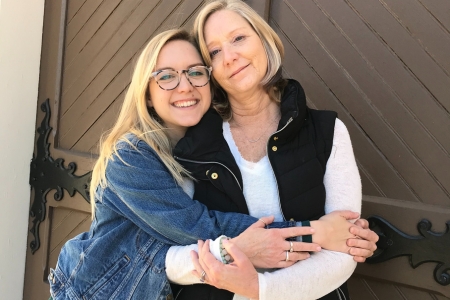
Sonnet Moore, 33, never knew her maternal grandmother. She died before Sonnet was born from ovarian cancer at the age of 49. Sonnet’s mother, Annette Moore, who is 66, has led a healthy life with no history of cancer. But when a second cousin on Annette’s side of the family tested positive for BRCA1, an inherited gene mutation that raises the risk for certain cancers, including breast and ovarian, it planted a seed in Sonnet’s mind.
“I thought about it a lot over the years,” Sonnet said. “I knew my sister had been tested and was negative, but my physician still recommended it. She knew our family history and said I might as well do it.”
In summer 2024, Sonnet tested positive for the BRCA1 mutation. While not everyone with the mutation develops cancer, risk reduction guidelines include additional screenings for breast and reproductive cancers and, for younger women, potential removal of reproductive organs.
“I'm single, not married, not in a relationship, and I want to have children; I just haven’t yet,” Sonnet said. “It impacted me a lot just knowing my status. It was really scary and intense.”
Prompted by Sonnet’s results, Annette decided she would receive genetic testing, too.
“My thought was I’m going to get this testing because I do my annual exams, I’ll be fine, but Sonnet needs these answers, and we need to know what direction to go in,” said Annette, who also tested positive for the BRCA1 mutation. “I never really thought about getting tested and nobody ever really recommended it, which is interesting given our family history.”
Now, Annette and Sonnet are navigating their increased cancer risks together at City of Hope® Cancer Center Atlanta through the Atlanta High-Risk Breast Cancer Program.
Finding a Higher Level of Care
When Annette found out she had the BRCA1 mutation, she was living in Connecticut and enrolled in a high-risk clinic at Yale. But in 2025, she decided to move closer to her two daughters and granddaughters in Georgia. She asked her physician for a recommendation to continue her care.
“The doctor told me, ‘If there’s a City of Hope in Atlanta, that’s where you go because they set the standards and protocols we all follow and our training program for genetic anomalies came from them,’” Annette remembered.
Sonnet joined the program soon after her mom’s first visit.
“She called me after her first appointment and was like, ‘You have to come,’” Sonnet said. “I had been seeing a breast care specialist, and they were really thorough and wonderful, but it just wasn’t the level of care that I felt like I needed. And a huge chunk was missing, which is the ovarian cancer piece.”
For Annette, her screening protocol involves imaging every six months, switching between a breast MRI and mammogram.
“They did talk to me about taking tamoxifen, which I declined for now,” said Annette. Tamoxifen can be used as a chemoprevention medication for women with a high risk of invasive breast cancer. “I’m open to hearing more about it, but because I have been so healthy, the side effects worry me.”
She received a hysterectomy at 35 for a suspicious mass that turned out to be endometriosis, but the procedure may have spared her from the same cancer that took her mother.
“Most people who have a hysterectomy at that age don’t say they’ve been lucky, but I do because I feel like that probably saved me,” Annette said. “Had I not done that, I don't know if I’d still be here.”
Weighing Her Options
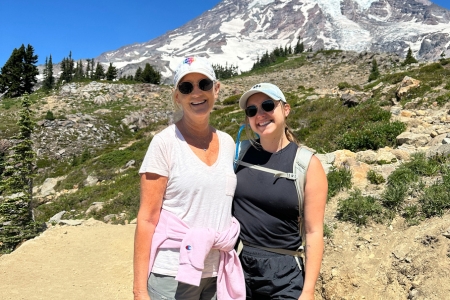
Sonnet is on the same breast cancer screening protocol as her mom, but because she still has her reproductive organs, she has been advised to consider removing her ovaries and fallopian tubes by 35 to reduce her cancer risk.
“The first thing I thought when I was told that was, ‘Do I get to be a mother?’ And I think about that every day now,” said Sonnet. “I’m so grateful to know [my status] and to get to make these really informed decisions, but it’s overwhelming.
According to Natalie Godbee, D.O., a gynecologic oncologist at City of Hope Atlanta who is treating Sonnet, patients with BRCA mutations are at an increased risk of ovarian, fallopian tube, and primary peritoneal cancers.
“This risk estimate can be as high as 50 to 60 percent in BRCA1 patients compared to the general population,” said Dr. Godbee. “For those who have not completed childbearing, we do surveillance ultrasounds and CA-125 tests.”
A CA-125 test looks for elevated levels of a cancer biomarker that could be a sign of ovarian cancer. For now, Sonnet is receiving blood tests and twice-yearly transvaginal ultrasounds. She is also exploring the option of egg retrieval to preserve the possibility of having kids in the future should she have her ovaries removed soon.
“I can keep my uterus for now because I do have dreams and desires of becoming a mother,” said Sonnet, whose BRCA1 mutation puts her at an increased risk for uterine cancer as well.
Charting New Waters Together
To support egg retrieval and stay in good health, Sonnet has met with a holistic doctor and a nutritionist at City of Hope. She said the staff and doctors have also been incredibly helpful in recommending local fertility clinics and grant opportunities to help pay for the process.
“When you’re 33 and you’re looking for the love of your life, you’re not thinking, ‘I better save my eggs, and I better find a financial way to do it,’” Annette said. “I love that they told her there’s a possibility of some financial assistance out there. I’m just really impressed with City of Hope, because they do offer counseling, and they do offer support groups.”
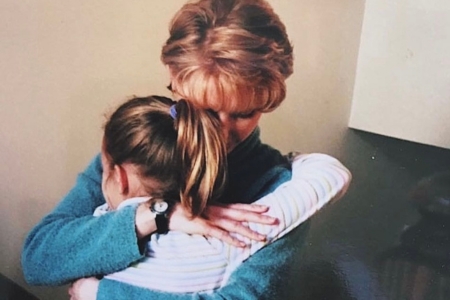
Sonnet and Annette are both proponents of therapy and have also been leaning on each other as they learn more about BRCA1 and what it could mean for their futures.
“There’s a lot of grief and a lot of loss with even just a BRCA1 diagnosis,” said Annette. “It’s a scary thing, even at 66. But the biggest impact for me is the impact that it has on Sonnet. She’s navigating waters that I didn’t have to at her age.”
In addition to family support, Annette and Sonnet also rely on close relationships during tougher days.
“I have some incredible friends who are just my rocks,” Sonnet said. “They are open and loving and let me cry about all the things I need to cry about and remind me I’m resilient and strong.”
She hopes sharing her story beyond her family and friend group might inspire other women to talk more about their health and get help when needed.
“If you feel like something’s wrong, be your biggest advocate; push for the things that you need,” Sonnet emphasized. “Ask for the genetic testing if you have a family history, or if you just feel like you need that information. The more knowledge you have, the better off you can be making decisions for your future. Not to be cheesy, but I want people here, and I want to be here, so I’m going to keep learning as much as I possibly can.”
While Annette was initially a bit reticent to get genetic testing based on her otherwise good health, she does advocate for women of any age — but especially those might want to start a family someday — to learn about potential risks and find out what they can do for themselves as they move forward through life.
“And if you have the capacity to get to a City of Hope location, go there,” she said.
Sonnet echoes her sentiment.
“I have never felt so heard and seen and cared for in a hospital or medical setting, I think that everyone deserves to have that level of care no matter what, especially when it comes to something as serious as a genetic predisposition to cancer or any sort of life-threatening illness,” she said. “I would absolutely recommend City of Hope, because I can't imagine going anywhere else.”