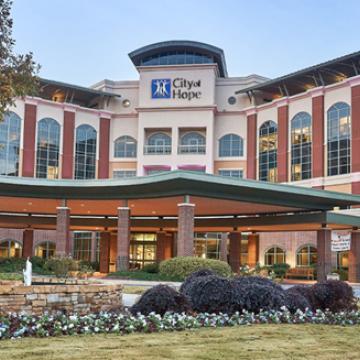
Across Georgia and the Southeast, City of Hope® Cancer Center Atlanta is bringing more options, and more hope, to patients through our Department of Surgical Oncology and Reconstructive Surgery. Together in one location, board-certified surgical oncologists and reconstructive surgeons provide sophisticated, disease-specific surgical care — when and where you need it — from minimally invasive, robotic-assisted procedures and complex reconstructive to plastic surgeries and heated intraperitoneal chemotherapy (HIPEC).
Leading-Edge Surgical Oncology Services in Atlanta
At City of Hope Cancer Center Atlanta, we offer an array of surgical innovations designed to remove a tumor and/or reconstruct a part of the body disfigured by cancer or its treatment. Our experienced team evaluates factors such as the location, size, type, grade and stage of the tumor, as well as your age, general health and more to determine whether you’re a candidate for surgery. Depending on your individual needs and goals, surgery may be combined with other treatments like chemotherapy or radiation therapy, administered before or after surgery, to stop cancer growth, spread and recurrence.
Our team approach means expert collaboration under one roof — before, during and after surgery — with surgical oncologists and surgeons with advanced training in various surgical techniques working hand in hand with nurses, surgical technicians, anesthesiologists, pathologists and other providers with disease-specific expertise. Patients can expect specialization and sophistication, whether your diagnosis is early stage or advanced.
With a pulse on the latest research and advances in surgical oncology and reconstructive surgery, our team is equipped with a growing portfolio of leading-edge surgical options, including those listed below.
Debulking surgery, or cytoreduction: This procedure focuses on safely removing as much cancer as possible. When cancers are too extensive or too close to vital organs, surgical oncologists may use debulking to ease symptoms caused by large tumors and slow the growth of advanced cancers, including some types of ovarian cancer, uterine cancer and other cancers that have spread to the peritoneum, or lining of the abdomen. The remaining cancer is treated with other therapies, such as chemotherapy.
HIPEC: HIPEC delivers highly concentrated, heated chemotherapy directly to the abdominal cavity during surgery. Step one involves cytoreductive surgery to remove visible tumors in the abdomen. During step two, chemotherapy drugs are heated, sterilized and pumped into the patient’s abdomen immediately following surgery.
PIPAC: Pressurized intraperitoneal aerosolized chemotherapy (PIPAC) administers chemotherapy directly to the abdominal cavity, specifically within the peritoneum, the smooth tissue that lines the abdominopelvic cavity and covers the organs within the abdomen. This novel therapy is used in the treatment of ovarian, uterine, gastric, colorectal and appendiceal cancers. Learn more about how PIPAC works.
Implant-based reconstruction: This common, two-stage breast reconstruction procedure involves the use of saline or silicone implants. The surgeon inserts a tissue expander in stage one, then removes the expander and inserts a permanent implant in stage two.
Oncoplastic surgery: This operation unites principles of plastic surgery with breast surgical oncology, such as nipple-areola-sparing and skin-sparing mastectomies, to achieve an aesthetic result.
- Nipple-areola sparing mastectomy preserves the nipple, areola and breast skin, but removes the breast tissue. Typically, this surgical procedure is only an option for patients with early-stage breast cancer with a smaller tumor. Despite nipple preservation, there is risk of feeling and sensitivity loss.
- Skin-sparing mastectomy involves removing the nipple, areola and breast tissue, while preserving the outer skin. Breast reconstruction — silicon or saline breast implants and autologous fat grafting or tissue transfer — is performed at the same time. A skin-sparing mastectomy helps protect the breast’s natural shape and contour while reducing the risk of scarring.
Autologous reconstruction: These techniques use the patient’s own tissue, called a “flap,” that usually comes from the belly, back, buttocks or inner thighs to create the reconstructed breast more naturally. They typically require more time and recovery than implant-based procedures.
- Deep inferior epigastric artery perforator (DIEP flap surgery) involves moving fat, skin and the blood supply from the lower belly to the breast.
- Stacked DIEP flap reconstruction is used to reconstruct one breast in women who don’t have adequate extra belly tissue, making them ineligible for standard DIEP surgery.
- Transverse rectus abdominis myocutaneous flap surgery uses abdominal tissue (affecting core abdominal muscles) and typically requires less time than the DIEP flap surgery.
- Latissimus dorsi flap is a two-step procedure that uses muscle, skin and fat from the back.
- Autologous fat grafting removes fat from one area of the body and transfers it to the breast using liposuction, which allows surgeons to refine the breast’s shape.
What Sets Our Atlanta Cancer Surgeons Apart?
The City of Hope difference means high-tech, high-touch care delivered by Atlanta experts who are highly skilled across the surgical spectrum and committed to bringing the latest technologies and techniques to patients with lifesaving speed.
Our Department of Surgical Oncology and Reconstructive Surgery is powered by a multidisciplinary team comprising surgical oncologists, plastic and reconstructive surgeons, anesthesiologists, surgical technicians, physician assistants, wound care certified registered nurses and more. All in one location. All focused on ensuring you understand your options, surgical treatment plan and what to expect before, during and after your procedure.
As a patient, you benefit from experts across City of Hope’s coast-to-coast clinical network who collaborate closely with physicians on the ground in Atlanta to deliver sophisticated surgical care, no matter your cancer type. Many of our board certified and fellowship-trained surgeons are published in peer-reviewed journals and recognized as top doctors. You also benefit from access to on-site supportive care providers who use evidence-based therapies to help reduce pain, cancer-related fatigue, functional impairments and other side effects.
Our Atlanta Surgical Oncology Team
Click the links below to learn more about our surgical oncology and reconstructive surgery experts.

Tolutope Oyasiji, M.D., is a cancer surgeon and medical director of surgical oncology with City of Hope in Georgia. Learn about his background and experience in surgical oncology.
Make an Appointment With Our Cancer Surgeons
Explore your surgical oncology and reconstructive surgery options. We’re available 24/7 to help handle the details, from insurance verification and medical records collection to appointment scheduling and arrangements for travel and lodging. Call us at (877) 524-4673 to make an appointment.
City of Hope Cancer Center Atlanta is conveniently located in historic Newnan, Georgia, just 30 minutes southwest of Atlanta's Hartsfield-Jackson International Airport and a short drive from the Atlanta area.
City of Hope Cancer Center Atlanta
Department of Surgical Oncology
600 Celebrate Life Parkway.
Newnan, GA 30265
New Patients: (877) 524-4673
Current Patients: (770) 830-2822