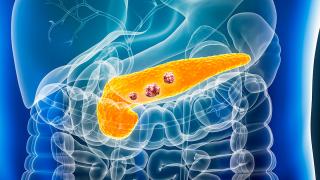
Liver and pancreatic cancers are among the most difficult cancers to diagnose and treat. While they are not among the most common cancers diagnosed in the United States, these hepatobiliary cancers are among the deadliest.
According to the National Cancer Institute (NCI):
- The five-year survival rate for a patient diagnosed with pancreatic cancer is 13%
- The five-year survival rate for a patient diagnosed with liver cancer and/or bile duct cancer is 22%
In Arizona and the Southwest, rates of these two cancers are largely stable, but are increasing among certain groups, including Native Americans and Hispanics.
New and emerging technologies and non-invasive therapies are improving outcomes for patients in the Southwest with pancreatic and liver cancer and other complex hepatobiliary cancers and gastrointestinal (GI) cancers.
In this article, we’ll explore:
- Why Are Hepatobiliary Cancers Hard to Treat?
- Pancreatic Cancer in the Southwest
- Liver Cancer in the Southwest
- New and Emerging Cancer Diagnostics and Treatments
If you or a loved one has been diagnosed with cancer and are looking for a second opinion, call us 24/7 at 877-524-4673.
Why Are Hepatobiliary Cancers Hard to Treat?
Hepatobiliary cancers include:
These cancers, which are also considered GI cancers, often do not present symptoms until they have advanced and are often diagnosed in late stages. Currently, no standard screening tests are available for pancreatic cancer. So, when a patient experiences symptoms, the disease has often reached an advanced stage, limiting treatment options.
Similarly, liver cancer is also frequently diagnosed at a later stage due to vague symptoms and a lack of standard screening options beyond those who are at high risk for developing the disease.

“Detecting these cancer types at an early stage is vital to improving survival rates,” says Gangandeep Singh, M.D., F.A.C.S., chief of surgical oncology and director of surgical services at City of Hope® Cancer Center Phoenix. “A patient diagnosed with pancreatic cancer at an early stage has an estimated five-year survival rate of 44%, compared to a 3% five-year survival rate for late-stage diagnoses. It’s one of the many reasons advancements in screening for this disease are so important.”
Symptoms of these cancers may include:
- Pain, especially in the upper right abdomen
- Swelling in the legs and feet
- A lump on the right side of the abdomen
- Jaundice or yellowing of the skin and whites of the eyes
- Bruising and bleeding easily
- Fatigue
- Nausea and vomiting
Pancreatic Cancer in the Southwest
Southwestern states have some of the lowest incidence rates of pancreatic cancer in the country. But while rates in the Southwest are below the national average, they are on the upswing in Arizona, New Mexico and Oklahoma. Rates also are rising in some of the most populated areas of the Southwest, such as Dallas County, Texas.
In Arizona, pancreatic cancer is diagnosed at a rate of 12 per 100,000 people, according to NCI. Rates are rising, however, among Hispanics in Maricopa County, home of the state capital Phoenix, the largest city in Arizona and the fifth most populated in the country.
In New Mexico, the incidence rate of pancreatic cancer is 12 per 100,000. But rates are rising in Bernalillo County, the state’s most populated county and home to its largest city Albuquerque.
In Texas, pancreatic cancer rates are higher than the national average and increasing in several counties, including the most populated areas around Houston, San Antonio and Dallas.
In Oklahoma, rates of pancreatic cancer are slightly below the national average, but are increasing in several counties, including Oklahoma County, home to Oklahoma City, the state’s capital and largest city.
Pancreatic cancer rates also are high among Native Americans. According to Northern Arizona University, pancreatic cancer is the fourth leading cause of cancer deaths among Native Americans in Arizona. Rates also are high among Native Americans in Oklahoma, Texas and New Mexico. Outside of California and Alaska, Southwestern states have the highest populations of Native Americans.
“The incidence of pancreatic cancer in Native Americans is higher than the general United States population and has the worst survival of any major racial or ethnic group,” say researchers at Oregon Health & Science University. “These outcomes are influenced by a patient population with often poor access to high-quality cancer care, historical trauma potentially leading to reduced care utilization, and a lack of research focused on etiologies and comorbid conditions that contribute to these disparities.”
Liver Cancer in the Southwest
Hispanics make up a significant portion of the population in the Southwest and Hispanic men and women have about double the rate of liver cancer diagnoses and deaths as non-Hispanic white Americans.
According to the U.S. Department of Health and Human Services (HHS),
- Hispanic men have a liver cancer incidence rate of 20.4 per 100,000 men, compared to 11.3 per 100,000 for white men
- Hispanic women have an incidence rate of 8.2 per 100,000, compared to 4 per 100,000 for white women
- Hispanics are nearly twice as likely to die from liver cancer as non-Hispanics whites
Some liver cancers may be prevented by the hepatitis B vaccine, which helps prevent that disease, which increases liver cancer risk. But according to HHS, Hispanic adults are 30% less likely to vaccinated for hepatitis.
Liver cancer is on the uptick in Oklahoma and in select counties in Arizona, Oklahoma and Texas.
New and Emerging Cancer Diagnostics and Treatments
Cancers of the pancreas and liver may be difficult to treat at any stage, but, as with all cancers, diagnosing them early increases treatment options and often improves outcomes.
One of the most notable advancements in the early detection of pancreatic cancer is the potential of liquid biopsy technology, which uses a blood test to identify biomarkers of cancer.
A 2024 study led by Ajay Goel, Ph.D., A.G.A.F., who chairs the Department of Molecular Diagnostics and Experimental Therapeutics at City of Hope Cancer Center Duarte, demonstrated that a blood test analyzing small RNA fragments released by tumors may accurately detect early-stage pancreatic cancer. The liquid biopsy, when combined with a test for the CA19-9 biomarker, accurately identified 97% of early-stage pancreatic cancer cases. CA 19-9 may be an early sign of pancreatic cancer, but the test on its own is not always reliable.
addition to advancements in early detection, a new wave of non-invasive treatments offers alternatives for patients who may not be candidates for surgery. One of these developments is the HistoSonics Edison® System, which uses histotripsy, a non-invasive ultrasound-based therapy that can break apart cancerous tissue without the need for surgery or radiation.
Histotripsy is currently being evaluated for its effectiveness in treating primary liver tumors and pancreatic lesions, with the hopes of integrating it into future standard-of-care treatment protocols.
“New technology like histotripsy represents a potential shift in how we can approach inoperable tumors,” says David Luyimbazi, M.D., surgical oncologist at City of Hope Phoenix. “By targeting and destroying cancerous tissue without harming other organs, histotripsy could provide a safer, more precise option for patients who aren’t candidates for surgery.”
If you or a loved one has been diagnosed with cancer and are looking for a second opinion, call us 24/7 at 877-524-4673.