For Madeline Lauener, Ph.D., being a 12-year-old in Vancouver meant playing plenty of sports. From cross-country and track to volleyball, ice skating and more, she was an active seventh grader.
So, when her energy waned, her family became suspicious.
“Being fatigued was the first sign that something had changed in my life. It was quite unusual for me,” she says. “I struggled to get through the day and often literally felt the need to sleep in the middle of the school day.”
When a swollen lymph node appeared on Lauener’s neck, her parents contacted their family doctor. That appointment launched a long road of complex cancer treatment, including a stem cell transplant. The journey also pivoted her childhood focus to science, leading adult Madeline to conduct potentially life-extending research at City of Hope, a global leader in stem cell transplantation.
The Road from Diagnosis to Treatment and Recovery
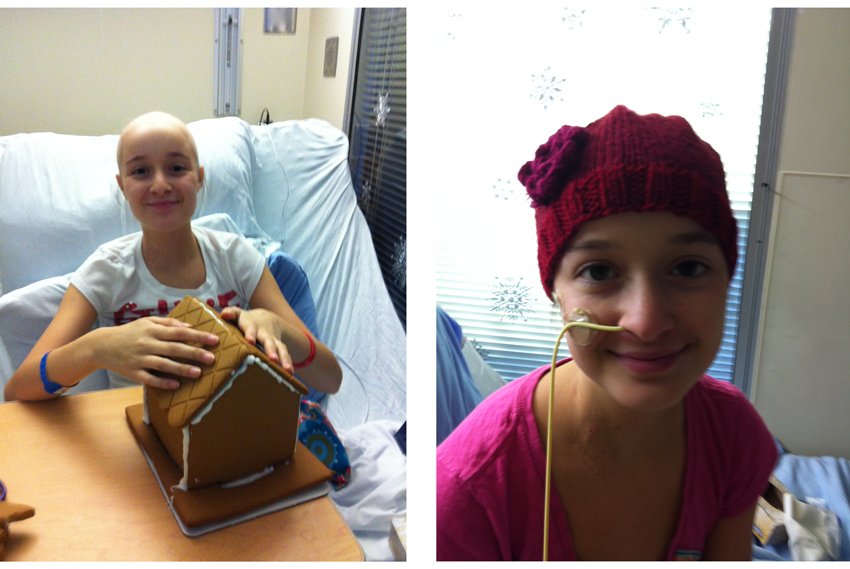
Initially, doctors weren't sure what was causing Lauener's symptoms. She was admitted to BC Children’s Hospital in April 2011. Despite fatigue, inflamed lymph nodes and a persistent 104°F temperature, her doctors struggled for months to determine what was wrong. When skin lesions appeared, a biopsy finally revealed Lauener had stage 4 non-Hodgkin’s lymphoma.
After a year of inpatient and outpatient chemotherapy, Lauener went into remission. But one month later, a PET scan of a lump on her face confirmed the cancer was back. Her doctors recommended a stem cell transplant to treat her aggressive disease.
They also advocated that she be allowed to participate in a U.S. clinical trial that offered access to a then-novel targeted therapy, brentuximab. The now front-line lymphoma treatment cleared her cancer, enabling a successful stem cell transplant on Halloween 2012.
The Road to Research
As a cancer survivor, Lauener understands patients’ hopes and fears. It’s what prompted her to consider a cancer care career.
“The all-encompassing experience of being a patient gave me the drive and passion to do something to impact patients’ mental, emotional and physical health,” she says. “The majority of the young adults who went through cancer treatment with me aren’t here today. I want to use my health and the time I’ve been given to help other patients however I can.”
Lauener says she was amazed by how quickly novel treatments and research efforts can progress in a year. The urgent need for forward-thinking breakthroughs also stuck with her. Those realizations further shaped her professional plans.
As a student at Simon Fraser University, she participated in an oncologist-led summer student research program at BC Children’s Hospital focused on graft-versus-host-disease (GVHD). This severe, potentially fatal stem cell transplant complication happens when donor cells attack the recipient’s healthy cells. She continued to study GVHD as she pursued her master’s and doctoral degrees in pathology and laboratory medicine.
“I considered medical school,” she says. “But I thought conducting GVHD translational and clinical research would give me a chance to increase stem cell transplant safety and effectiveness. It’s a way that I can impact the therapies patients receive.”
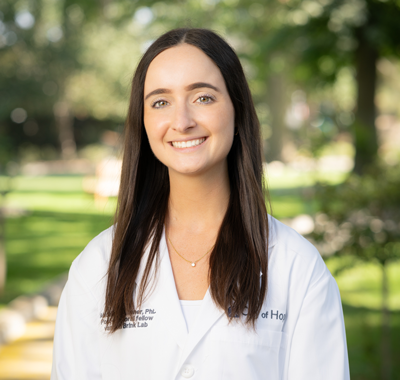
That choice led her to City of Hope and a postdoctoral fellowship with Marcel van den Brink, M.D., Ph.D., a world leader in GVHD, transplant biology and cell therapy. Since 2024, she’s been part of the blood and marrow transplantation program in the Van den Brink lab, focusing on cell and gene therapies that can minimize GVHD.
“City of Hope has a patient-friendly environment and mentality that resonates with me,” she says. “[Dr. Van den Brink’s] lab is doing incredible work. They have a track record of translational work that brings therapies to patients. I wanted to be a part of that.”
Creating Cells to Attack GVHD
To improve stem cell transplantation, Lauener investigates immune mechanisms that may reduce or prevent GVHD. During her doctoral work, she launched studies into regulatory natural killer cells (NKreg).
From her research, Lauener discovered patients with fewer NKreg cells are more likely to develop GVHD and have worse post-transplant outcomes. By examining blood samples, she determined these cells have a unique ability to suppress CD4-positive cells that cause GVHD without impacting any of the body’s healthy immune cells. NKreg cells also strengthen some of the body’s other cancer-killing cells. Lauener says these promising results deserve further investigation.
“Here at City of Hope, we’re looking at this more deeply to understand how the mechanism in NKreg cells suppresses just CD4-positive cells,” she says. “We want to see if we can develop the NKreg cells in a way we can deliver to patients, so we can prevent GVHD and, potentially, prevent cancer progression.”
The goal, she says, is to start a Phase 1 clinical trial at City of Hope within two years that will bring this novel therapy to patients who face a stem cell transplant. This research would examine whether NKreg cells can suppress CD4-positive cells in humans and determine if it can reduce or reverse existing GVHD.
The Impact of Philanthropy: Partnering to Advance Progress
Innovative, life-extending projects like Lauener’s work often require significant support. Alongside government funding, donors can contribute to research efforts focused on improving patient quality of life. This type of partnership helps forward-thinking investigators pursue bold ideas that can reinvent cancer care and ensure better outcomes.
Donor support accelerates the abilities of trailblazing researchers, like Lauener, to bring their investigative research results to the clinic. Significant breakthroughs — and the next generation of leading-edge therapies — are only possible with partners who look to the future.
“Right now, patients have diseases that could really use some life-saving therapies. Moving treatments along as quickly as we can will be extremely beneficial,” Lauener says. “Having philanthropic support from institutions, associations and generous donors who understand the value of research is critical. It’s an essential element of how we can move forward.”