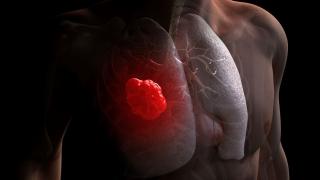
Pope Leo underwent lung cancer surgery this week to remove a lower lobe of his right lung after being diagnosed with early-stage lung adenocarcinoma, the Vatican said — spotlighting the benefits of cancer screening, early detection and treatment.
During his weekly blessing and prayer in St. Peter’s Square on Sunday, the pope said the cancer was caught at a “very early stage and is well localized” and his doctors had advised surgery — spotlighting the benefits of cancer screening, early detection and treatment.
“During some recent medical examinations, the doctors found a small, localized nodule in my lung,” the pope, 71, told thousands gathered in St. Peter’s Square.

An examination of a nodule during the 90-minute operation had confirmed the diagnosis, and the pope is expected to make a full recovery.
Amit A. Kulkarni, M.D., a lung cancer expert and medical director of clinical trials in the Department of Medical Oncology & Therapeutics Research at City of Hope® Cancer Center Arizona, said Pope Leo’s case is a prime example of the importance of screening and catching cancer in early stages.
“The pope’s lung cancer diagnosis is an important reminder that lung cancer can affect anyone and that early detection can make a profound difference,” he said. “When lung cancer is found at an earlier stage, treatment is often more effective, and the chance of cure is greatest.”
This article covers the basics of Pope Leo’s cancer surgery and details on lung cancer, screening and treatment, including:
- What is lung adenocarcinoma?
- Lung nodules: Causes and cancer risks
- Diagnosis, testing and treatment
- Lung cancer symptoms and signs
- Screening guidelines for lung cancer
- When to see a doctor
If you or a loved one is concerned about possible signs or symptoms of cancer and would like an initial consultation or a second opinion, call us 24/7 at 877-460-4673.
What Is Lung Adenocarcinoma?
Lung cancer is the leading cause of cancer death in the United States and second most common cancer, according to the American Cancer Society. Most people aren’t diagnosed with lung cancer until it has advanced or spread to other parts of the body because symptoms don’t typically appear in early stages or are mistaken for other health conditions.
Lung adenocarcinoma — the type of lung cancer diagnosed in Pope Leo — is the most common form of the disease. Survival rates vary widely depending on the stage of the cancer at diagnosis and a patient’s overall health. The information released about the pope indicates his cancer was diagnosed at an early stage, when the type of surgery he underwent is the typical recommended treatment because it has a very high survival rate.
The pope’s surgery itself lasted 90 minutes and involved an advanced video-assisted technique, according to the Vatican statement.
“The operation was successful and there were no complications,” the statement said, which did not indicate whether the pope would undergo further treatment.

Jae Y. Kim, M.D., a lung cancer specialist and chief of thoracic surgery at City of Hope Cancer Center Duarte, said the fact that the pope’s cancer was caught and addressed early is good news for his prognosis for a full recovery.
“Pope Leo was diagnosed with adenocarcinoma, which is the most common type of lung cancer,” he said, noting 30-40% of people who get adenocarcinoma of the lung have never smoked. “Pope Leo's case demonstrates the benefit of diagnosing lung cancer early. Lung cancers that are detected very early have cure rates of about 90% with surgery. Most people who have part of their lung removed are able to maintain an active lifestyle after surgery with few limitations. Pope Leo's predecessor, Pope Francis, had part of his lung removed at an early age for an infection and was quite active throughout his life.”
Lung Nodules: Causes and Cancer Risks
Lung nodules — like the one found in Pope Leo’s right lung — are common. They are found in about half of people who have low-dose computed tomography (LDCT) imaging scans. They are also sometimes called pulmonary nodules and tend to be small round or oval lesions up to 3 centimeters. These lesions are often solid, with the same soft tissue structure throughout the entire nodule.
Causes of lung nodules aren’t always known, but they may develop because of:
- Cysts or abnormal artery formations that are present at birth
- Past infections like tuberculosis or fungal infections
- Inflammatory conditions like rheumatoid arthritis
- Irritants found in the air
- Scar tissue
- Cancer, especially primary lung cancer
Most lung nodules are not cancerous. To determine if cancer is present, a doctor examines the lesion on an imaging test, such as a CT scan, and may recommend other diagnostic tests.
Depending on the cancer risk, the doctor may also suggest follow-up imaging tests every few months to a year to monitor its characteristics for signs of malignancy (cancer).
Sometimes a benign (noncancerous) nodule on the lung may turn into cancer. That’s why evaluations and screenings with CT scans or chest X-rays are important for people at risk, such as smokers.
To assess a person’s risk, doctors ask about medical history, smoking habits (past or present), symptoms of lung cancer, family history of lung cancer or a prior diagnosis of lung cancer or other lung conditions like emphysema or chronic obstructive pulmonary disease (COPD).
Diagnosis, Testing and Treatment
Pulmonary nodules don’t always cause symptoms and are often discovered on a scan performed for other reasons, such as to detect lung infections.
While many lung nodules are found on chest X-rays, CT scans are better at detecting them and are the primary diagnostic imaging test used for monitoring and evaluating nodules. Larger or fast-growing nodules are more likely to be cancerous than smaller or slower-growing nodules.
Positron electron tomography (PET) scans are also used to check lung nodules for cancer characteristics, particularly if the nodule is larger than about 0.8 centimeters and the patient is at high risk for developing cancer.
If a nodule has grown or has features that may indicate cancer, a biopsy may be performed so a tissue sample may be examined by a pathologist, a doctor who specializes in identifying diseases of the tissues and cells.
Sometimes a biopsy is recommended to diagnose or rule out cancer. Nodule resection (removal) may also be advised if a patient is at high risk for developing cancer.
Lung Cancer Symptoms and Signs
In early stages of lung cancer, there are often no obvious signs or symptoms. A person may have a persistent cough or frequent respiratory infections, such as bronchitis or pneumonia, that never seem to go away. Sometimes, a person may feel fatigued or experience an unexplained loss of appetite.
But once lung cancer spreads, symptoms may develop where the cancer has metastasized, including those listed below.
Lymph nodes: Swelling in the nodes, such as around the neck or under the collarbone.
Bone metastasis: Bone discomfort, particularly in the hips or back.
Brain metastasis: Headaches, weakness in an arm or leg, seizures or balance issues.
Liver metastasis: Jaundice (yellowing of the skin or eyes).
Often, patients don’t experience symptoms until their lung cancer is advanced, such as in Stage 4 lung cancer. In addition to persistent cough, respiratory infections, fatigue and loss of appetite, the following are common symptoms of advanced lung cancer.
Unexplained weight loss: Common with advanced cancer, this is often the result of people losing their appetite (a condition known as cachexia), which may lead to loss of weight and muscle mass.
Trouble breathing: New or more frequent breathing problems or wheezing.
Coughing up blood: Mucus or phlegm with a red or rust color produced with a cough.
Chest pain: Discomfort or pain that worsens with laughter, deep breathing or coughing.
Hoarseness: Voice may sound strained, raspy or lower in volume.
Trouble swallowing: Trouble swallowing (dysphagia) is a rare symptom of advanced lung cancer.
Screening Guidelines for Lung Cancer
Lung cancer screening may be recommended for people who have a higher risk for developing the disease before they have any signs or symptoms. Screening may help detect cancer at its earliest stages when more lung cancer treatment options are available and more likely to be successful.
The U.S. Centers for Disease Control and Prevention (CDC) and the U.S. Preventive Services Task Force (USPSTF) recommend yearly lung cancer screening for people who are between 50 and 80 years old, are current smokers, have quit smoking within the last 15 years or have a 20 pack-year of smoking history (smoking 20 cigarettes a day for 20 years or smoking 40 cigarettes a day for 10 years).
Also worth noting: The CDC and the USPSTF recommend halting lung cancer screenings if at least 15 years have passed since the person quit smoking, if the person has developed an illness that reduces life expectancy significantly or is unable or unwilling to undergo curative therapy.
Screening With a Low-Dose CT Scan
A low-dose CT (LDCT) scan is the only recommended screening tool for lung cancer. It uses X-rays, computers and low doses of radioactive materials to take 3D pictures of the lungs that doctors examine for evidence of lung cancer.
LDCT testing is very accurate when screening for lung cancer, ranging from 59% to 100% effectiveness, according to the U.S. Preventive Services Task Force.
Annual LDCT screening for three years in individuals at increased risk for developing lung cancer lowered the chance of lung cancer deaths by 20% in a major trial, according to the National Cancer Institute.
Results of LDCT screening are generallly ready in several days, and doctors typically discuss the results with each patient, explaining what they mean and what happens next.
If you or a loved one is concerned about possible signs or symptoms of cancer and would like an initial consultation or a second opinion, call us 24/7 at 877-460-4673.