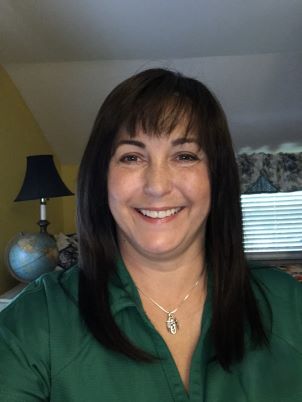
At 51, Crystal Cornelius began experiencing persistent night sweats and abdominal swelling. She initially attributed the symptoms to menopause and job stress, but when her upper abdomen became hard and uncomfortable, she sought medical care. Imaging, a PET scan and a lymph node biopsy revealed two forms of non-Hodgkin lymphoma, including an aggressive type. After hearing about the care a friend received at City of Hope®, Crystal’s husband encouraged her to seek a second opinion at the Chicago-area location. There, blood cancer specialists confirmed both diagnoses and determined that she needed to begin intensive treatment immediately.
From Diagnosis to Treatment: Facing Lymphoma Head-On
With the treatment plan established, Crystal began an aggressive chemotherapy regimen at City of Hope. She then chose to return home for radiation therapy. When she felt well enough, she worked remotely as an administrative laboratory director, which helped her maintain a sense of purpose and routine.
Following radiation, Crystal received an autologous stem cell transplant, which means her own cells were used. Although the transplant initially controlled her disease, the cancer returned four years later. Knowing she would need advanced treatment and specialized expertise, Crystal returned to City of Hope Chicago, where a biopsy confirmed that the cancer had returned in a different form and now included Hodgkin lymphoma.
With this new diagnosis, Crystal needed an allogeneic stem cell transplant using healthy donor cells to rebuild her blood and immune systems. Because no one in her family was a suitable match, her care team turned to the National Marrow Donor Program® (NMDP) Registry — as do about 75% of patients who need an allogeneic transplant — to search for a compatible donor. The search focused on finding a donor whose human leukocyte antigen (HLA) markers, which are proteins on the surface of most cells, closely matched Crystal’s, as this can reduce the risk of transplant-related complications.
“Blood and marrow transplantation is one of the most powerful tools we have in modern medicine, but an allogeneic transplant cannot move forward without a well-matched donor,” said Tulio Rodriguez, M.D., Director, Bone Marrow Transplant and Cellular Therapy Program at City of Hope Chicago. “For Crystal, finding a suitable donor offered her the best chance for a cure.”
A Peripheral Blood Stem Cell Donation Offers Hope
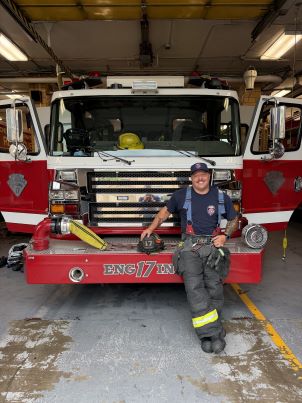
A few weeks later, Crystal learned she had a stem cell transplant match: Cody Duge, a Rochester, New York, firefighter and owner of CrossFit Center City. After seeing a poster during a blood draw several years prior, he joined the NMDP Registry, hoping the decision might one day help someone with blood cancer.
NMDP arranged Cody’s travel to Florida for a peripheral blood stem cell collection, which collects blood-forming stem cells from the bloodstream. Cody underwent the nonsurgical procedure over the course of one day, during which a machine separated the needed stem cells and returned the remaining blood to his body. He experienced fatigue afterward but recovered within about a week. It felt like a small price to pay to help someone else.
On May 8, 2024, Crystal received Cody’s donated cells through an allogeneic stem cell transplant at City of Hope Chicago. Dr. Rodriguez led her care with support from Leslie Popplewell, M.D. and a multidisciplinary team specializing in the complex treatment option. Crystal credits the team with guiding her safely through every step of the transplantation process, combining clinical expertise with empathy and compassion.
“Knowing that I had multiple lymphomas, I truly believe that I’m here because God is not done with me yet. He put an amazing village in my life to support me – Cody and his selfless act to donate, a strong support system and the amazing care team at City of Hope,” Crystal said. “My journey was filled with a lot of faith and prayers, and I am beyond thankful that I have returned to gardening, work, quilting and caring for my animals. Every day is a gift.”
Meeting for the First Time
For years, Crystal and Cody knew only that a donor had given and a patient had received. NMDP confidentiality rules kept their identities private until the required waiting period ended and both agreed to connect.
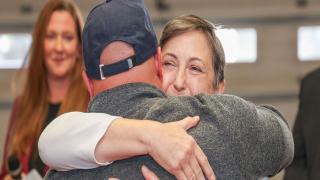
When they met for the first time on September 14, 2026, Crystal and Cody embraced for several minutes, both with tears in their eyes. The moment gave Crystal the chance to thank the stranger whose cells made her second transplant possible. For Cody, it connected a decision he had made years earlier with the person whose life it changed.
“All I wanted to do was hug Cody and thank him from the bottom of my heart — on behalf of my family and friends, too,” Crystal said. “Cody is my hero. As a firefighter, he has probably saved countless lives by going into burning buildings. With his stem cell donation, he saved mine.”
Watch Crystal and Cody meet for the first time.
City of Hope Marks 50 Years of Stem Cell Transplant Care
The reunion between Crystal and Cody also celebrated 50 years since City of Hope’s first bone marrow transplant in 1976. Since then, as one of the world’s largest and most successful bone marrow and blood stem cell transplant programs, City of Hope has performed more than 20,000 bone marrow and blood stem cell transplants.
Locally, City of Hope Cancer Center Chicago is the only hospital offering the full spectrum of stem cell and bone marrow transplant services between Chicago and Milwaukee. Established in 1991, the hospital’s longstanding program has maintained accreditation from the Foundation for the Accreditation of Cellular Therapy (FACT) for more than a decade, reflecting rigorous standards for quality and safety in cellular therapy and transplantation, and has been recognized multiple times as “high performing” in the treatment of leukemia, lymphoma and myeloma by U.S. News & World Report.
Additionally, City of Hope Chicago is proud to be an NMDP network partner, working within its global donor and transplant network to help connect patients with suitable blood stem cell donors and broaden access to potentially lifesaving cell therapies.
How to Become a Stem Cell Donor
Joining the NMDP Registry is simple, but its impact can be extraordinary. Eligible adults ages 18 to 35 who meet health guidelines can begin with a cheek swab, which identifies the HLA markers used to match potential donors with patients who need a transplant. Not every registry member will be called to donate, but every person who joins increases the chance that a patient like Crystal can find the compatible donor who may make lifesaving treatment possible.
“I want others to know that joining the donor registry can save a life and affect so many more,” Crystal said. “A donation can touch the patient’s entire circle of family and friends.” For patients facing blood cancers and other serious blood disorders, a well-matched donor can make all the difference.
“At City of Hope Chicago, we are proud to partner with NMDP, not only because they connect patients and donors, but because they help make stories like Crystal’s and Cody’s possible,” said Dr. Rodriguez. “By joining the registry, Cody provided the donor cells Crystal needed for her transplant — a powerful example of how one volunteer can help make lifesaving cell therapy possible.”
Interested in becoming a potential blood stem cell donor? Visit nmdp.org/get-involved/join-the-registry to learn how to join the NMDP Registry.
Photo credits: Chicago Fire Department (CFD), Crystal Cornelius and Cody Duge