You had a scan for a health concern, and the report mentions a pancreatic cyst. Now you’re wondering: Is it cancer? Will I need surgery? What’s next?
Many pancreatic cysts are found unexpectedly, without symptoms. Most never become cancer, but some types need follow-up to watch for concerning changes.

“An unexpected finding can cause patients to feel anxious, especially when it involves the pancreas,” says Omeed Alipour, M.D., an interventional gastroenterologist at City of Hope Orange County Lennar Foundation Cancer Center and an assistant clinical professor of gastroenterology at City of Hope. “At City of Hope, we know and understand this, and we make sure to clearly explain what the scan tells us, whether we need more information and what happens next, and to thoroughly answer any questions the patient may have.”
This article will help you understand:
- What pancreatic cysts are and how they’re found
- Which types can become cancer
- What further testing may involve
- When monitoring or treatment is recommended
- What you can do after a diagnosis
What is a pancreatic cyst, and how is it found?
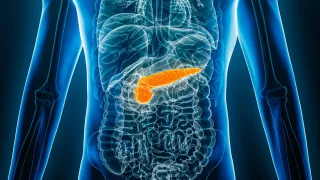
A pancreatic cyst is a fluid-filled pocket in or on the pancreas, an organ behind the stomach that helps digest food and regulate blood sugar.
Cysts become more common with age. They often turn up on a CT scan or MRI ordered for another reason, sometimes while doctors investigate abdominal pain or pancreatitis, which is inflammation of the pancreas.
Most cause no symptoms. When symptoms occur, they may include upper abdominal or back pain, nausea, or feeling full after a small meal. However, a cyst may be unrelated to the symptoms that prompted the scan. Your doctor will consider other explanations, too.
Is a pancreatic cyst cancer?
Usually, no. But the type matters. Common examples include:
- Pseudocysts: Fluid collections that usually develop after pancreatitis and sometimes after an injury. They are not cancerous.
- Serous cystadenomas: Generally noncancerous cysts that sometimes grow large enough to cause discomfort or press on nearby organs.
- Intraductal papillary mucinous neoplasms, or IPMNs: Mucus-producing growths involving the pancreatic ducts, small tubes that carry digestive juices. Some can develop into cancer.
- Mucinous cystic neoplasms, or MCNs: Another mucus-producing type that can become cancerous.
“Precancerous” means a cyst could develop into cancer, not that it inevitably will. Some cysts already contain cancer when discovered, which is why evaluation matters.
What happens after a pancreatic cyst is found?
Your doctor will review your scan, symptoms and health history, including previous pancreatitis and any family history of pancreatic cancer.
An MRI, sometimes with a technique called magnetic resonance cholangiopancreatography (MRCP), can provide a closer look at the cyst and pancreatic ducts. Doctors assess its size, any solid areas or small nodules, and whether a duct is widened. Earlier scans, if available, help show whether it has grown.
Your doctor may recommend endoscopic ultrasound (EUS) for more information. While you’re sedated, a thin, flexible tube with an ultrasound probe passes through your mouth into your stomach and small intestine, providing close-up images of the pancreas.
Sometimes, the doctor also collects cyst fluid or cells for testing. Not every cyst needs this procedure, and testing may not tell us exactly what type of cyst it is.
Will you need monitoring or treatment?
Many cysts can be monitored with repeat imaging, called surveillance. The schedule depends on the suspected type, size and features, and your overall health. Some clearly benign cysts need no ongoing surveillance.
Monitoring helps doctors watch for changes that could require treatment while avoiding unnecessary surgery.
Surgery may be recommended if testing suggests cancer or a substantial risk of it developing. It usually removes the affected portion of the pancreas. Because this is a major operation, an experienced team should weigh its benefits and risks with you.
A pseudocyst causing symptoms or complications may need drainage instead.
What can you do after a diagnosis?
Ask what type of cyst is suspected, whether a pancreatic specialist should review it and when your next test is due. Make sure you know who will arrange follow-up and explain your results.
There is no proven diet or supplement that makes a precancerous pancreatic cyst disappear. Keep recommended appointments and report persistent abdominal or back pain, unexplained weight loss, or newly diagnosed or worsening diabetes. These changes can have other causes but deserve evaluation.
Yellowing of the skin or eyes needs prompt medical attention. Severe abdominal pain, especially with fever or vomiting, requires urgent care.
“You should leave your appointment knowing when your physician will check the cyst again and which changes should prompt a call,” says Dr. Alipour. “Having a clear follow-up plan helps make an unexpected finding less frightening.”
Ending cancer starts with Hope. To make an appointment at any of City of Hope’s Orange County locations, call 888-333-HOPE (4673).
Emerging Pancreatic Cancer Therapy Opens a New Door for This Grateful Patient
Beyond the KRAS-Targeted Therapy Breakthrough: Why a New Pancreatic Cancer Drug Matters
Five things everyone should know about pancreatic cancer