Stage 4 Metastatic Breast Cancer
April 10, 2025
This page was reviewed under our medical and editorial policy by Susan Yost, Ph.D., staff scientist, Department of Medical Oncology & Therapeutics Research, City of Hope® Cancer Center Duarte
During the breast cancer diagnosis process, the care team determines the stage of the cancer and the extent to which the cancer has spread.
Stage 4 breast cancer, also known as metastatic breast cancer, is an advanced form of cancer that starts in the breast. Metastatic means the cancer has spread to other areas of the body.
What Is Metastatic Breast Cancer?
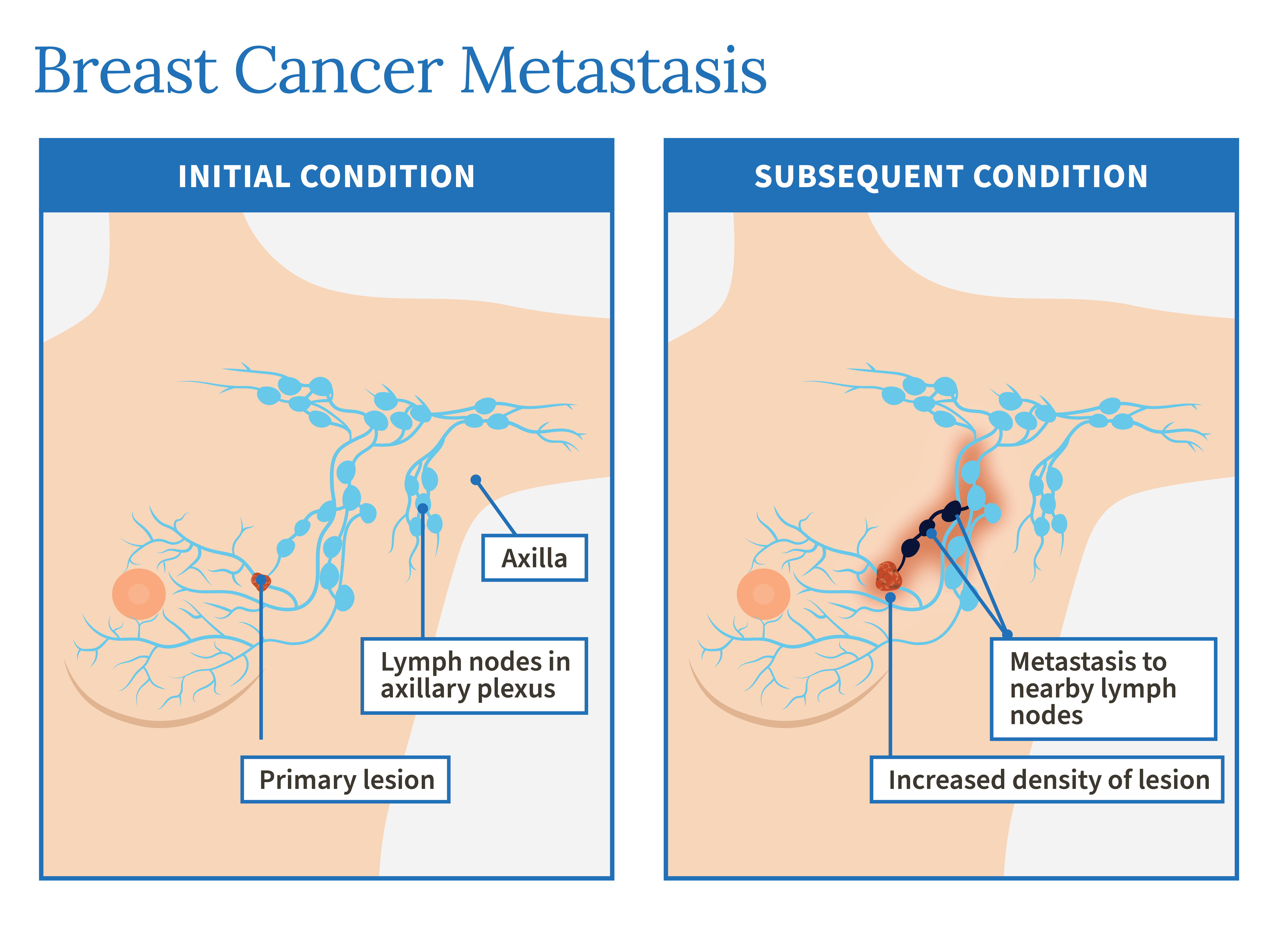
Metastatic breast cancer, or Stage 4 breast cancer, is the most advanced stage of the disease. This is when cancer has spread beyond the breast and nearby lymph nodes to other parts of the body, such as the bones, liver, lungs or brain. Cancer cells spread through the lymph system (the network of organs and lymph nodes throughout the body) and the bloodstream. About 6% of breast cancers are metastatic when they are diagnosed.
Because Stage 4 breast cancer has spread to other parts of the body (distant sites), patients may experience symptoms where the cancer has spread, such as bone pain if the cancer has reached the bones.
Stage 4 breast cancer is considered incurable, but many types of treatment are used to slow down the cancer’s growth and treat symptoms that the cancer is causing. The goal is to control the cancer for as long as possible and maintain a good quality of life.
Where Does Breast Cancer Spread?
When breast cancer spreads to distant sites beyond the breast tissue and nearby lymph nodes, it may do so in two ways: through the lymph system or through the blood.
Breast cancer tends to spread to specific organs. It commonly spreads to the bones, lungs and liver. It may also spread to the brain or other organs, but that is less likely.
Metastatic Breast Cancer Symptoms
Most of the time, breast cancer has no symptoms and is detected in routine screening. When it begins to spread, however, symptoms might include swelling of the lymph nodes in the armpit, wounds or sores on the breast or chest, or the skin on or near the breast may appear dimpled, like the skin of an orange.
Once cancer has metastasized, symptoms may relate to the area where it has spread. When metastatic breast cancer reaches the bones, lungs, liver or brain, symptoms may include:
- Bone pain or fractures when cancer spreads to the bones
- Trouble breathing when cancer spreads to the lungs
- Jaundice and/or swelling in the abdomen when cancer spreads to the liver
- Dizziness, headaches or seizures when cancer spreads to the brain
General symptoms of metastatic cancer may also include:
- Shortness of breath or breathing problems
- Fatigue
- Weakness
- Pain
- Unintended weight loss
Diagnosing Stage 4 Breast Cancer
Getting a full understanding of where cancer cells are in the body is an important part of the diagnostic process. Doctors use many tests to learn more about the cancer and where it has spread.
Breast biopsy: A biopsy takes a sample of cells or tissue for a pathologist to examine under a microscope. A breast biopsy is how an initial breast cancer diagnosis is confirmed. A biopsy may be performed on a small or large area of the breast.
A biopsy may also be performed to test lymph nodes near the breast for signs of cancer. A sentinel lymph node biopsy obtains tissue from the lymph node where the cancer is most likely to have spread. A doctor will identify that lymph node by injecting a substance such as a blue dye into the tumor or nearby area and watching how it moves through to the lymph nodes. The lymph node is then removed and tested for cancer.
Blood chemistry studies: Blood tests may be used to determine where cancer has spread by testing levels of certain substances. Abnormal levels may signal the presence of cancer cells. For example, high levels of calcium and alkaline phosphatase may be a sign that cancer has spread to the bones.
Chest X-ray: A chest X-ray allows doctors to check if cancer has spread to the lungs.
Ultrasound: Ultrasound uses sound waves to create real-time images of the body. It is often used to examine the breast, underarm or liver for signs of cancer.
Computed tomography (CT) scan: A CT scan creates detailed cross-sectional images of the body using X-rays. It is frequently used to examine the chest or abdomen to determine if breast cancer has spread to organs such as the lungs or liver.
CT-guided needle biopsy: If doctors suspect there may be cancer in an area deep within the body, a CT scan may help them guide a needle to the site for a biopsy. A sample of the tissue is removed to be tested for the presence of cancer cells.
Magnetic resonance imaging (MRI) scan: MRI scans use radio waves and strong magnets to produce detailed images of soft tissues. They are used to check the breasts, brain, spinal cord or other areas for cancer spread.
Positron emission tomography (PET) scan: A radioactive sugar is injected into the blood. Cancer cells absorb it, allowing them to be seen on the PET scan.
PET/CT scan: A PET scan combined with a CT scan provides a detailed image that highlights areas of cancer activity alongside precise anatomical details.
Bone scan: A low-level radioactive substance is injected into the bloodstream, which collects in areas of abnormal bone activity. The scan may reveal areas in the bones where cancer would be hard to see in a standard X-ray.
Metastatic Breast Cancer Treatment
Treatment for metastatic breast cancer focuses on shrinking tumors, slowing cancer growth and improving symptoms. Because cancer has spread to other organs, Stage 4 breast cancer is incurable. However, treatment may help a patient live longer than one who receives no treatment. Treatment options for Stage 4 breast cancer hinge on the hormone-receptor status, HER2 status and any gene mutations associated with the cancer.
Hormone receptor-positive cancers: Hormone therapy is often the first line of treatment for patients with hormone receptor-positive metastatic breast cancer. Soltamox® (tamoxifen) or aromatase inhibitors are often used, and may be paired with a targeted CDK4/6 inhibitor drug such as Ibrance (palbociclib), Verzenio® (abemaciclib) or Kisqali® (ribociclib), which may help stop cancer cells from growing.
If those treatments do not work well, another hormone therapy may be given in combination with a targeted drug, a PI3K inhibitor or a type of drug called an AKT inhibitor.
Premenopausal women are likely to be treated with tamoxifen or drugs that stop ovarian hormone production combined with Kisqali® (ribociclib) and other drugs.
Hormone receptor-negative cancers: For people with hormone receptor-negative cancer, chemotherapy alone is often used. This is because hormone therapy drugs are not appropriate for hormone receptor-negative cancer.
HER2-positive cancers: People with HER2-positive cancers may be treated with chemotherapy and drugs that target the HER2 protein, like Herceptin® (trastuzumab) or other brands of trastuzumab and Perjeta® (pertuzumab). If the cancer is also hormone receptor-positive, hormone therapy may be given as well.
If those initial treatments do not work well, doctors may turn to medications that combine a monoclonal antibody with a chemotherapy drug (antibody-drug conjugates); other HER2 drugs that have not been tried; or other drugs called kinase inhibitors.
Triple-negative breast cancer (TNBC): Treatment for TNBC depends on any gene mutations that the cancer has as well as any proteins the cancer cells are known to make.
- People with cancer cells that make the PD-L1 protein may be treated with immunotherapy and chemotherapy.
- People with TNBC and gene changes (including microsatellite instability or mismatch repair genes) may be treated with breast cancer immunotherapy and the drug Keytruda® (pembrolizumab).
- People with TNBC and a BRCA gene mutation may be treated with drugs called PARP inhibitors.
- People with TNBC with no known gene changes or proteins may be treated with chemotherapy or Trodelvy® (sacituzumab govitecan), which is a type of drug called an antibody-drug conjugate.
Treating metastatic breast cancer symptoms: Surgery, radiation therapy or chemotherapy given in a specific area of the body may be given in order to treat symptoms and/or complications caused by cancer. They may be used to manage painful or open breast wounds, treat brain metastases, prevent or treat bone fractures, relieve pressure caused by a tumor, address blood vessel blockages, or alleviate pain and other symptoms throughout the body.
If cancer continues to advance during treatment, the care team may recommend changing the treatment plan.
- People being treated with hormone therapy for breast cancer may be given a new hormone therapy drug, have a targeted therapy drug added to their regimen or switch to only a targeted therapy drug as part of their breast cancer treatment plan.
- People on chemotherapy for breast cancer may switch to another chemotherapy drug, have an immunotherapy drug added to their regimen or switch to using an immunotherapy drug on its own.
- People being treated for HER2-positive breast cancer may be able to switch from their current treatment to another drug that targets the HER2 protein.
Clinical trials that test how well new treatments work, such as high-dose chemotherapy with stem cell transplant, may also be an option for patients with Stage 4 breast cancer.
Stage 4 Breast Cancer Survival Rate
The five-year survival rate is the percentage of people with a particular cancer who are alive five years or more after they were diagnosed. Survival rates are estimates and do not predict how an individual patient will fare.
In a 2018 study of more than 50,000 patients conducted by researchers in JAMA Oncology, the survival rate range observed for Stage 4 breast cancer was 33% to 38%.
The National Cancer Institute estimates the five-year relative survival rate for women diagnosed with distant breast cancer at 31.9%. This statistic is based on data from 2014 to 2020 and includes women diagnosed with Stage 4 breast cancer of all types. Different types of breast cancers may have various survival rates. For example, hormone receptor-positive breast cancers tend to have higher survival rates than hormone receptor-negative breast cancers.
Because they are based on past information, these estimates do not take into account recent advances in breast cancer treatment, which may improve an individual patient’s outcome.
American Cancer Society. Treatment of stage IV (metastatic) breast cancer, November 28, 2023.
https://www.cancer.org/cancer/types/breast-cancer/treatment/treatment-of-breast-cancer-by-stage/treatment-of-stage-iv-advanced-breast-cancer.htmlMedlinePlus. Breast cancer, February 14, 2024.
https://medlineplus.gov/breastcancer.htmlNational Cancer Institute, Surveillance, Epidemiology, and End Results (SEER) Program. Cancer stat facts: female breast cancer.
https://seer.cancer.gov/statfacts/html/breast.htmlNational Cancer Institute. Metastatic cancer: when cancer spreads, November 10, 2020.
https://www.cancer.gov/types/metastatic-cancerStatPearls [Internet]. Breast cancer, February 25, 2024.
https://www.ncbi.nlm.nih.gov/books/NBK482286/StatPearls [Internet]. Lymphadenopathy, August 8, 2023.
https://www.ncbi.nlm.nih.gov/books/NBK558918/National Cancer Institute, NCI Dictionary of Cancer Terms. Axillary lymph node.
https://www.cancer.gov/publications/dictionaries/cancer-terms/def/axillary-lymph-nodeNational Cancer Institute, NCI Dictionary of Cancer Terms. Peau d'orange.
https://www.cancer.gov/publications/dictionaries/cancer-terms/def/peau-dorangeAmerican Cancer Society. What are advanced and metastatic cancers? July 9, 2024.
https://www.cancer.org/cancer/managing-cancer/advanced-cancer/what-is.htmlAmerican Cancer Society. Breast biopsy, February 27, 2024.
https://www.cancer.org/cancer/types/breast-cancer/screening-tests-and-early-detection/breast-biopsy.htmlAmerican Cancer Society. Lymph node surgery for breast cancer, January 3, 2023.
https://www.cancer.org/cancer/types/breast-cancer/treatment/surgery-for-breast-cancer/lymph-node-surgery-for-breast-cancer.htmlAmerican Cancer Society. Other breast cancer gene, protein, and blood tests, November 28, 2023.
https://www.cancer.org/cancer/types/breast-cancer/understanding-a-breast-cancer-diagnosis/other-breast-cancer-gene-protein-blood-tests.htmlAmerican Cancer Society. Imaging tests to look for breast cancer spread, November 8, 2021.
https://www.cancer.org/cancer/types/breast-cancer/understanding-a-breast-cancer-diagnosis/tests-to-find-out-if-breast-cancer-has-spread.htmlNational Cancer Institute. Breast cancer treatment (PDQ®) — patient version, August 23, 2024.
https://www.cancer.gov/types/breast/patient/breast-treatment-pdqNational Cancer Institute, A to Z List of Cancer Drugs. Trastuzumab, December 8, 2023.
https://www.cancer.gov/about-cancer/treatment/drugs/trastuzumabAmerican Cancer Society. Triple-negative breast cancer, March 1, 2023.
https://www.cancer.org/cancer/types/breast-cancer/about/types-of-breast-cancer/triple-negative.htmlAmerican Cancer Society. Inflammatory breast cancer, March 1, 2023.
https://www.cancer.org/cancer/types/breast-cancer/about/types-of-breast-cancer/inflammatory-breast-cancer.htmlAmerican Cancer Society. What are advanced and metastatic cancers? July 9, 2024.
https://www.cancer.org/cancer/managing-cancer/advanced-cancer/what-is.htmlWeiss A, Chavez-MacGregor M, Lichtensztajn DY, Yi M, Tadros A, Hortobagyi GN, Giordano SH, Hunt KK, Mittendorf EA. Validation study of the American Joint Committee on Cancer eighth edition prognostic stage compared with the anatomic stage in breast cancer. JAMA Oncol, February 1, 2018.
PMID: 29222540.