As a nurse practitioner in our Department of Supportive Care focusing on palliative medicine adult gerontology and mental health, Kaifan Zhao, AGACNP, PMHNP, knows the value and power of supportive care and advocating for patients in ways they know and can understand.
Zhao first arrived in the United States as a 17-year-old high school exchange student. Unexpectedly, he ended up in a local hospital with a persistent sore throat. Navigating the American healthcare system was a challenge, he said, as he was unfamiliar with it and English was not his native language.
An Eye-Opening Experience
“I didn’t know what ‘primary’ or ‘urgent care’ medicine was and I had no resources to turn to,” Zhao said. The hospital visit led to multiple bills from the emergency room, the hospital itself and the attending physician, bills that were nearly impossible for his family to pay. Zhao said it was eye-opening. This early experience made him realize that many immigrants have no clue how to navigate health care in the United States. He committed to a career in nursing, driven by a desire to offer comprehensive and assessable patient care. He eventually became an adult geriatric acute care nurse practitioner in 2015, and subsequently earned a post-master certification as a psychiatric mental health nurse practitioner in 2024.
Certified Medical Interpreter
He joined City of Hope seven years ago as a clinical supportive care nurse practitioner. He currently works in a Supportive Care Medicine clinic, serving the needs of our immigrant patient population, especially those in supportive and palliative medicine. He is a Certified Medical Interpreter (CMI) in his native language of Mandarin.
“With such a challenging experience as a teenager, I felt called to make a difference for Mandarin- and Cantonese-speaking patients,” he said. He was uniquely positioned with the skills and knowledge to make a difference.
When Zhao joined City of Hope in 2017, our supportive care program consisted of five physicians and three nurse practitioners. Through the generosity of the Sheri and Les Biller Family Foundation, the program has grown to more than 20 clinicians.
An Extraordinary Healer
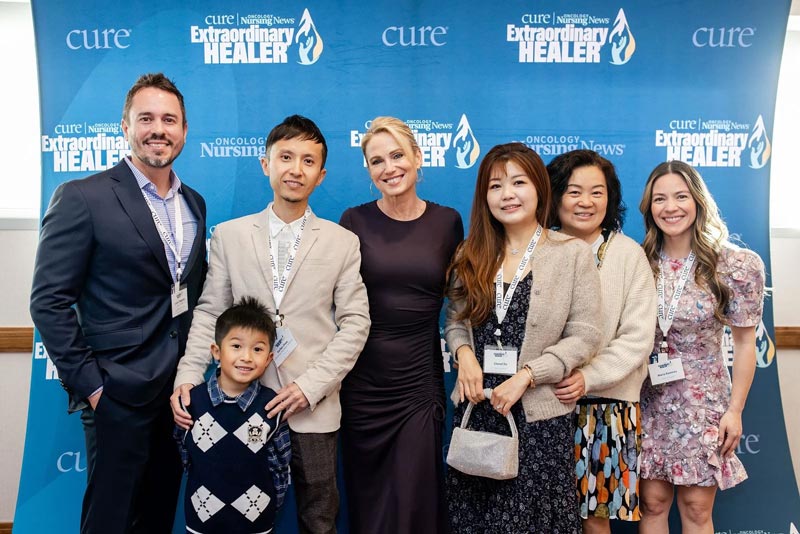
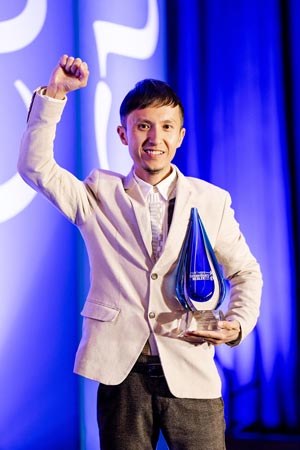
Zhao’s commitment to caring and advocating for patients led him to be named an Extraordinary Healer of 2025 by CURE Oncology Nursing News. It is an award given to those who are making a remarkable difference in the lives of those facing cancer. From a pool of 82 national nominees, he was selected as the sole winner of the prestigious honor.
This award is such an honor, and it signifies that people from minority groups need to actively advocate for the needs of vulnerable patients, address cultural and linguistic barriers and provide bilingual resources. It’s essential to be mindful of cultural sensitivities and individual circumstances, and empower our patients from this vulnerable group to participate fully in their treatment.
- Kaifan Zhao
Transcreation versus Translation
According to Zhao, many Mandarin and Cantonese speaking patients often exhibit a stoic demeanor, silently enduring discomfort throughout their cancer treatment, particularly if they are not fluent in English. Consequently, they may remain unaware of the bilingual resources we can offer.
“Many patients do not have a full understanding of their diagnoses and treatment plans,” he said. “There is no exclusive word-for-word translation for ‘supportive medicine,’ in Chinese. To many patients, the word “palliative” can imply that death is near.” Zhao said his approach is not to directly translate this term, but rather to “trans-create” it. This means he adapts the meaning into language and concepts that are more easily understood within the patient’s cultural context.
Doing his own research Zhao visited local Chinese grocery stores to talk to people and gauge their understanding of supportive care and palliative medicine. His suspicions were confirmed that they had little to no understanding of what supportive care medicine meant.
Creating a Custom Clinic
As a result of his independent findings, Zhao created a Nurse Practitioner-led supportive care clinic for the Mandarin and Cantonese speaking communities, with two primary objectives: Develop and provide community education and resources for Mandarin and Cantonese speakers about integrating supportive medicine into their care treatment plan, and establish a specialized clinic tailored to the needs of the patient population.
“There is an urgent need to support this vulnerable population,” he said. He recalled a patient who had failed to attend multiple appointments. Upon contracting a family member, Zhao learned the patient had died a week prior. The patient had lived alone, and the patient’s passing went unnoticed for an entire week.
“Many immigrants live alone,” he said. “A lot can happen between appointments, and we want to be sure our patients are safe and looked after.” Zhao initiated a partnership with community programs as a way to monitor patients that he considers high risk.
“I remember a Chinese patient from my clinic who had been admitted and was struggling with managing pain,” Zhao said. “When my inpatient duty began and I saw him, the moment our eyes met his entire demeanor shifted. “The patient said to me, in Mandarin, ‘The moment I saw you, my pain was reduced by 50%.’”
Zhao said his daily interactions with patients in the clinic is the most rewarding part of this job at City of Hope.
“I get the opportunity to connect with ‘my peeps’ from the Chinese community and make a positive impact on their lives during a very challenging time for them,” he said. “Knowing that I can provide support and comfort on their journey is super fulfilling. I know this community because it was, and is, me.”