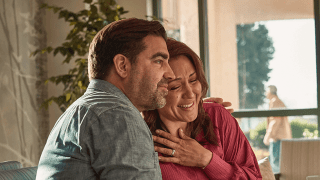
A record number of Americans are surviving cancer. According to the American Cancer Society, survivorship rates topped 70 percent in 2026 — an all-time high.
With so many cancer survivors living in the United States today — about 18.6 million people and counting — conversations about life after treatment are taking on new significance.
At City of Hope, survivorship is not an afterthought. It is a core part of patient care, led by Saro H. Armenian, D.O., M.P.H., City of Hope’s Barron Hilton Chair in Pediatrics and director of the Childhood, Adolescent and Young Adult Cancer Survivorship Program.
In a conversation with City of Hope’s Office of Philanthropy, Dr. Armenian shares why oncologists are shifting attention to patients’ long-term health.
Dr. Armenian, you’ve been at the forefront of this national conversation. First, what do we mean by survivorship care — and why is it so important?
It surprises some people to learn that cancer survivors need proactive care even after treatment ends. Unfortunately, cancer survivors face significantly higher risks of chronic conditions such as heart disease, secondary cancers and cognitive decline. Even survivors in their 20s and 30s can have serious cardiovascular events. Many also experience infertility, pain, anxiety and accelerated aging. For too long, these issues have been under-recognized and under-treated.
I believe this is one of the most pressing and preventable challenges in cancer care today — and it is only becoming more important as people are diagnosed younger and living longer.
Good survivorship care should offer a detailed follow-up plan that helps patients return to normal life while reducing long-term complications that may arise from their cancer or treatment. At City of Hope, we take a holistic approach to help patients preserve their long-term physical, emotional, cognitive and financial health.
What’s different about City of Hope’s approach?
At City of Hope, we believe survivorship is not an optional service or a post‑treatment add‑on. It is a core responsibility.
We have a saying, “When we take a patient’s hand, we don’t let go.” Our organization integrates survivorship, supportive care and prevention into every phase of care, ensuring patients continue to thrive after treatment ends. Our care is also highly personalized, with recommendations based on each survivor’s unique treatment history and risk profile.
Equally important, our methods are evidence-based, with a strong focus on active prevention, rather than waiting for problems to arise.
Research plays a major role in survivorship care. What has City of Hope learned?
Survivorship wasn’t always considered a science, but City of Hope was an early leader in this field. Our Childhood, Adolescent and Young Adult Cancer Survivorship Program is a great example of how we integrate care with research to improve outcomes.
For more than 20 years, program participants have completed detailed health assessments and contributed blood samples that help us identify genetic and biological drivers of long-term health risks. This makes our program one of the largest longitudinal survivorship studies in the country.
How does that research translate into patient impact?
On an individual level, we can detect and treat health issues before they become serious. For example, we may recommend cardiac imaging for patients exposed to certain chemotherapies or enhanced breast cancer screening for women who received chest radiation.
On a broader level, this research informs safer, more precise and less toxic cancer therapies for future patients. Over the years, our work has shown that many late effects are preventable or modifiable with early intervention. We also helped establish cardio-oncology as a formal medical discipline focused on protecting heart health before, during and after cancer treatment.
So, what does the future of survivorship care look like?
City of Hope’s vision is to make survivorship care a central and defining component of modern oncology. We want to create new national standards of care that focus on active prevention rather than passive observation. These standards of care will come from the expansion of survivorship care and research that show what works — and what doesn’t. Philanthropy will play a key role in helping us scale and accelerate this effort at City of Hope and beyond.
That’s amazing. To wrap up, what’s the most important thing you want people to remember?
The end of treatment is not the end of care. It’s the beginning of a new chapter. And with the support of donors, City of Hope is committed to being there for survivors at every phase of life.