Every year, about 36,000 Americans are diagnosed with multiple myeloma — a type of blood cancer that affects plasma cells, which are formed in the body’s bone marrow. While myeloma is not curable, it may often be managed with treatments such as a bone marrow transplant. However, most patients experience relapses, meaning the disease comes back.
But recently, a new type of treatment for relapsed myeloma was approved. Called CARVYKTI®, this cellular therapy may provide longer periods of remission for myeloma patients.
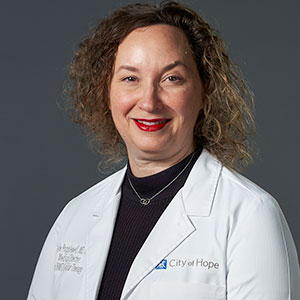
“CARVYKTI® was developed a few years ago and, right now, it's the only CAR T cell product that's available for first relapse multiple myeloma,” explains Leslie Popplewell, M.D., the medical director of hematology and blood and marrow transplant at City of Hope® Cancer Center Atlanta.
In this article, Dr. Popplewell explains more about CARVYKTI® for multiple myeloma, including:
- What is CARVYKTI®?
- How does CAR T cell therapy help treat multiple myeloma?
- Can everyone with myeloma get CAR T cell therapy?
- CARVYKTI® side effects
- Pros and cons of CAR T for myeloma
- The future of CAR T cell therapy for blood cancers
If you or a loved one has been diagnosed with multiple myeloma and would like to schedule an appointment or get a second opinion, call us 24/7 at 877-460-4673.
What Is CARVYKTI?
CARVYKTI® is a new CAR T cell treatment that was designed to treat multiple myeloma that has come back, or relapsed, after a first round of treatment. Its official name is ciltacabtagene autoleucel, sometimes shortened to cilta-cel.
“CARVYKTI® was developed specifically to target multiple myeloma,” says Dr. Popplewell, explaining that the treatment was tested in clinical trials over a long period of time. “Typically, clinical trials for these treatments target patients who have relapsed after multiple prior lines of therapy, and as we see those treatments being well tolerated and effective, then we begin to use them in clinical settings.
Right now, CARVYKTI® is only available at a handful of authorized cancer centers with expertise in delivering CAR T cell therapies, such as City of Hope Atlanta.
CARVYKTI® has already shown significant benefits for patients with relapsed myeloma, as detailed below.
Longer remission times: A single infusion of CARVYKTI® offers longer remission periods in between relapses, with about one-third of heavily pretreated patients remaining in remission for at least five years without needing ongoing therapy.
Improved prognosis: CARVYKTI® significantly improves patients’ outlook both in terms of the disease’s progression and overall survival, reducing the risk of either by up to 59% for certain patient groups.
Highly effective: This new therapy benefits patients in any risk category as well as those who have had any number of prior treatments, making it potentially highly effective for many patients with multiple myeloma.
How Does CAR T Cell Therapy Help Treat Multiple Myeloma?
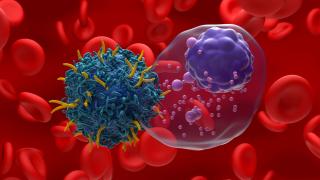
CARVYKTI® is a type of CAR T cellular therapy. All CAR T cell treatments take T lymphocyte cells — a type of immune cell — from a patient’s body, which are then engineered in a lab so that they are better able to fight cancer.
“T lymphocytes are a normal part of the of the immune system,” says Dr. Popplewell, explaining how the process works. “They're generally not very good at identifying and killing cancer cells, but CARVYKTI® takes a sample of a patient’s T cells then inserts genetic information into them that allows them to then express a receptor on their surface.”
This receptor “sticks to” a type of molecule called B cell maturation antigen (BCMA), which is produced by multiple myeloma cells. Bringing the immune cells directly to a patient’s cancer helps the body fight off the disease.
“Following a single infusion, these T cells can persist in the body, actively seeking out and eliminating cancerous cells,” adds Dr. Popplewell.
Can Everyone With Myeloma Get CAR T Cell Therapy?
“When patients are initially diagnosed with multiple myeloma, usually they'll go on a multi-drug regimen. For patients who are young enough and healthy enough, they usually have a good response to autologous stem cell transplant,” Dr. Popplewell says.
To become eligible to receive CARVYKTI® treatment, a patient must have already received some form of first-line treatment before experiencing a first relapse.
“Eligibility also hinges on being young and healthy enough to tolerate aggressive treatment,” adds Dr. Popplewell.
One final consideration is that CARVYKTI® is a new treatment that is only available at certain leading cancer centers with strong cellular therapy programs.
“City of Hope has about 50 years of cell transplant experience,” Dr. Popplewell says. “It’s a natural extension to be able to offer CAR T cell therapy for myeloma at City of Hope Atlanta.”
CARVYKTI Side Effects
As with any medical treatment, there are some potential side effects for patients receiving CARVYKTI®. In general, they fall into two categories. The first category includes symptoms related to inflammation within the body’s immune system (a condition called cytokine release syndrome). This may lead to:
- Headaches, dizziness and nausea
- Increased heart rate
- Trouble breathing
- Low blood pressure
The second category includes side effects related to the body’s neurological system, such as:
- Seizures, shaking or twitching
- Problems with speech or comprehension
- Issues with balance
- Becoming confused or agitated
Pros and Cons of CAR T for Myeloma
CARVYKTI® offers a wide range of benefits for patients with myeloma that has come back after initial treatment.
“The overall response rate to CARVYKTI® is very high, at 80% to 85% or better in many studies,” Dr. Popplewell says.
Many patients who become eligible for CARVYKTI® have already been on a regimen of treatments for myeloma for years. Because of how effective it is, CARVYKTI® may offer welcome relief — and a break from ongoing treatment.
“One of the nice things that I have heard patients say is they are so relieved that after they undergo CARVYKTI®, because afterwards there is no maintenance therapy,” she explains. “This means they have a period of time when they are not taking pills every day and not going in for frequent lab draws, because they're in remission.”
Patients interested in CARVYKTI® should talk to their cancer care team about whether it is an appropriate treatment option for them, taking into account the benefits and the possible side effects.
The Future of CAR T Cell Therapy for Blood Cancers
According to Dr. Popplewell, there is interest in using the CAR T cell platform developed for CARVYKTI® to help create new treatments for other kinds of blood cancers.
"One of the directions that we're looking at for the future is making CAR T cell therapies a first-line therapy for myeloma, which is something that's really done yet,” she says. There's also interest in creating platforms that allow for faster manufacturing of these CAR T cell products.
“CAR T cells and other novel therapies like this are probably underutilized for these cancer types. There are a lot of patients out there who might be eligible and so it’s important to get the word out and to not discount CAR T cell therapy as an option for blood cancers.”
If you or a loved one has been diagnosed with multiple myeloma and would like to schedule an appointment or get a second opinion, call us 24/7 at 877-460-4673.