Cervical cancer is among the most preventable cancers because it may be found early with screening. Widespread use of the Pap test — the first screening test adopted for cancer — started in the early 1960s. Since then, cervical cancer incidence and mortality rates have dropped by more than 50%.
In the 1980s, researchers discovered a link between human papillomavirus (HPV) infections and cervical cancer. Today, they know the virus causes nearly all cases of the disease, as well as the majority of several other kinds of cancer.
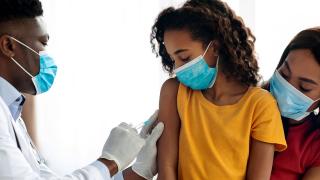
A study released in February confirmed that the HPV vaccine reduced by 80% the rate of precancerous lesions found in young women. The report states the data is “consistent with considerable impact of HPV vaccination for preventing cervical precancers among women in the age groups most likely to have been vaccinated and support existing recommendations to vaccinate children at the routinely recommended ages as a cancer prevention measure.”
Although HPV vaccines, which became available in 2006, have helped to further reduce incidence rates (rates of the disease in women ages 20 to 24 fell 11% between 2012 and 2019), thousands of women each year are still receiving a diagnosis.
In fact, in 2025, more than 13,000 women will learn they have cervical cancer, according to the American Cancer Society, and more than 4,000 women are likely to die from it.
The truth is, there’s still a lot of misunderstanding about HPV, its connection to cancer and steps you may take to protect yourself.
In this article, we’ll unravel the myths about HPV and cancer by exploring these facts:
- HPV Isn’t One Single Virus
- HPV Symptoms Aren’t Always Present
- The HPV-Cancer Link Goes Beyond Cervical Cancer
- HPV Screenings Aren’t Common
- Both Men and Women Get HPV
- HPV Isn’t Spread Exclusively by Sexual Contact
- The HPV Vaccine May Help Prevent Cancer
- Getting the HPV Vaccine Doesn’t Mean It’s OK to Skip Pap Tests
If you or a loved one has been diagnosed with lung cancer and are looking for a second opinion, call us 24/7 at 877-524-4673.
HPV Isn’t One Single Virus
Calling HPV a virus is something of a misnomer. In reality, HPV refers to a group of more than 200 viruses.
These viral infections only affect humans and are spread through person-to-person contact. That can mean skin-to-skin contact or through contact with the mucous membrane, which is the lining inside people’s mouths and throats, their rectums and, in women, the lining of the vagina and cervix.
Up to 80% of the population is exposed to HPV over their lifetime, says Joshua Cohen, M.D., F.A.C.O.G., F.A.C.S., medical director of the Gynecologic Cancer Program at City of Hope® Orange County.
“It’s very common,” he says in the Talking Hope podcast. “There are so many different strains. Right now, there are 42 million people in the United States with HPV.”
HPV Symptoms Aren’t Always Present
HPV is the most common sexually transmitted disease in the United States. Yet it doesn’t commonly cause symptoms. Instead, the body clears the virus within a few months’ time and most people don’t even know they had it.
Still, some types of HPV may cause warts, including genital warts. And some types may cause more serious problems, like cancer. For these, the virus may persist and, over time, cause cell damage, triggering cancer’s development.
“We really don’t know why some patients clear up HPV and some patients don’t,” Dr. Cohen says. “It’s likely partly related to the immune system and how the immune system interacts with the virus or its different strains.”
The HPV-Cancer Link Goes Beyond Cervical Cancer
While it’s true that HPV causes most cervical cancers — upwards of 95 percent, according to Dr. Cohen — it also causes the majority of other types of cancers annually, including:
| Cancer | Cases in Women | Cases in Men |
|---|---|---|
Throat | 2,300 | 12,500 |
Cervical | 11,100 | 0 |
Anal | 4,700 | 2,200 |
Vulval | 2,900 | 0 |
Penile | 0 | 900 |
Vaginal | 700 | 0 |
Total | 21,700 | 15,600 |
Source: Centers for Disease Control and Prevention
All told, HPV is linked to around 30,000 cancers a year.
HPV Screenings Aren’t Common
Health care providers don’t go looking for HPV, so to speak. That’s because most cases go away without causing any symptoms or problems.
If you learn you have it, it’s usually after a Pap smear. If you’ve tested positive for HPV, though, remember it’s common and discuss with your OB-GYN or primary care doctor whether further testing is needed, Dr. Cohen says.
“I view it as a chronic condition like high blood pressure or diabetes in that if you go to your doctor and follow up with them, they’re going to keep you safe,” he says.
Both Men and Women Get HPV
While cervical cancer, which exclusively affects women, is the most common HPV-associated cancer, the virus is linked to cancers that only affect men, as well, like penile cancer. It is also associated with cancers that affect both men and women, like oropharyngeal and rectal cancers.
It’s possible to spread HPV to your partner, which is why men and women both need to get vaccinated.
“It’s to help protect everybody in society,” Dr. Cohen says.
HPV Isn’t Spread Exclusively by Sexual Contact
Although sexual contact is one way HPV is transmitted, it’s not the only way. It may be spread through any skin-to-skin contact or through contact with the mucous membrane.
The HPV Vaccine May Help Prevent Cancer
The vaccine available in the United States protects against the nine most common strains of HPV. That means, “if someone gets vaccinated, they really are covered against 95% of the risk of cervical cancer,” Dr. Cohen says.
“When you have a preventable cancer with a safe vaccine, as a gynecologic oncologist it breaks my heart when I see patients who are not getting vaccinated, because we can prevent the vast majority of those,” he says.
Still, Dr. Cohen notes vaccine hesitancy is a significant problem in the medical field right now — not just for HPV but for a variety of vaccines.
Getting the HPV Vaccine Doesn’t Mean It’s OK to Skip Pap Tests
It’s a myth that if you’re vaccinated against HPV, you can skip your regular Pap smears, Dr. Cohen says.
“HPV vaccination is far and away the most important thing to protect women from cervical cancer,” he says, but “it’s not meant to prevent cancer necessarily. It’s meant to find pre-cancers.”
Dr. Cohen adds that it’s important to remember there’s still a small group of rare forms of cervical cancer that aren’t prevented with HPV vaccination.
If you or a loved one has been diagnosed with lung cancer and are looking for a second opinion, call us 24/7 at 877-524-4673.