Lymphedema is a common complication of cancer treatment, affecting about 10 million Americans, including many survivors of breast cancer and genitourinary cancers.
“The lymphatic system is a circulatory system that tends to carry your immune cells, like your white blood cells, and other cells like macrophages and dendritic cells,” explains Antoine Lyonel Carré, M.D., M.P.H., a plastic surgeon at City of Hope® Cancer Center Duarte.
Patients may develop lymphedema if their lymph nodes were removed during cancer treatment, usually because cancer has spread to these nodes. This can lead to blockages in the lymphatic system that cause buildups of lymph fluid, which become swellings in the arms, legs or other extremities.
“At City of Hope, we offer a comprehensive approach to lymphedema, tailored to what type of lymphedema a patient has, what stage it is at and any comorbidities,” adds Dr. Carré, an expert in performing advanced surgeries that offer longer-lasting relief from the symptoms of this chronic, incurable condition.
This article discusses some of the innovative ways surgeons like Dr. Carré are treating lymphedema, including topics like:
- What is lymphedema surgery?
- Surgery for lymphedema at City of Hope
- Lymphovenous bypass surgery for lymphedema
- Vascularized lymph node transplant surgery
- Vascularized lymph node vessel transplant
- Will lymphedema return after surgery?
If you or a loved one has been diagnosed with lymphedema and would like to talk to our lymphedema care team, call us 24/7 at (877) 834-8941.
What Is Lymphedema Surgery?
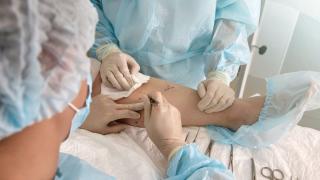
Lymphedema surgeries work by “rerouting” lymph fluid in the affected area, sending it back into the body’s other circulatory systems – usually into an artery or vein – thereby reducing fluid buildup.
“Lymphedema treatment is not one-size-fits-all,” Dr. Carré says. “Lymphedema itself is a dynamic disease, and it requires dynamic decision-making in the treatment process.”
Many patients see some benefit from non-surgical treatment options such as medications, dietary changes and the use of compression techniques to reduce swelling. But for others, surgical intervention can be more effective at reducing lymphedema symptoms.
“Patients also move from one group to the other: They may come initially to see a lymphatic surgeon and not be a good surgical candidate, but after multiple rounds of medical therapy, or because of some other medical comorbidity, that might change,” says Dr. Carré.
Surgery for Lymphedema at City of Hope
When seeking out lymphedema care, Dr. Carré emphasizes that patients should choose a clinic that is a certified LE&RN Center of Excellence – an accreditation given by the Lymphatic Education & Research Network. City of Hope was one of the first LE&RN-accredited centers in Southern California.
“This certification means that your institution has met all the criteria to be able to treat all levels of lymphedema with the latest research and accredited procedures,” he adds.
While many different factors go into determining whether a patient is a good candidate for lymphedema surgery, a surgical approach to care may not be appropriate for:
- Patients with early-stage lymphedema that can be managed non-surgically
- Patients with other health issues such as obesity, which may make surgery less effective
- Patients who are smokers or tobacco users
- Patients with stage 4 cancer, who are at higher risk of surgery complications
But Dr. Carré stresses that “even though there is no cure for lymphedema, surgery can reduce the impact of it and help manage it and slow its progression.”
Lymphovenous Bypass Surgery for Lymphedema
Lymphedema surgeons, certified lymphedema therapists and other specialists help create a personalized care plan for each patient. One innovative technique performed by Dr. Carré and his team is called a lymphovenous bypass.
Before undergoing a lymphovenous bypass, doctors examine the obstructed lymph nodes and their lymphatic channels – the small tubes that move lymph fluid around the body.
After locating the lymphatic channels that are blocked, they use a microscopic procedure to detach these channels from the blocked node.
“Then we take find those lymphatic channels – which are usually 0.2 mm to 0.7 mm – and we reattach them to an adjacent vein to bypass that lymphatic channel so that fluid travels into the venous system, relieving the obstruction,” Dr. Carré explains.
Unlike debulking surgeries like liposuction, this procedure addresses the cause of lymphedema rather than just its symptoms.
“With liposuction, you are only removing excess fluid. After the procedure, the fluid tends to accumulate again,” Dr. Carré says. “So surgeries like liposuction can play a role in lymphedema treatment, but they should be in concert with other lymphedema therapies like lymphovenous bypass.”
New research has also shown the benefits of preventative lymphovenous bypass surgery for patients who are about to undergo cancer surgery that is likely to cause lymphedema. Surgeons at City of Hope are beginning to integrate this approach into cancer treatment regimens for certain patient groups.
Vascularized Lymph Node Transplant Surgery
A more complex surgical procedure for lymphedema is a vascularized lymph node transplant. In effect, this surgery involves replacing a blocked lymph node with a healthy, functional lymph node from elsewhere in the patient’s body.
“When performed well, we can remove lymph nodes from somewhere in the body without creating lymphedema there, then move that lymph node along with its artery and vein to the affected limb,” Dr. Carré says. “Under the microscope, we reattach the artery and the vein to create a pump-like system that reabsorbs the lymphatic fluid in the affected limb and puts it back into the venous system.”
Vascularized Lymph Node Vessel Transplant
Another procedure that involves transplanting healthy tissue to resolve a blocked lymph node is a vascularized lymph node vessel transplant, or VLVT.
In this procedure, surgeons remove a small amount of the omentum, which is a fold of fatty tissue inside the abdomen. This tissue is considered lymphoid tissue, meaning it’s part of the lymphatic system.
“We remove this tissue robotically, so we don't make a big incision, then take that, along with its blood vessels, and connect the artery and the vein of that omentum to the affected limb,” explains Dr. Carré. “This lymphoid tissue performs the same function as the lymph node, absorbing the excess lymph fluid in that limb into the venous system.”
Will Lymphedema Return after Surgery?
Despite huge advances in treatment options, lymphedema is still incurable. But surgical procedures like lymphovenous bypass and VLVT can offer significant relief from symptoms that affect both patients’ health and their quality of life – often for much longer than non-surgical treatments.
For patients who do see symptoms return, the most important thing is to find a certified care center for lymphedema care like City of Hope’s Los Angeles-area location, where patients are monitored for at least three years after any surgical procedure.
“The only way patients get truly comprehensive and reliable lymphedema treatment is by going to a LE&RN Center,” says Dr. Carré. “These centers offer the support that patients need as they go from one phase of the disease to the next, including multiple modalities of care.”
If you or a loved one has been diagnosed with lymphedema and would like to talk to our lymphedema care team, call us 24/7 at (877) 834-8941.