More than 40,000 Americans will be diagnosed with liver cancer this year alone, while metastatic liver cancer – or cancer that started elsewhere but spread to the liver – is even more common.
Treatment for this serious disease may include surgery, chemotherapy or radiation therapy. But doctors are also increasingly offering minimally invasive options, such as Yttrium-90, also known as Y90 treatment. “Y90 treatment delivers radioactive beads through the liver artery to target tumors in the liver,” explains Jonathan Kessler, M.D. , chief of the Division of Interventional Radiology at City of Hope® Cancer Center Duarte.
This article will explain how Y90 treatment works and who it may be most beneficial for, including:
- What is Y90 treatment?
- Is it a cure?
- How is the Y90 procedure performed?
- How long does it take?
- How many Y90 treatments can you have?
- Y90 treatment side effects
If you or a loved one has been diagnosed with cancer and is looking for an initial appointment or a second opinion, call us 24/7 at 877-524-4673.
What Is Y90 Treatment?
The medical term for treatments like Y90 is “radioembolization.” This refers to any cancer treatment that uses radiation particles delivered directly to the tumor through the patient’s bloodstream. Y90 uses radioactive material from an element called yttrium.
“Y90 treatment is used for both primary liver cancer and liver metastases,” Dr. Kessler says, adding that the goal is to shrink or destroy those tumors. “Because it’s highly targeted, we can deliver a very high dose of radiation to tumors, effectively minimizing side effects.”
Is It a Cure?
For some patients, Y90 treatment may offer the chance of a cure for liver cancer. For others, it may be part of a cancer care plan that includes surgery, chemotherapy and/or other treatment options.
“Y90 can be palliative or curative, depending on several factors specific to the patient’s diagnosis, cancer stage and a variety of other factors,” Dr. Kessler says. “It can also be given in coordination with other therapies.”
Even in cases of advanced liver cancer that cannot be cured, Y90 treatment can help patients manage their symptoms in order to improve their quality of life.
How Is the Y90 Procedure Performed?
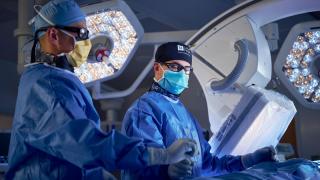
Y90 treatments are performed by highly trained interventional radiology experts using these steps:
- In most cases, patients receive a mild sedative, and local anesthesia is used to numb the area where a catheter (a long, narrow tube) is inserted into the body.
- The catheter is inserted into an artery in the arm or leg that connects to the liver.
- Using imaging technology, doctors guide the catheter to the point where the tumor is receiving its blood supply.
- Small spheres that contain radioactive yttrium are injected through the catheter so they can be placed at the exact point where they can travel through the blood supply to the tumor.
“These radioactive beads flow through the bloodstream to the area where the tumor is and deliver radiation locally,” Dr. Kessler explains. They then emit radiation for around two weeks, after which they become inactive.
How Long Does It Take?
A benefit of minimally invasive therapies like Y90 treatment is that they often take less time to perform than open surgeries and are easier to recover from.
“The procedure takes, on average, 60 minutes or so,” says Dr. Kessler, who performs Y90 treatments in the Los Angeles area. “It’s done entirely as an outpatient procedure, so patients usually go right home afterward.”
How Many Y90 Treatments Can You Have?
Some patients may need only one Y90 treatment, while others may undergo multiple Y90 sessions. The patient’s cancer care team helps determine whether repeating Y90 treatment may be beneficial, based on his or her unique diagnosis and whether the first Y90 procedure showed positive results.
Y90 Treatment Side Effects
Although Y90 treatment is a minimally invasive procedure, it can cause some mild side effects, Dr. Kessler notes.
“Fatigue is the most common,” he explains. “I tell patients, it's noticeable, but not debilitating. Other side effects include mild discomfort in the abdomen or loss of appetite, but those typically resolve in seven to 14 days.”
If you or a loved one has been diagnosed with cancer and is looking for a second opinion, call us 24/7 at 877-524-4673.