Brain Tumor Facts
Nov. 14, 2025
This page was reviewed under our medical and editorial policy by Keng Lam, M.D., assistant clinical professor, Department of Medical Oncology & Therapeutics Research, City of Hope® Cancer Center Duarte.
Brain tumors are less common than many other types of tumor. About 95,000 new brain tumor diagnoses are made in the United States every year.
More than 100 different types of primary brain tumor may occur, some of which are cancerous and most of which are benign (non-cancerous). The information below describes facts about primary brain tumors, which are those that develop in the brain, as opposed to metastatic tumors that spread to the brain from other locations.
What Are Brain Tumors?
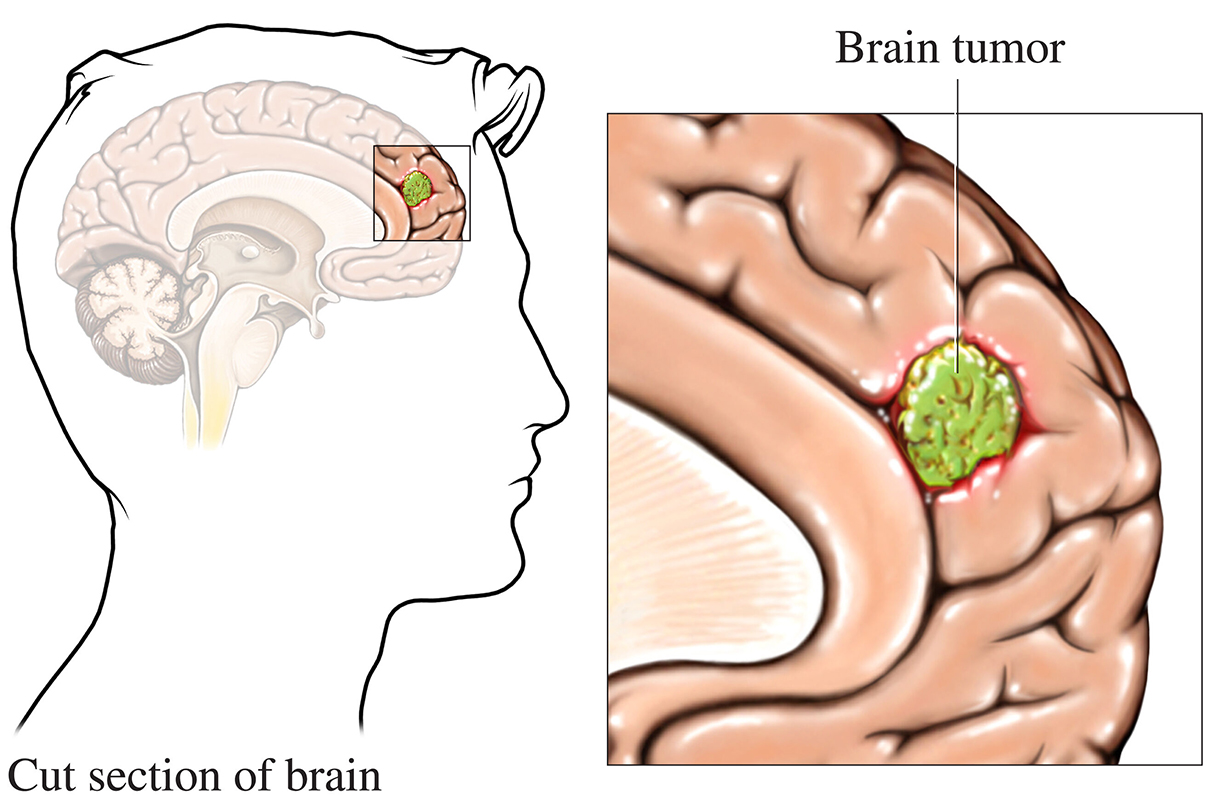
A brain tumor occurs when cells in the brain grow out of control and form a mass. About 72% of all brain tumors are benign, or non-cancerous. These types of tumors are more likely to respond well to treatment and less likely to come back. The remaining 28% are malignant, or cancerous.
What Is Brain Cancer?
Brain cancer is the result of cells growing and multiplying abnormally in or around the brain, forming a tumor that is cancerous. The term brain cancer refers only to brain tumors that are cancerous. While around 95,000 Americans receive a brain tumor diagnosis every year, only 25,000 of these diagnoses are malignant brain cancer.
What Causes Brain Tumors?
Doctors and scientists don’t yet fully understand the cause of brain tumors. However, there are some risk factors that make it more likely that a person may develop a brain tumor.
Risk Factors
Some risk factors for brain tumors include:
- Having had radiation therapy to treat a prior brain tumor
- Having certain genetically inherited conditions
- Being infected with Epstein-Barr virus, which has been shown to be linked to certain kinds of lymphoma that develop in the brain, although this is rare
Are Brain Tumors Hereditary?
Most types of brain tumor are not hereditary. However, some genetic factors increase the chances someone may develop a brain tumor, such as:
- Having a close family member, such as a parent or sibling, who was diagnosed with a brain tumor
- Having previously had a brain tumor
- Some rare genetically inherited conditions, including neurofibromatosis, Li-Fraumeni syndrome, Von Hippel-Lindau syndrome and Turner syndrome
Can a Benign Brain Tumor Turn Cancerous?
Yes, in some cases, it is possible that a benign brain tumor may become a malignant, or cancerous, brain tumor. It doesn’t happen often, but it’s one reason why all types of brain tumors should be addressed and treated swiftly.
- American Cancer Society. Key statistics for brain and spinal cord tumors. January 16, 2025.
https://www.cancer.org/cancer/types/brain-spinal-cord-tumors-adults/about/key-statistics.htm - Cancer Research UK. Grades of brain tumours. June 9, 2023.
https://www.cancerresearchuk.org/about-cancer/brain-tumours/grades - Cancer Research UK. Risks and causes of brain tumours. January 19, 2023.
https://www.cancerresearchuk.org/about-cancer/brain-tumours/risks-causes - MedlinePlus. Brain tumor - primary - adults. December 31, 2023. https://medlineplus.gov/ency/article/007222.htm
- National Brain Tumor Society. Brain tumor facts. 2025.
https://braintumor.org/brain-tumors/about-brain-tumors/brain-tumor-facts/ - National Health Service. Brain tumours. June 12, 2023.
https://www.nhs.uk/conditions/brain-tumours/