Erectile Dysfunction Treatments
June 26, 2024
This page was reviewed under our medical and editorial policy by Humberto Villarreal, M.D., urologic surgeon and assistant clinical professor, Division of Urology and Urologic Oncology, Department of Surgery, City of Hope® Cancer Center Duarte.
Erectile dysfunction (ED) affects as many as 30 million men in the United States. ED treatment recommendations address the underlying cause of the condition in each patient, such as certain cancer treatments or health issues that may make it difficult to maintain an erection.
A patient’s care team also considers his individual health and the severity of his ED when putting together an ED treatment plan. The risks and benefits of treatment options will be reviewed with each patient.
Nearly everyone who undergoes treatment for ED has successful outcomes using one or a combination of ED therapies, from lifestyle changes to medications and surgery.
Below is a detailed breakdown of the various treatment options, including why and when they may be used.
Lifestyle Changes
For some men, lifestyle changes may be enough to treat ED, because healthy habits play a key role in getting and maintaining erections.
Below are seven lifestyle changes used to help treat ED.
Eat a healthy diet and exercise. Exercising and maintaining behaviors that positively impact wellness may help combat ED. This includes eating a healthy diet containing foods such as fruits, vegetables, nuts, fiber, green tea and flaxseed. Dietary supplements such as L-arginine, OPCs (found in grape seeds and pine bark) and red ginseng may also be beneficial for improving ED. In particular, the Mediterranean diet has been demonstrated to be the most balanced in promoting wellness and sexual health. Regular exercise also helps by reducing stress, assisting with weight management and increasing blood flow.
Control underlying health conditions. High blood pressure, high cholesterol and diabetes are the three most common conditions that affect erectile function. Controlling these illnesses is vital to maintaining penile health. Reducing stress, avoiding red meat and processed foods, eating a heart-healthy diet and limiting excess sugar, caffeine and dairy products may help men manage these conditions.
Stop smoking. Both tobacco smoking and smokeless tobacco products may cause blood vessels that supply blood to the penis to narrow or stiffen, making it more difficult to attain and maintain erections.
Maintain a healthy body weight. Increased fat in the belly region increases activity of an enzyme called aromatase that converts the male sex hormone testosterone to estrogen. Since testosterone helps control male sex drive, reduced levels may lead to ED.
Avoid certain environmental toxins. A group of compounds called xenobiotics may contribute to ED by lowering testosterone levels. These include BPA (bisphenol A), phthalates and organophosphates, which may be found in items such as plastics, lubricants, coatings, pesticides and herbicides.
Address mental health issues. Thoughts and emotions impact the body and may alter men’s sexual functioning. Treatments such as cognitive behavioral therapy, guided imagery and clinical hypnosis may be used to help address emotional issues that are driving ED. Mental health professionals assist men by addressing performance anxiety and helping couples incorporate new strategies into their sexual relationships.
Review medications. Sometimes, drugs that are prescribed for cancer, depression, Parkinson’s disease, high blood pressure, heartburn or other conditions may contribute to ED. Men experiencing ED should review their medications with their doctor, who may suggest trying out different ones that may be less likely to trigger ED. Because stopping a drug may lead to life-threatening health consequences, men should always work with their doctor when changing medications.
Erectile Dysfunction Medications
When lifestyle changes are not enough to correct ED, a doctor may prescribe the erectile dysfunction medications like those listed below.
Oral medications: Oral medications used to treat ED include the pills Viagra® (sildenafil), Cialis® (tadalafil), Levitra® or Staxyn® (vardenafil) and Stendra® (avanafil). These medications should never be taken with nitrate drugs for chest pain, and they should be taken under close supervision by a medical professional in any patient taking alpha blockers for high blood pressure or an enlarged prostate.
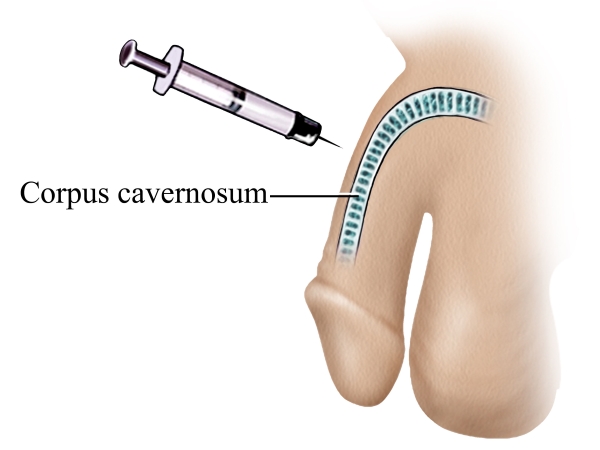
Penile injection therapy: Some medications may safely be injected directly into the penis. These medications include edex® (alprostadil), Pavacot® (papaverine) and OraVerse® or Regitine® (phentolamine). A compounded mixture of the previously mentioned medications may also be prescribed in order to maximize results while reducing side effects. The first dose of the injection therapy is usually administered under the supervision of a health care provider. While men may be apprehensive about giving themselves a penile injection, it is considered one of the most reliable ED treatments and may be an appropriate option when oral medication does not work.
Urethral pellet: Also known as MUSE®, this tiny pellet is placed into the urethra to dissolve and be absorbed into the erectile tissue. It is a form of the drug alprostadil. Though it may be easier to administer than an injection, MUSE is not always as successful.
Side effects of ED medications may include priapism (a prolonged erection) and vision or hearing loss. Men who experience loss of sight or hearing or who have an erection lasting more than four hours should contact their doctor right away.
ED medications may not work for everyone and may be less successful after certain procedures, such as prostate surgery. This is because some medications stimulate the nerves, which may be damaged after an operation.
Erectile Dysfunction Surgery
When both lifestyle changes and Viagra, Cialis and other medications fail, penile implant surgery may be an appropriate option. Penile implants (penile prosthesis) are safe and provide spontaneous and reliable results along with a sustained quality of life for men who choose this ED treatment option.
There are two types of implants: those that inflate and deflate, and those that are always firm (semirigid). The implant is placed through a small incision within the tunica albuginea (fibrous tissues that stretch during erection), which allows the penis to become rigid for intercourse.
The operation to implant the prosthesis may take place in an outpatient clinic or hospital. Most men stay overnight in the hospital to ensure proper follow-up care. Pain medication may be prescribed, and patients are typically told to avoid heavy lifting for seven to 14 days after the surgery.
The potential risks of penile prosthesis include infection, bleeding and pain. In addition, since the device is mechanical, it may break down over time. However, with newer models and advanced surgical techniques, the rate of mechanical failure and infection has been reduced.
A penile implant device may be used four to six weeks after the operation. Men must use it to get an erection after surgery, and, once an implant is placed, no other form of treatment will work.
In addition to penile prosthesis implantation, artery reconstruction surgery is another procedure sometimes used to treat ED. Artery damage is a potential underlying cause of ED and may occur for a number of reasons, including as a side effect of radiation therapy. The doctor may recommend artery reconstruction surgery for younger men with ED who do not have vascular disease or sinusoidal obstruction syndrome (veno-occlusive disease), a condition of the liver. During the procedure, arteries are repaired and rebuilt to remove blockages that impede blood flow to the penis.
Other Treatments for ED
Additional treatments that may be used to treat ED include those listed below.
Penis pump: Also called a vacuum erection device (VED) or external vacuum device, this is a sealed chamber (such as a plastic tube) placed over the penis. It contains a pump to pull air out of the chamber, creating a vacuum that allows blood to flow into the penis. After the penis is erect, a restrictive band is placed at its base to trap the blood. This band is left in place for up to 30 minutes. The device is safe and cost-effective and works well in most cases, though some men report dissatisfaction. Practice and patience are required for consistent results, and VEDs may cause (mostly painless) bruising on the penis that takes a few days to heal. In addition, the penis tends to be cool to the touch during performance, as there is no active blood flow while the restrictive band is in place. VEDs are usually prescribed by a doctor, although some are available over the counter.
Testosterone therapy (testosterone supplementation): Since low testosterone levels may reduce men’s sexual desire and lead to erection issues, this hormone is sometimes given to patients with ED who have hormonal imbalances. But it is not typically considered an appropriate treatment for ED, and it is not usually prescribed for patients with certain types of cancer, such as untreated or recurrent prostate cancer. Other potential side effects of testosterone supplementation include issues with urinating and high red blood cell counts.
Other external penile prostheses: Constriction rings are placed at the base of the penis to help stop blood from leaving the penis during sex, similar to the band used with a VED. They are beneficial for men who achieve erections but do not tend to maintain them. During intercourse, men may also use a penile splint, which is a device that supports and holds the penis in place and contains a quick-release mechanism for fast removal. Side effects of these devices may include bruising, rupture of blood vessels and aggravation of preexisting conditions, such as priapism (prolonged erection) and Peyronie’s disease (penile curvature).
National Institute of Diabetes and Digestive and Kidney Diseases. Definition & facts for erectile dysfunction, July 2017.
https://www.niddk.nih.gov/health-information/urologic-diseases/erectile-dysfunction/definition-factsAmerican Cancer Society. How cancer can affect erections, February 5, 2020.
https://www.cancer.org/cancer/managing-cancer/side-effects/fertility-and-sexual-side-effects/sexuality-for-men-with-cancer/erections-and-treatment.htmlStatPearls [Internet]. Erectile dysfunction, January 9, 2024.
https://www.ncbi.nlm.nih.gov/books/NBK562253/U.S. Department of Veterans Affairs, Whole Health Library. Erectile dysfunction, May 1, 2024.
https://www.va.gov/WHOLEHEALTHLIBRARY/tools/erectile-dysfunction.aspU.S. Department of Health and Human Services, My Health Finder. Heart-healthy foods: shopping list, September 19, 2023.
https://health.gov/myhealthfinder/health-conditions/heart-health/heart-healthy-foods-shopping-listMedlinePlus. Erection problems - aftercare, July 1, 2023.
https://medlineplus.gov/ency/patientinstructions/000396.htmMedlinePlus. Testosterone levels test: What is a testosterone levels test? September 12, 2022.
https://medlineplus.gov/lab-tests/testosterone-levels-test/American Urological Society. Erectile dysfunction: AUA guideline (2018).
https://www.auanet.org/guidelines-and-quality/guidelines/erectile-dysfunction-(ed)-guidelineMedlinePlus. Drugs that may cause erection problems, January 1, 2023.
https://medlineplus.gov/ency/article/004024.htmNational Institute of Diabetes and Digestive and Kidney Diseases. Treatment for erectile dysfunction, July 2017.
https://www.niddk.nih.gov/health-information/urologic-diseases/erectile-dysfunction/treatmentAmerican Cancer Society. Managing male sexual problems related to cancer, February 5, 2020.
https://www.cancer.org/cancer/managing-cancer/side-effects/fertility-and-sexual-side-effects/sexuality-for-men-with-cancer/sex-problems.htmlWang VM, Levine LA. Safety and efficacy of inflatable penile prostheses for the treatment of erectile dysfunction: evidence to date. Medical Devices: Evidence and Research Journal. 15, 27-36, February 10, 2022.
https://www.ncbi.nlm.nih.gov/pmc/articles/PMC8844936/StatPearls [Internet]. Penile prosthesis implantation, September 26, 2022.
https://www.ncbi.nlm.nih.gov/books/NBK563292/NIDDK LiverTox: Clinical and Research Information on Drug-Induced Liver Injury [Internet]. Sinusoidal obstruction syndrome (veno-occlusive disease), May 4, 2019.
https://www.ncbi.nlm.nih.gov/books/NBK548032/U.S. Food and Drug Administration. External penile rigidity devices - class II special controls guidance document for industry and FDA staff, December 28, 2004.
https://www.fda.gov/medical-devices/external-penile-rigidity-devices-class-ii-special-controls-guidance-document-industry-and-fda-staffU.S. Food and Drug Administration. Import alert: detention without physical examination of external penile rigidity devices, May 19, 2023.
https://www.accessdata.fda.gov/cms_ia/importalert_226.htmlNational Institute of Diabetes and Digestive and Kidney Diseases. Penile curvature (Peyronie’s disease), August 2019.
https://www.niddk.nih.gov/health-information/urologic-diseases/penile-curvature-peyronies-diseaseVeterans Administration Center of Integrated Health. Erectile dysfunction (ED), July 2013.
https://www.mentalhealth.va.gov/coe/cih-visn2/Documents/Patient_Education_Handouts/Erectile_Dysfunction_Version_3.pdfMedlinePlus. Erection problems, October 13, 2023.
https://medlineplus.gov/ency/article/007617.htm