Kidney Cancer Facts
January 7, 2026
This page was reviewed under our medical and editorial policy by Walter Stadler, M.D., professor, Department of Medical Oncology & Therapeutics Research, City of Hope® Cancer Center Chicago
Kidney cancer is one of the 10 most frequently diagnosed cancers in the United States, comprising up to 5% of all cancer diagnoses.
What Is Kidney Cancer?
Kidney cancer is a disease involving the abnormal and uncontrolled growth of cells in the kidneys, a pair of organs that removes waste products from the bloodstream and excretes them as urine.
What Causes Kidney Cancer?
Kidney cancer develops when the DNA of cells located within the kidneys change (mutate) and then begin to grow out of control, crowding out healthy cells. Although researchers haven’t yet pinpointed what causes most cases of kidney cancer, some risk factors have been known to increase the likelihood of developing the disease
Kidney Cancer Risk Factors
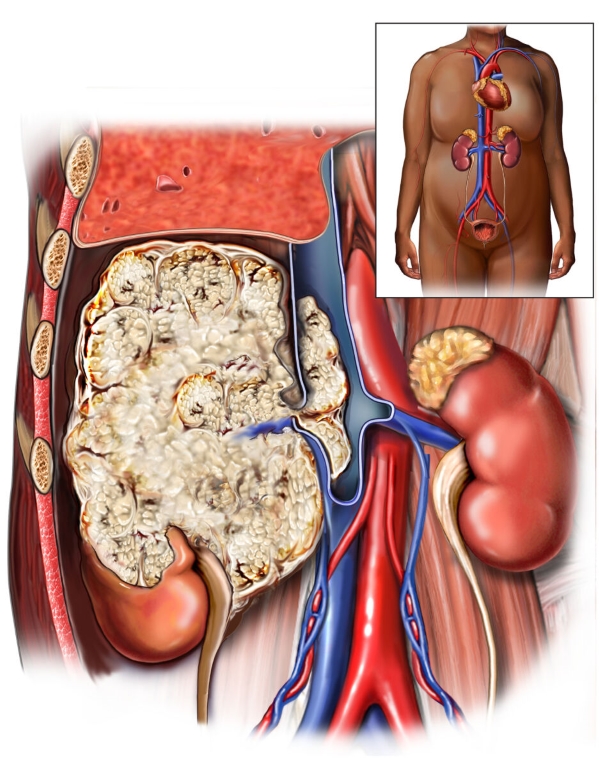
Researchers have identified several factors that may raise the risk of developing kidney cancer, including those listed below.
History: A personal or family history of kidney cancer, particularly in people with a parent, brother, sister or child with the disease, may lead to an increased risk for developing kidney cancer.
Kidney disease: Having an advanced kidney disease, particularly those requiring dialysis, may increase risk of developing renal cell carcinoma (RCC).
Cigarette use: Smoking raises the risk of developing RCC, the most common type of kidney cancer, and is believed to be behind up to 30% of kidney cancer diagnoses.
Obesity: Obesity is believed to increase the risk of developing RCC.
High blood pressure: Also referred to as hypertension, high blood pressure may increase the risk of kidney cancer.
Gender: Kidney cancer is two to three times more common in men than in women.
Race/ethnicity: African-Americans have a slightly higher risk of developing RCC.
Workplace chemicals: Exposure to cadmium, organic solvents and some herbicides may increase kidney cancer risk.
Medications: Use of acetaminophen or painkillers that contain phenacetin may be linked to a higher risk of renal cell carcinoma.
Is Kidney Cancer Hereditary?
While a family history of kidney cancer may raise a person’s risk of developing the disease, fewer than 5% of kidney cancer diagnoses are believed to be caused by an inherited gene.
Inherited genetic mutations that may increase kidney cancer risk include, such as von Hippel-Lindau syndrome, hereditary papillary renal cell carcinoma, tuberous sclerosis complex syndrome and Birt-Hogg-Dube syndrome.
- American Cancer Society (2024, January 17). Key Statistics About Kidney Cancer. https://www.cancer.org/cancer/types/kidney-cancer/about/key-statistics.html
- NHS (U.K.). (2023, May 31). Causes of Kidney Cancer. https://www.nhs.uk/conditions/kidney-cancer/causes/
- American Cancer Society (2024, May 1). What Is Kidney Cancer? https://www.cancer.org/cancer/types/kidney-cancer/about/what-is-kidney-cancer.html
- National Kidney Foundation (2024). Kidney Cancer. https://www.kidney.org/atoz/content/kidney-cancer
- American Cancer Society (2024, May 1). What Causes Kidney Cancer? https://www.cancer.org/cancer/types/kidney-cancer/causes-risks-prevention/what-causes.html
- American Cancer Society (2024, May 1). Risk Factors for Kidney Cancer. https://www.cancer.org/cancer/types/kidney-cancer/causes-risks-prevention/risk-factors.html