The good news: There are more cancer survivors in the United States than ever before, thanks to decades of innovation and research. In fact, the last 10 years have proven to be one of the most exciting eras in cancer research, awareness and prevention. The National Institutes of Health estimates our medical knowledge now doubles every 73 days. In 1950, it took 50 years.
The bad news: Challenges and disparities in outcomes persist. According to the 2025 American Cancer Society (ACS) Cancer Statistics report, young women are far more likely to be diagnosed with cancer compared to men. And mortality rates for many preventable cancers are at least twice as high for Native American and Black people than for white people. So, we still have work to do.
How we're moving forward: Last month, on World Cancer Day, City of Hope announced 10 bold solutions to address the most urgent cancer challenges, underlined by the ACS report. I encourage you to read more about how City of Hope is making progress toward each of these solutions.
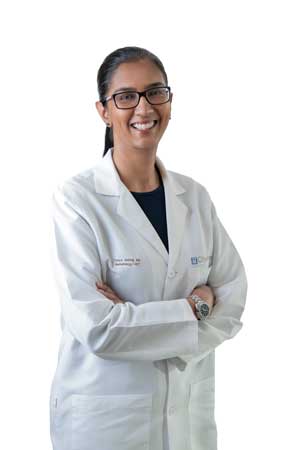
One of these solutions — No. 6 on the list — is exemplified by a story in this month’s Hope Connection. The concept of “de-escalation” is about making breakthroughs that minimize treatment risks and maximize outcomes. That’s exactly what Tanya Siddiqi, M.D., is doing, thanks to a generous gift from the Edmonds family.
Neil Edmonds and his mom, Sylvia, were both diagnosed with a blood cancer called chronic lymphocytic leukemia (CLL). Neil suffered significant health consequences from chemotherapy and Sylvia, sadly, passed away from heart failure related to treatment. They have dedicated their gift to supporting Dr. Siddiqui’s efforts to develop the next generation of CLL therapies. For that, we are truly grateful.
Throughout our history, philanthropy has powered City of Hope’s lifesaving innovations, from pioneering bone marrow transplants to advancing immunotherapies that are revolutionizing treatment for all types of cancer. Your support is — and continues — to advance these bold solutions, too.
Curing cancer for all requires all of us. Thank you for your steadfast support of our mission.
With gratitude,

Kristin J. Bertell
Chief Philanthropy Officer