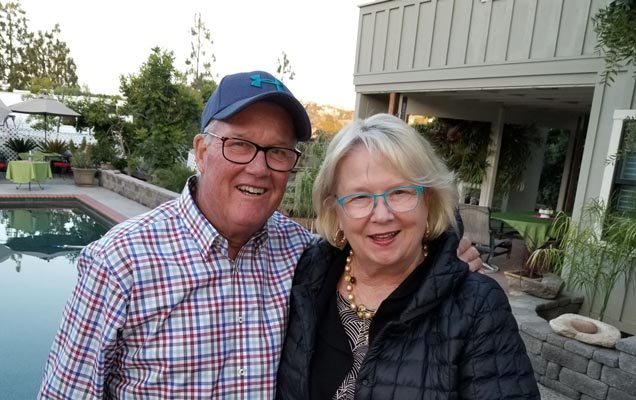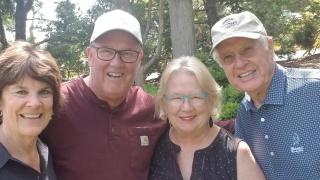
When Susan Nason’s brother Jay Hollingsworth learned he had high-risk multiple myeloma, the family sprang into action. They began searching for the most knowledgeable experts who could deliver the most advanced treatments. But they soon discovered that, while several treatments for multiple myeloma exist, it’s a complicated disease. And few institutions have the experience needed to offer leading-edge care.
That all changed when Jay’s friends introduced him to Steven Rosen, M.D., City of Hope® executive vice president and then-director of the Comprehensive Cancer Center and Beckman Research Institute.
Their lunch meeting launched an extensive — and bumpy — clinical journey. But Jay’s course of treatment opened the door for City of Hope to explore how researchers and doctors could apply a more targeted tumor analysis method called whole genome sequencing to multiple myeloma.
An Aggressive Battle
When Jay received his initial diagnosis, doctors estimated he would succumb to the disease within a few years. From the beginning, his treatment path was an uphill battle, Susan says.
“When he was first diagnosed, it was very disheartening. We knew he was already in the late stages,” she says. “But the treatment program at City of Hope gave our family more time. At first, they estimated 2.5 years — he lived for five.”
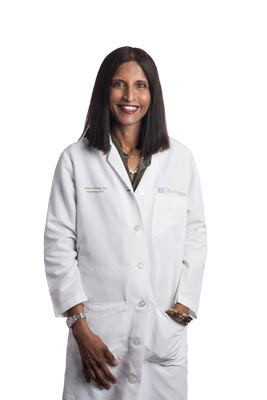
Susan credits the three clinical trials City of Hope hematologist Amrita Krishnan, M.D., medical director of the Judy and Bernard Briskin Center for Multiple Myeloma Research, enrolled Jay in for the extra years. Each therapy worked for a while, giving him energy to enjoy family trips and remodeling projects. Their successes also created a strong belief that ultimately multiple myeloma could be treated and cured, although the family knew this would be a difficult journey. During Jay's treatment, Susan was determined to fight the disease alongside her brother. She made a $7.5-million gift to fund City of Hope’s multiple myeloma projects.
Unfortunately, each treatment regimen success was only effective for a limited period and Jay's cancer returned. After exhausting the most common medication options, Dr. Rosen and Dr. Krishnan recommended a CAR T cell therapy. That’s when Jay’s treatment journey hit a roadblock.
Insight into a Tricky Disease
Currently, no cure for multiple myeloma exists. But there are 19 therapies to attack the disease. The problem is that doctors don’t know which one will work best for each patient.
“In most cases, doctors have a routine,” Susan says. “They start with one drug. Then, when that doesn’t work, they go to the next and then the next.”
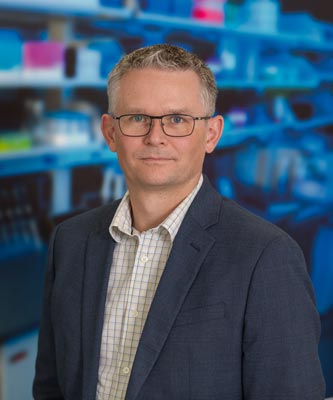
That’s why Jay’s treatment team turned to Jonathan Keats, Ph.D., scientific director of the Judy and Bernard Briskin Center for Multiple Myeloma Research at City of Hope’s Translational Genomics Research Institute (TGen) when his disease continued to progress. Dr. Keats had determined how to apply whole genome sequencing — already in use to analyze acute myeloid leukemia through the Robert & Lynda Carter Altman Family Foundation Research Fund — to identify the genetic abnormalities in multiple myeloma tumors.
“While we waited for his CAR T cell therapy to be manufactured, we enrolled Jay in our TGen General Oncology Study that allows us to sequence patient tumors from around the world. He was the first City of Hope patient we sequenced,” Dr. Keats says. “When I looked at his results over Thanksgiving 2022, I said some choice four-letter words. His tumor no longer had the gene that the planned CAR T cell therapy targets — the treatment that we had planned would not work for him.”
Instead, Jay’s genetic results revealed his tumor had three copies of a different gene that would likely respond to a different therapy. The treatment worked well during the holidays, but the respite was short-lived.
“Jay had a very aggressive disease that quickly became resistant to the drug, and his condition worsened in the spring,” Dr. Keats says. “We definitely learned from his experience,” he says. “It helped us understand that some cells have mutations that prevent our new immunotherapy drugs from binding and killing the multiple myeloma tumor cells. But they may respond to the other approved therapies." Whole genome sequencing tests will be able to help physicians predict these responses and select the most optimal treatment program. Dr. Keats and Dr. Krishnan are leading the efforts to develop these diagnostic tests that according to Dr. Keats, "give us the opportunity to live up to TGen’s and City of Hope’s mantra of providing personalized medicine.”
Susan says Jay was fascinated with the TGen project and always believed it would change the way multiple myeloma was diagnosed and treated.
Jay lost his battle with multiple myeloma in 2023. However, Susan has continued her commitment to fighting this deadly disease in her brother's memory. She has now funded a TGen project to develop a whole genome sequencing test for multiple myeloma, on a platform very similar to the acute myeloid leukemia sequencing test that TGen launched in 2024.
"If the new TGen test helps even one patient by extending their life and giving them more time, hopefully giving them many years of a happy and productive life, then Jay would be so pleased," Susan says. "Jay always believed the disease could be conquered and he hoped that his battle with multiple myeloma would somehow contribute."
The impact of whole genome sequencing
Current multiple myeloma therapy largely resembles a one-size-fits-all approach. Even with 19 possible therapeutic options, most patients receive the same therapy to reduce their cancer cells before undergoing a bone marrow transplant. Then, doctors can prescribe a variety of medications to help keep their cancer under control when it relapses.
But with each successive treatment regimen the physician doesn’t know if a patient will be sensitive or resistant to specific drugs, Dr. Keats says.
Conducting whole genome sequencing during a patient’s treatment journey can overcome this hurdle. The test process involves enriching the tumor cells from a bone marrow sample using magnetic antibodies drawn to proteins that only exist on the surface of multiple myeloma cells. DNA is isolated from the enriched tumor cells and the DNA is then sequenced to look at each of the 3 billion letters of the human genome more than one hundred times.
Thanks to recent advancements in computer automation, the data analysis to identify mutations in the tumor can be completed in three hours. Within 48 hours, doctors receive the DNA analysis results and disease-specific guidance. This helps them determine a patient’s prognosis and which therapies will best attack a patient’s multiple myeloma. As a result, they avoid wasting valuable time and money on ineffective, expensive treatment options.
“If we had sequenced Jay at the beginning, we would have appreciated how aggressive his tumor was from day one. We would have used that information to pick therapies that we thought were more effective for his disease,” he said. “This is a test City of Hope can use to help build clinical trials that direct patients to disease-specific therapy options.”
Thanks to the existing resources from the Robert & Lynda Carter Altman Family Foundation Research Fund and an additional $3 million gift from Susan, City of Hope and TGen will make the test widely available to doctors by summer 2025. They hope to use results from the first 100 patients who undergo the test to earn coverage from the Centers for Medicare & Medicaid Services, making the test accessible and affordable for more patients. Generous support from the Argyros Family Foundation is also helping with the effort to build a study of early patient results.
Ultimately, Dr. Krishnan says, by investing in whole genome sequencing, City of Hope will be the first center with the capability to unravel the genetics of multiple myeloma tumors in the clinic. This ability is revolutionizing how our clinical team thinks about and treats this disease. The potential result will be more life-changing, life-extending and personalized therapy options.
“This test is going to change the pace for multiple myeloma care. It’s going to lead to better outcomes for patients,” she says. “The longer you let a patient’s tumor develop and go crazy, the more problems you create. This test will really improve the way we care for patients.”
For Susan, supporting City of Hope’s multiple myeloma work is also a way to remember her brother.
“I think of contributing to their work as a legacy for him,” she says. “I’ve never seen such a totally committed team. They went above and beyond for my brother. I know he would want me to keep supporting their work.”