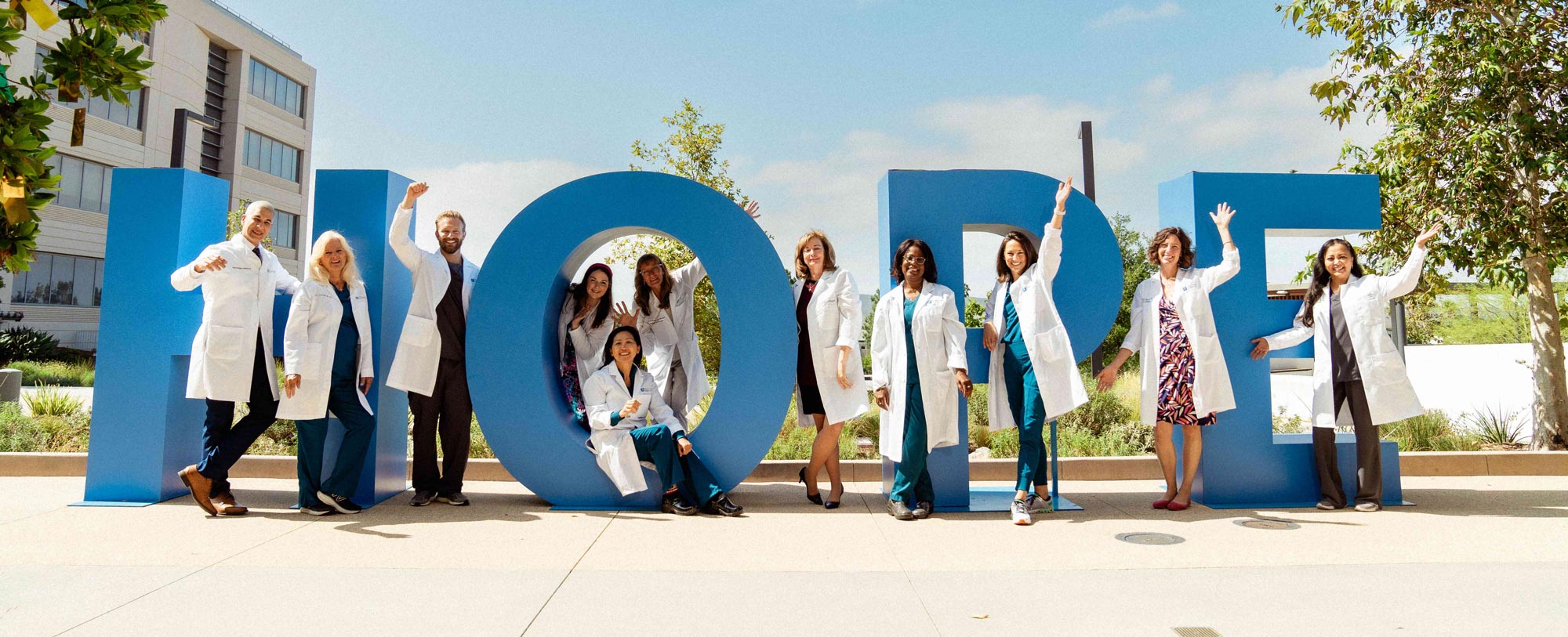
If you look up the definition of the word “hope,” you’ll get words and phrases like “to wish for” ... “to desire” ... to have “an optimistic state of mind.”
At City of Hope®, we think about hope a little differently. Hope is more than a passive state of mind. It is action, driven by a powerful catalyst — YOU.
Here, philanthropy singularly and exceptionally fuels our mission. Every year, more than 150,000 donors and volunteers give back to support City of Hope research and patient care. That support is the essential ingredient that turns ideas into action and hope into reality for millions of people facing cancer and diabetes.
With your support, we can speed up the delivery of lifesaving innovations by years. We can enlist the brightest minds in our research programs, hire clinicians with the deepest expertise in a multitude of cancers, provide the most compassionate patient care and bring the latest advances to more people in more places.
This inclination toward action — found in both our supporters and our employees — is a defining part of the City of Hope ethos. One hundred years ago, our founders didn’t just hope for an end to tuberculosis. They got busy, activating their communities and raising funds to provide care and dignity to those who were sick. That legacy lives on today in you and in our ambitious vision to cure cancer and diabetes.
This month’s newsletter is all about action. The stories here are real examples of how philanthropy moves our work forward. Recently, donor support has been the catalyst:
- making possible integrative oncology research to reduce painful side effects of breast cancer treatment,
- strengthening supportive care programs so that children facing cancer can still thrive,
- activating business leaders to rally their industries behind City of Hope,
- advancing a clinical trial for a cancer vaccine at the Toni Stephenson Lymphoma Center,
- and even inspiring a proposal at Walk for Hope (she said “yes!”)
There is no doubt that we give our patients and families hope. But hope is more than a feeling. It is a verb, and you make that possible.
Thank you,

Kristin J. Bertell
Chief Philanthropy Officer