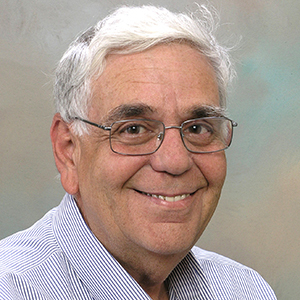
An internationally recognized neuroscientist, Paul was renowned for his pioneering work on cholinergic neurons, which advanced fundamental understanding of neuronal identity and continues to shape how the field approaches neurodegenerative disease today.
After earning his Ph.D. from SUNY Buffalo in 1973 and completing postdoctoral training in the Chemistry Department at Indiana University, Paul joined the Neuroscience Division at City of Hope Medical Center in 1977. Over more than four decades, he made profound and enduring contributions to the institution: advancing research in neurodegeneration and neuronal development, shaping foundational research programs, and mentoring generations of young scientists.
His work exemplified scientific rigor, intellectual curiosity, and an unwavering commitment to education, collaboration and service. As David Ann reflected, Paul’s long‑standing dedication to City of Hope and the Eugene and Ruth Roberts Summer Student Academy—as well as his meaningful contributions to both science and education—will be remembered by many. He touched the lives of colleagues, trainees and students across generations.
A Career Dedicated to Understanding the Brain
Paul’s research focused on illuminating the molecular mechanisms that define neuronal identity, with particular emphasis on the transcriptional programs specifying cholinergic neurons. Among his most influential scientific achievements was his work on choline acetyltransferase (ChAT), the enzyme responsible for acetylcholine synthesis. While ChAT’s function had been known for decades, Paul ushered cholinergic research into the molecular era through the development of cloning and expression tools, advances in understanding genetic and developmental regulation, and the generation of widely used immunocytochemical reagents.
John Rossi, a close friend since Paul's earliest days at City of Hope, remembered him as the consummate basic scientist—deeply engaged in the biochemistry, genetics, and genetic regulation of ChAT. He noted that Paul wisely chose to study this enzyme in Drosophila, where genetic analysis was especially powerful—an approach that reflected both Paul’s insight and his deep appreciation for rigorous experimental design.
Paul’s laboratory also pioneered the use of transgenic models and fluorescence‑based neuron purification to identify whole‑genome expression signatures of specific neuronal subtypes. These advances helped lay the groundwork for modern studies of selective neuronal vulnerability in diseases such as Alzheimer’s disease, Parkinson’s disease and ALS. His work on Presenilin gene mutations, key contributors to familial Alzheimer’s disease, further expanded the reach and enduring impact of his scientific contributions.
Builder of Programs and Champion of Students
Beyond his research accomplishments, Paul was perhaps best known for his extraordinary dedication to mentorship and education. For nearly four decades, he served as the longtime director of the Eugene and Ruth Roberts Summer Student Academy, inspiring hundreds of high school and undergraduate students to consider careers in biomedical science. Under his leadership, the program’s culture, curriculum, and spirit flourished, expanding access to research experiences for students from all backgrounds.
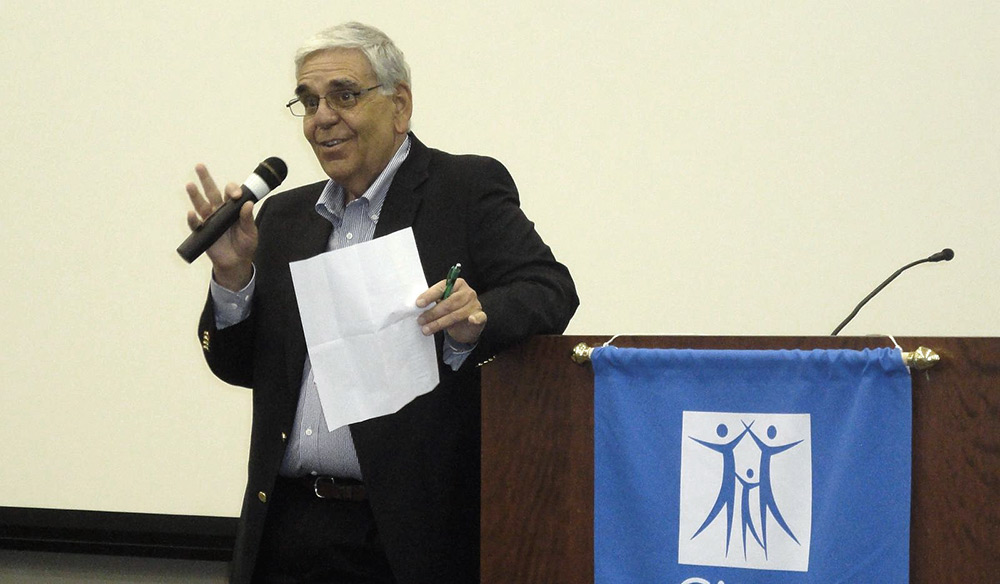
In recognition of his contributions, the academy established the Paul Salvaterra Scholar Award, presented annually to the student who submits the program’s top science essay. Paul also played an influential role in CIRM‑funded educational initiatives such as SPARK and the Creativity Awards, helping to broaden access to stem cell science education across California.
Leadership in Neuroscience and Stem Cell Research at City of Hope
Throughout his career, Paul held numerous leadership roles at City of Hope, including Program Director in the Department of Neurosciences and long‑standing faculty member of the Irell & Manella Graduate School of Biological Sciences. He was also the Founder and Director of the Institutional Light Microscopy and Imaging Core Facility from 1997 to 2011, establishing essential imaging capabilities that supported investigators across the institution and strengthened the scientific infrastructure of City of Hope.
Through his leadership and service, Paul helped shape the culture of scientific rigor, collaboration and intellectual curiosity that defines City of Hope’s research enterprise today.
A Legacy of Impact—Professionally and Personally
Colleagues consistently describe Paul as generous with his time, meticulous in his science, and deeply committed to nurturing the next generation of investigators. Steve Forman recalled Paul’s independent—and often brave—voice within the research community, noting his willingness to speak candidly and thoughtfully when difficult conversations were needed.
He was also a lively and engaging colleague with a sly sense of humor. He always had a good joke ready. John Rossi fondly recalled a moment when Paul surveyed a notoriously messy desk and explained his famous taxonomy of filing systems: geographic scattering, geologic stacking, and the chemical method—simply making another xerox copy of the article you can no longer find. It was quintessential Paul: insightful, warm, witty and gently instructive.
Paul Salvaterra’s influence endures through the science he advanced, the programs he built, and the countless students and colleagues whose lives he shaped. He will be remembered not only for his intellect and leadership, but for his candor, humor, generosity and unwavering commitment to the scientific community he so deeply cared about.
“The Lessons and Legacy of Dr. Paul Salvaterra”
A Personal Reflection from a Student He Mentored
Dr. Paul Salvaterra was an extraordinary scientist whose legacy extends far beyond his scientific achievements. Alongside decades of outstanding research at the City of Hope, he pursued a passion for supporting talent and fostering scientific curiosity among local underrepresented communities. His commitment to diversity and mentorship strengthened his research, opened doors for many, and has left a lasting impact on my own life and scientific journey.
Paul first recognized the work ethic and drive in my mother and aunts, championing opportunities for our family and emphasizing the value of education. Building on that foundation, he recognized my own passion for science and nurtured it with the same care, respect and guidance through the Eugene and Ruth Roberts Summer Student Academy. Beyond the program, he remained a steadfast source of encouragement as I navigated the challenges of my academic path as a first-generation American and college student, reminding me of the perseverance and grit required to pursue my aspirations. Even today, his words, “Passion first, then preparation,” etched in a gifted copy of Letters to a Young Scientist, continue to guide my research and stand as a lasting testament to the depth of his mentorship.
Paul’s legacy lives on in his science and in the many lives he influenced, including my own, inspiring future generations through his enduring example of excellence, generosity and unwavering support.
With gratitude for his guidance and inspiration,
Yeraldi Loera
Ph.D. student, Princeton University
There will be a memorial service in honor of Dr. Salvaterra on Tuesday, June 2, on City of Hope's Duarte campus. The event will be held from 4 p.m. - 6 p.m. in its Visitor Center.