ABCDEs of Skin Cancer
April 10, 2026
This page was reviewed under our medical and editorial policy by Gaurav Singh, M.D., M.P.H., F.A.C.M.S., Mohs Micrographic Surgeon and Dermatologist, City of Hope® Cancer Center Chicago.
An easy way for patients to remember what to look for when checking their skin for cancer is by knowing the “ABCDEs” of skin cancer — an acronym that highlights common warning signs of skin cancer. It stands for Asymmetry, Border, Color, Diameter and Evolving.
ABCDE Rule for Skin Cancer Detection
The ABCDE rule is a simple guide for patients and health care providers to help spot warning signs of skin cancer based on characteristics of a mole’s shape, border, color, size or behavior over time.
Patients who notice any of the ABCDE features covered below should notify a dermatologist or other health care provider.
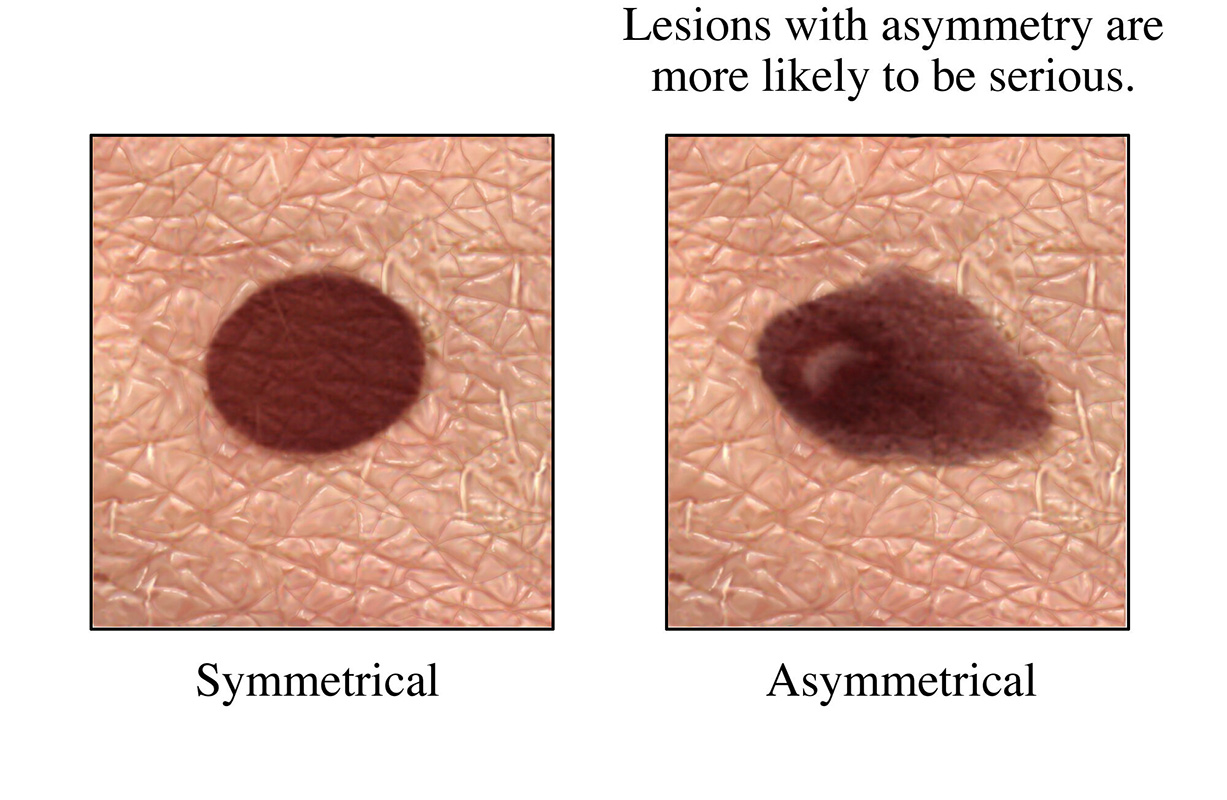
A: Asymmetry
A — Asymmetry: One half of a mole or spot doesn’t look like the other half, instead of being evenly shaped.
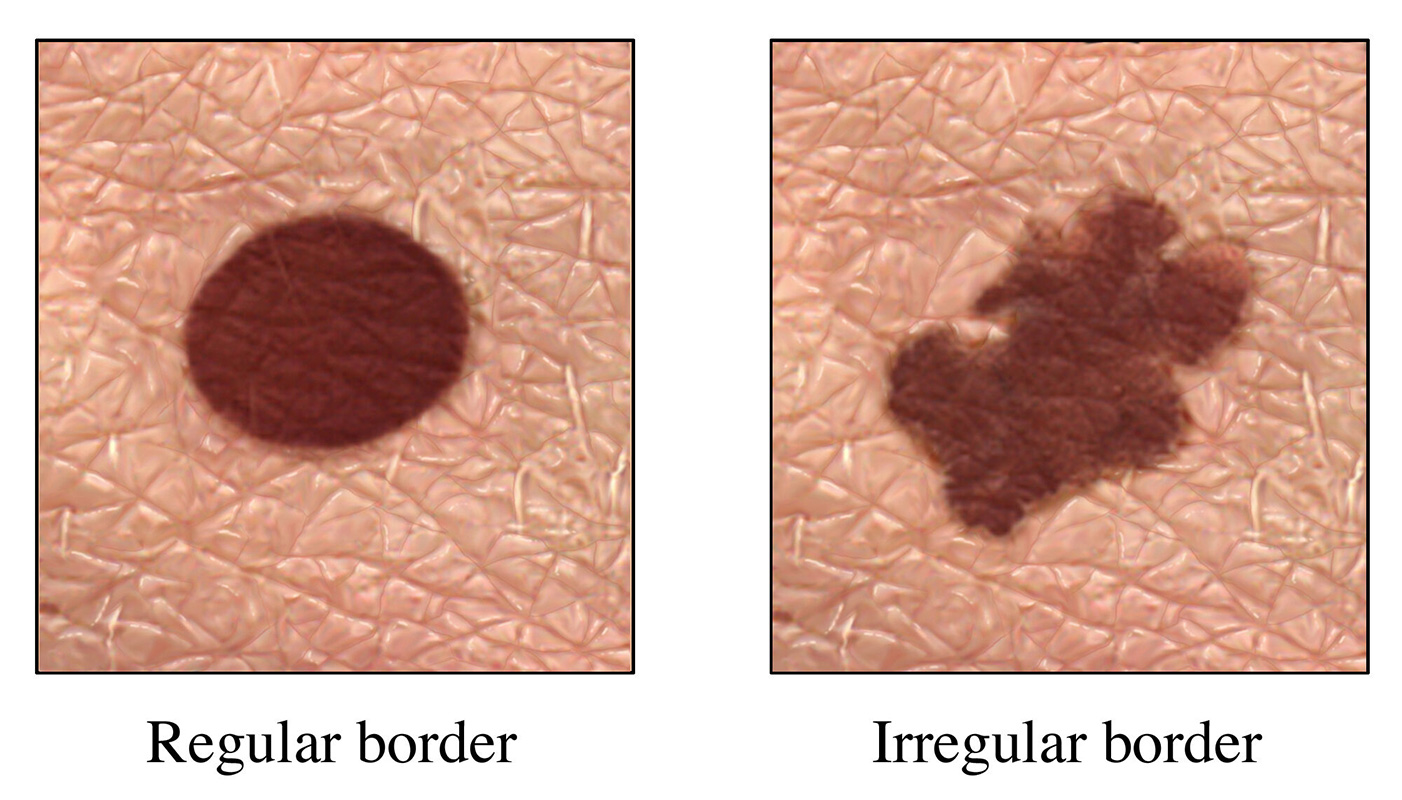
B: Border
B — Border: The edges are irregular, uneven, jagged or notched, rather than clearly defined.
C: Color
C — Color: The color isn’t the same all over — it may have multiple shades of brown, black, tan or even areas of other colors like white, gray, red or blue.
D: Diameter
D — Diameter: A spot is larger than about 6 millimeters (mm), or roughly the size of a pencil eraser, though melanomas can be smaller.
E: Evolving
E — Evolving: Any change over time in size, shape, color or height, or new symptoms like itching, bleeding or crusting should be checked by a doctor.
How to Detect an Atypical Mole
When a mole looks different from the other moles on the skin, it’s sometimes called an “ugly duckling.” Instead of matching the shape, size or color of the person’s typical moles, an ugly duckling stands out as atypical or unusual. Anyone who notices a spot that doesn’t appear like the rest — for example, it’s a different color or oddly shaped compared to nearby moles — should show it to his or her doctor.
- American Cancer Society. Signs and symptoms of melanoma skin cancer, February 25, 2025. https://www.cancer.org/cancer/types/melanoma-skin-cancer/detection-diagnosis-staging/signs-and-symptoms.html
- AIM at Melanoma Foundation. Know your ABCDEs, 2026.
https://www.aimatmelanoma.org/melanoma-101/understanding-melanoma/moles-and-other-lesions/know-your-abcdes/