Kenya Honda, M.D., Ph.D.
Microbiology and Immunology
Adjunct Professor and Visiting Scholar, Microbiome Program, Department of Hematology & Hematopoietic Cell Transplantation
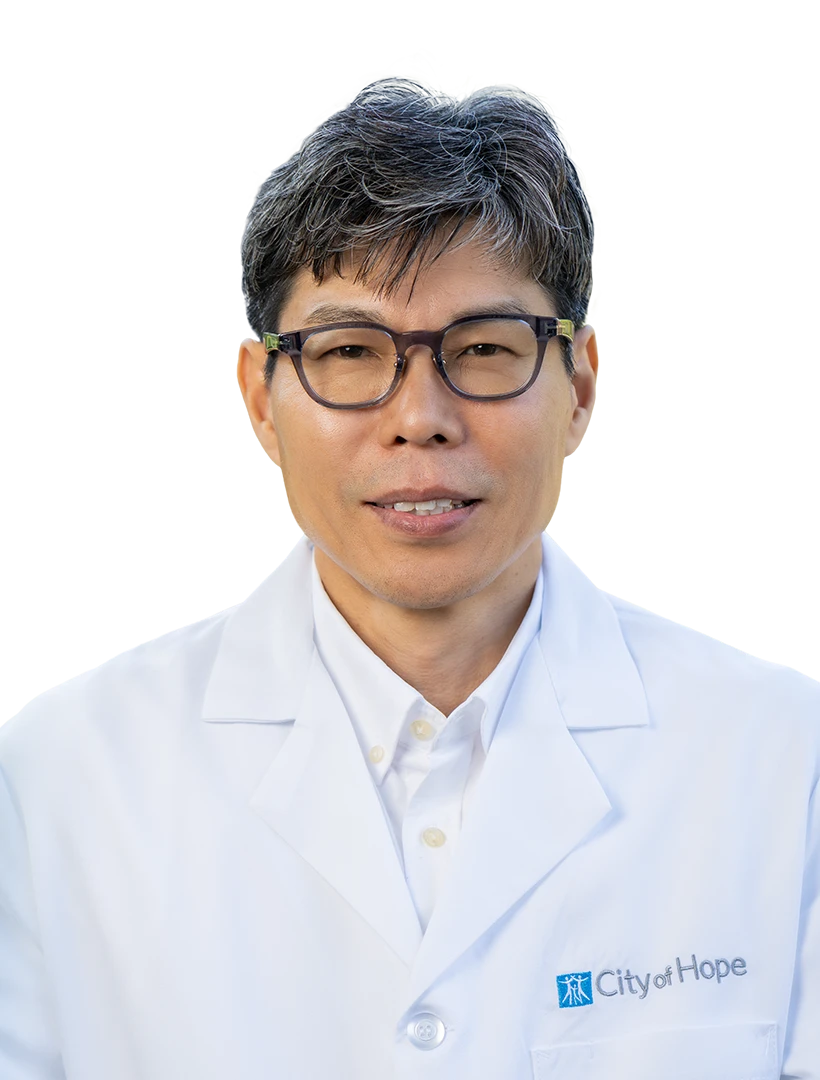
Kenya Honda, M.D., Ph.D., is an adjunct professor and visiting scholar in the Department of Hematology & Hematopoietic Cell Transplantation's Microbiome Program at City of Hope® Cancer Center Duarte. His research aims to advance the understanding of the interplay between the human host, its immune system and endogenous microbiota. His laboratory focuses on identifying microbiota members that drive specific types of adaptive immune responses in their hosts. His team has developed in vitro and in vivo approaches, including specialized mouse models, to dissect the individual contributions of human-borne microorganisms to health and disease, with a particular emphasis on inflammation and cancerous diseases.
Age-related illnesses, chronic inflammation and infectious diseases are notably reduced in centenarians, offering a unique opportunity to study the beneficial roles of microorganisms in promoting longevity and health. To explore this, Dr. Honda and his group established a gnotobiotic pipeline to screen and test effector molecules in the gut. They have optimized anaerobic culturing techniques that mimic the gut environment to cultivate relevant microorganisms.
They carry out characterization of these organisms and their metabolic activities using fine-tuned downstream setups such as next-generation sequencing and mass spectrometry. Through this framework, Dr. Honda’s team has made significant contributions to further our understanding of not only which microorganisms contribute to disease and how, but also which ones are beneficial and could potentially be used for therapeutic purposes. More broadly, their work sheds light on how microorganisms influence host physiology.
Location
Duarte Cancer Center
Duarte, CA 91010
Education & Experience
Degrees
- 2001, Ph.D., Medical Science, Immunology and Developmental Biology, Kyoto University, Graduate School of Medicine, Japan
- 1994, M.D., Oncology, Radiology and Gastroenterology, Kobe University, School of Medicine, Japan
Professional Experience
- 2025-present, Adjunct Professor and Visiting Scholar, Microbiome Program, Department of Hematology & Hematopoietic Cell Transplantation, City of Hope, Duarte, CA
- 2022-present, Center Director, The Keio University Human Biology Microbiome Quantum Research Center (Bio2Q)
- 2014-present, Professor, Department of Microbiology and Immunology, Keio University School of Medicine, Tokyo, Japan
- 2013-present Team Leader, Laboratory for Gut Homeostasis, RIKEN Center for Integrative Medical Sciences (RIKEN IMS), Japan
- 2009-2013, Associate Professor, Department of Immunology, Graduate School of Medicine, The University of Tokyo, Japan
- 2007-2009, Associate Professor, Laboratory of Immune Regulation, Department of Microbiology and Immunology, Graduate School of Medicine, Osaka University, Japan
- 2001-2007, Assistant Professor, Dept. of Immunology, Graduate School of Medicine and Faculty of Medicine, The University of Tokyo, Japan
Research
To date, Dr. Honda has led numerous studies aimed at deciphering the complex relationship between the host and its microbiota in both health and disease. Notable examples of his pioneering work include:
- First identification of TH17 cell-inducing microbiota members including segmented filamentous bacteria (SFB) (Ivanov, Atarashi et al., Cell 139:485-98, 2009) and a consortium of 20 ulcerative colitis-associated bacterial strains (Atarashi et al., Cell. 163:367-80, 2015)
- First identification of the role of Clostridia bacteria in promoting gut barrier integrity and immune system balance via the induction of Treg cells (Atarashi et al., Science 331:337-341, 2011; Atarashi et al., Nature. 500:232-6, 2013) and demonstration of short-chain fatty acids derived from the strains contributing to the Treg induction (Furusawa et al., Nature. 504:446–450, 2013)
- First example for TH1 cell-inducing microbiota members including Klebsiella and their causal relationship with inflammatory bowel disease (IBD) (Atarashi et al., Science. 358:359-365, 2017)
- First example for CD8 cell-inducing human microbiota members that can potently enhance cancer immune therapies (Tanoue et al., Nature 565:600, 2019)
- Identification of novel bile acid metabolizing microbes that are unique to centenarians (Sato, Atarashi, Plichta et al. Nature. 599:458–464, 2021)
- Identification of commensal consortia that potently decolonize Enterobacteriaceae pathogens (Furuichi et al, Nature. 633, 878–886, 2024)
Awards & Memberships
Awards
- 2014-2024, Named by Clarivate Analytics in the list of “Highly Cited Researchers”
- 2020, Carlos J. Finlay UNESCO Prize for Microbiology
- 2016, Bäelz award
- 2016, Academic Award of the Mochida Memorial Foundation
- 2015, The 32nd Inoue Prize for Science
- 2015, The 18th Japanese Society for Immunology (JSI) Award
- 2014, Gottfried Wagener Prize
- 2013, NISTEP Award
Memberships
- 2024-present, Taxa, Scientific Advisor
- 2021-presen, Current Opinion in Microbiology, Advisory Board
- 2021-present, Nature Reviews Gastroenterology & Hepatology, Advisory Board
- 2020-present, 4Bio Capital, Scientific advisor
- 2020-presen, Cell Host & Microbe, Advisory Board
- 2015-present, Science Translational Medicine, Scientific Advisory Board
- 2015-2023, Mucosal Immunology, Associate Editor
- 2010-present, Gut Microbes, Editorial Board
- 2010-present, Vedanta Bioscience, Scientific Co-Founder
Publications
- Furuichi M, Kawaguchi T, Pust MM, Yasuma-Mitobe K, Plichta D, Hasegawa N, Ohya T, Bhattarai S, Sasajima S, Yoshimasa A, Tuganbaev T, Yaginuma M, Ueda M, Okahashi N, Amafuji K, Kiridooshi Y, Sugita K, Stražar M, Skelly A, Suda W, Hattori M, Nakamoto N, Caballero S, Norman J, Olle B, Tanoue T, Arita M, Bucci V, Atarashi K, Xavier R*, Honda K*. Commensal consortia decolonize Enterobacteriaceae via ecological control. Nature. 633, 878–886. (2024)
- Miyamoto Y, Kikuta J, Matsui T, Hasegawa T, Fujii K, Okuzaki D, Liu YC, Yoshioka T, Seno S, Motooka D, Uchida Y, Yamashita E, Kobayashi S, Eguchi H, Morii E, Tryggvason K, Shichita T, Kayama H, Atarashi K, Kunisawa J, Honda K, Takeda K, Ishii M. Periportal macrophages protect against commensal-driven liver inflammation. Nature. 629:901-909. (2024)
- Johansen J, Atarashi K, Arai Y, Hirose N, Sørensen SJ, Vatanen T, Knip M, Honda K, Xavier RJ, Rasmussen S, Plichta DR. Centenarians have a diverse gut virome with the potential to modulate metabolism and promote healthy lifespan. Nat Microbiol. 8(6):1064-1078. (2023)
- Cui W, Nagano Y, Morita S, Tanoue T, Yamane H, Ishikawa K, Sato T, Kubo M, Hori S, Taniguchi T, Hatakeyama M, Atarashi K, Honda K*. Diet-mediated constitutive induction of novel IL-4+ ILC2 cells maintains intestinal homeostasis in mice. J Exp Med. 220(8):e20221773. (2023)
- Li Y, Watanabe E, Kawashima Y, Plichta DR, Wang Z, Ujike M, Ang QY, Wu R, Furuichi M, Takeshita K, Yoshida K, Nishiyama K, Kearney SM, Suda W, Hattori M, Sasajima S, Matsunaga T, Zhang X, Watanabe K, Fujishiro J, Norman JM, Olle B, Matsuyama S, Namkoong H, Uwamino Y, Ishii M, Fukunaga K, Hasegawa N, Ohara O, Xavier RJ*, Atarashi K, Honda K*. Identification of trypsin-degrading commensals in the large intestine. Nature. 609(7927):582-589. (2022)
- Kawano Y, Edwards M, Huang Y, Bilate AM, Araujo LP, Tanoue T, Atarashi K, Ladinsky MS, Reiner SL, Wang HH, Mucida D, Honda K, Ivanov II. Microbiota imbalance induced by dietary sugar disrupts immune-mediated protection from metabolic syndrome. Cell. 185(19):3501-3519.e20. (2022)
- Federici S, Kredo-Russo S, Valdés-Mas R, Kviatcovsky D, Weinstock E, Matiuhin Y, Silberberg Y, Atarashi K, Furuichi M, Oka A, Liu B, Fibelman M, Weiner IN, Khabra E, Cullin N, Ben-Yishai N, Inbar D, Ben-David H, Nicenboim J, Kowalsman N, Lieb W, Kario E, Cohen T, Geffen YF, Zelcbuch L, Cohen A, Rappo U, Gahali-Sass I, Golembo M, Lev V, Dori-Bachash M, Shapiro H, Moresi C, Cuevas-Sierra A, Mohapatra G, Kern L, Zheng D, Nobs SP, Suez J, Stettner N, Harmelin A, Zak N, Puttagunta S, Bassan M, Honda K, Sokol H, Bang C, Franke A, Schramm C, Maharshak N, Sartor RB, Sorek R, Elinav E. Targeted suppression of human IBD-associated gut microbiota commensals by phage consortia for treatment of intestinal inflammation. Cell. 185(16):2879-2898.e24. (2022)
- Tuganbaev T, Yoshida K, Honda K*. The effects of oral microbiota on health. Science. 376(6596):934-936. (2022)
- Sato Y, Atarashi K, Plichta DR, Arai Y, Sasajima S, Kearney SM, Suda W, Takeshita K, Sasaki T, Okamoto S, Skelly AN, Okamura Y, Vlamakis H, Li Y, Tanoue T, Takei H, Nittono H, Narushima S, Irie J, Itoh H, Moriya K, Sugiura Y, Suematsu M, Moritoki N, Shibata S, Littman DR, Fischbach MA, Uwamino Y, Inoue T, Honda A, Hattori M, Murai T, Xavier RJ*, Hirose N, Honda K*. Novel bile acid biosynthetic pathways are enriched in the microbiome of centenarians. Nature. 599(7885):458-464. (2021)
- Ivanov II, Tuganbaev T, Skelly AN, Honda K*. T Cell Responses to the Microbiota. Annu Rev Immunol. 40:559-587. (2022)
- Sato Y, Atarashi K, Plichta DR, Arai Y, Sasajima S, Kearney SM, Suda W, Takeshita K, Sasaki T, Okamoto S, Skelly AN, Okamura Y, Vlamakis H, Li Y, Tanoue T, Takei H, Nittono H, Narushima S, Irie J, Itoh H, Moriya K, Sugiura Y, Suematsu M, Moritoki N, Shibata S, Littman DR, Fischbach MA, Uwamino Y, Inoue T, Honda A, Hattori M, Murai T, Xavier RJ*, Hirose N, Honda K*. Novel bile acid biosynthetic pathways are enriched in the microbiome of centenarians. Nature. 599(7885):458-464. (2021)