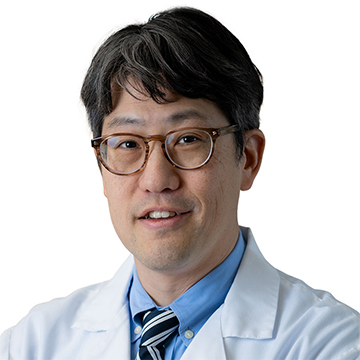
Colleagues describe Robert R. Jenq, M.D., as “shy,” “humble” and with a “calm demeanor.” Listen to his steady, low-key voice, and you get a sense of it. But spend more time with him, and a wealth of knowledge pours out of that quiet persona.
Jenq, a professor in the Department of Hematology and Hematopoietic Cell Transplantation, is one of City of Hope’s newest researchers specializing in a once-obscure field that is rapidly coming into vogue: the role played by the microbiome — the concentration of bacteria, fungi, viruses and other microorganisms lodged mostly in our gut — in overall health, and especially its effect on specific forms of cancer care.
“The bacteria that live within us are performing incredible amounts of chemistry and are impacting on our health in many facets,” he explained, “and the potential to shape what they’re doing could lead to important breakthroughs.”
Weighing about 2½ pounds, the microbiome is home to tens of trillions of microbes representing possibly 1,000 different species. They act on a variety of processes like synthesizing vitamins or fermenting fiber into fatty acids, and they also affect the immune system. Disrupting the microbiome can create simple problems like diarrhea or, as researchers are now finding out, serious complications in cancer patients, especially those who receive a bone marrow transplant.
That’s a major focus of City of Hope’s microbiome program, directed by Jenq as part of the larger laboratory established by Marcel van den Brink, M.D., Ph.D., president of City of Hope Los Angeles and City of Hope National Medical Center. Jenq seeks to better understand, among other things, how a transplant damages the microbiome, how that damage can trigger lethal side effects like graft-versus-host disease (GVHD), and what can be done to prevent it.
The effort may be relatively new, but the idea has been circulating for some time. Jenq cites 1970s studies showing that subjects with normal microbiomes developed GVHD after bone marrow transplants, while those bred without microbiomes did not develop the condition.
This led to an effort to keep human transplant patients as germ-free as possible, treating them in a kind of “boy in the bubble” environment. This very expensive method yielded only mixed results, and the effort was largely abandoned when researchers came up with medications like cyclosporine to tame the effects of GVHD.
The opportunity to push this research forward at City of Hope was too tempting for Jenq to pass up.
Choosing Microbiome
Born in Long Island, New York, and raised in Oregon, he is the grandson of farmers and teachers in Taiwan. He is the first doctor in the family, and he remembers early on how the idea of using science to help people appealed to him.
He chose microbiome research after a mentor directed him to study why transplant recipients developed dangerous vancomycin-resistant enterococci (VRE) infections in the hospital. “VRE lives in your intestinal tract,” explained Jenq, “and you live with it (without problems) until your immune system is depleted. Then it can break through and enter your bloodstream.” A healthy microbiome, it turns out, helps keep VRE at bay, partly by stimulating the immune system.
Jenq and van den Brink worked together at New York’s Memorial Sloan Kettering Cancer Center for 10 years before Jenq headed to Houston’s MD Anderson Cancer Center in 2016. When van den Brink arrived at City of Hope in 2023 he reached out to join him.
“And I couldn’t say no,” said Jenq. “It’s an amazing place. Everyone is so in sync with the mission.”
“He was the perfect candidate,” said van den Brink. “He has a deep understanding of the field, a great knowledge of the technology, and he’s taking it all into the clinic to solve problems, and he’s doing it eloquently.”
Jenq didn’t come to City of Hope alone. Having built MD Anderson’s microbiome lab from the ground up, Jenq had developed quite a following, and he brought along several scientists devoted to the field and to him.
“He is so creative. He’ll hear about some new research and come up with a bunch of ideas for using it. It’s very cool to watch,” said Jennifer Karmouch, Ph.D., co-director of the microbiome program. Karmouch, a longtime colleague from Jenq’s Houston days, initially resisted his call to relocate to California. But, just like Jenq himself, she changed her mind after a campus visit. “It was wonderful,” she said, “especially seeing all the clinical trials. I had to go, so I packed up my husband, my two kids and my mom, and we moved!”
Transforming Cancer Care Through Gut Health
Karmouch says the team has “hit the ground running” at an opportune time. “Microbiome research is booming right now,” she said. “Everyone wants to get in on it, but they lack the time, the expertise and the staff support. We have all of that.”
The “boom” comes from the realization that our gut bacteria may do much more than we ever realized, and that many different cancer treatments may be affected by it. Jenq’s clinical partners are lining up to find out.
“We have been working on several approaches to modulate the microbiome to improve outcomes of immunotherapy,” said Karamjeet Sandhu, M.D., an assistant professor in City of Hope’s Division of Leukemia in the Department of Hematology and Hematopoietic Cell Transplantation.
For example, some patients with melanoma, or lung, kidney and other cancers take immune checkpoint inhibitors like nivolumab to “unleash the brakes” on the immune system. But sometimes this treatment also causes colitis because, it is believed, the drugs deplete the gut bacteria. Solution? Put it back. By using a fecal transplant, the microbiome is replenished, and colitis is averted.
The same kind of microbiome manipulation may help patients who receive CAR T cell treatment, which alters their immune system and may also injure their gut bacteria.
Indeed, the goal of Jenq’s lab is to integrate microbiome research into every department, providing a major new tool for personalized medicine.
“It is important,” said Ryotaro Nakamura, M.D., director of City of Hope’s Center for Stem Cell Transplantation and another clinical colleague, “because (the microbiome) is less understood than it should be. City of Hope is becoming one of the leading centers in this area due to Dr. Jenq and Dr. van den Brink’s leadership and support.”
To achieve this goal, Jenq wants to take a deeper dive into the role antibiotics and diet play in modulating our microbiome. He envisions a program in which dietitians and other specialists monitor patients’ food intake, along with regular blood and stool samples to keep track of any changes in gut bacteria.
Another area of research will involve supplements, like probiotics, to enhance the microbiome’s health and diversity. “We think there’s a short list of beneficial bacteria that we can grow and give back to people,” he said.
And when it comes to transplants and GVHD, Jenq wonders if it is actually the patient’s gut bacteria that the transplanted stem cells are recognizing as “foreign” and rejecting. This could open up new areas of treatment.
“It’s possible that the immune cells, which are part of the..stem cell graft, are recognizing microbiome bacteria and that this contributes to GVHD,” he explained. “Maybe we could try to target these problem-causing immune cells and get rid of them.”
A full agenda for sure, and Jenq is supplementing it by recruiting faculty, developing clinical trials and building out the department, all in his calm, reassuring way.
“You can’t shake him,” said van den Brink. “You can’t get him angry. He’s always kind, level-headed, with his dry sense of humor.”
Away from work, Jenq and his wife, Yessenia, an e-commerce entrepreneur, enjoy Southern California's less-humid climate, the Asian food they've discovered in the San Gabriel Valley ("It's hard to find better!"), watching their 12-year-old and 15-year-old sons play volleyball, and indulging in pickleball, a new interest.
The program's expansion continues with the recent addition of Kenya Honda, M.D., Ph.D., a globally recognized pioneer in microbiome research. Internationally known for his groundbreaking work uncovering how specific microbes influence immune cell development, Dr. Honda brings with him a wealth of knowledge and a world-class team of researchers, further strengthening City of Hope's position at the forefront of this leading-edge field.
As City of Hope's microbiome program continues to expand, Jenq remains focused on the bigger picture: transforming how we understand and treat cancer through the lens of gut health. With his characteristic quiet determination and growing team of world-class researchers, he's advancing the field of personalized medicine — one microbe at a time.