
Although surgery is a first-line treatment option for many types and stages of cancer, it may not always be the top choice for patients diagnosed with more advanced disease. When one City of Hope® Cancer Center Chicago patient experienced a recurrence of stage 4 esophageal cancer, he experienced excellent outcomes after undergoing cryotherapy — a type of treatment that uses extreme cold to target and kill cancer cells. Since treatment, this patient has shown no evidence of cancer coming back.
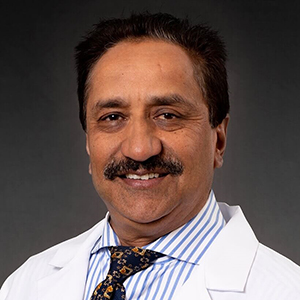
In this article, Pankaj Vashi, M.D., A.G.A.F., F.A.S.P.E.N., gastroenterologist and associate professor at City of Hope Chicago, covers the basics on how cryotherapy is used to treat some common complications of esophageal cancer, including:
- Managing stage 4 esophageal cancer
- Cryotherapy for metastatic esophageal cancer
- No evidence of disease after cryotherapy
- Esophageal cancer treatment in Chicago
If you or a loved one has been diagnosed with cancer and are would like for a second opinion, call us 24/7 at 877-524-4673.
Managing Stage 4 Esophageal Cancer
Esophageal cancer affects the esophagus, the pipe that carries food from the back of the throat to the stomach. At Stage 4, esophageal cancer may have spread to tissue around the esophagus, to nearby lymph nodes or to other organs or parts of the body. Some of the common symptoms of advanced esophageal cancer include:
- Difficulty swallowing (known as dysphagia)
- A bad cough or a persistently hoarse voice
- Burning, pain or a feeling of pressure in the chest
- Severe heartburn or reflux
- Unexpected weight loss
In many cases, patients with Stage 4 esophageal cancer receive palliative care — an approach that centers on reducing symptoms and improving quality of life.
“Treatment options for Stage 4 esophageal cancer are mainly palliative, including steps to manage dysphagia, or difficulty in swallowing, as well as nutrition, pain control and other symptom management,” says Dr. Vashi. “For some patients, a combination of chemotherapy and targeted therapies is also an option.”
Cryotherapy for Metastatic Esophageal Cancer
Dysphagia, or trouble swallowing, is one of the most common challenges for patients with esophageal cancer. Studies have found that cryotherapy (sometimes called cryoablation) is an effective and safe way to treat dysphagia in patients who cannot undergo surgery because their cancer is too advanced.
“Liquid nitrogen cryotherapy is mainly used for the management of dysphagia,” Dr. Vashi explains. “By improving patients’ symptoms of dysphagia, we are able to improve their quality of life and their nutrition.”
During cryotherapy, surgeons insert a long, narrow, lighted tube called an endoscope into the esophagus. The endoscope is used to spray liquid nitrogen on a tumor. The goal of cryotherapy is to kill the cancer cells. For patients with advanced esophageal cancer, this has been shown to vastly improve quality of life.
No Evidence of Disease After Cryotherapy
One patient at City of Hope Chicago experienced excellent results after undergoing cryotherapy to treat dysphagia. This patient — a man in his early 50s — had previously been treated for stage 4 Her2neu PDL-positive esophageal cancer. This is a subtype characterized by changes in how certain proteins work in the body.
“This patient’s Her2neu and PDL-positive status made him a better candidate for a combination of immunotherapy and targeted therapy,” says Dr. Vashi.
However, when the patient’s cancer returned, it began to cause significant problems swallowing, so his cancer care team recommended cryotherapy.
After treatment, dysphagia resolved entirely — and there were no signs of cancer.
However, Dr. Vashi stresses that this is an unusual case.
“Such outcomes are very rare in Stage 4 cancer patients. Our patient is still alive with no residual cancer detected on endoscopy or X-ray studies,” he explains.
Esophageal Cancer Treatment in Chicago
Every cancer diagnosis, like every person themselves, is unique. The benefit of receiving treatment for cancer at a comprehensive treatment center like City of Hope Chicago is that a patient’s care team is able to tailor his or her treatment plan to be as effective as possible.
Some of the esophageal cancer treatment options available at City of Hope Chicago include:
- A variety of surgical procedures, including conventional surgery and procedures like endoscopic mucosal resection, which are less invasive but highly effective
- Chemotherapy and other options such as targeted therapy and immunotherapy
- Advanced radiation therapy techniques for esophageal cancer
- Access to clinical trials and a nationally recognized supportive care program
If you or a loved one has been diagnosed with cancer and would like a second opinion, call us 24/7 at 877-524-4673.