Ferrone

Cervical Cancer Patient Urges Prevention

Julianna Ferrone is flying in from Atlanta to ride City of Hope’s float in the Rose Parade — and to spread the message about screening and early detection
Julianna Ferrone
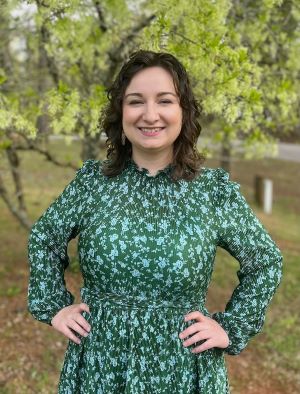
Julianna Ferrone

Julianna Ferrone is excited — and just a little nervous — about the upcoming Tournament of Roses Parade on New Year’s Day in Pasadena, California.

Excited because she’s traveling all the way from Atlanta to ride aboard City of Hope’s parade float — this year it’s called “A Beautiful Day For Hope” — joined by fellow cancer survivors and their physicians.

Ferrone, however, is more than just a simple survivor: This soft-spoken child of the South is on a personal mission. At just 31, she is a passionate cancer warrior. She’s carrying a message that she plans to communicate every chance she gets: “My cancer didn’t have to happen.”

“It’s important,” she said, “because of the type of cancer I had. It’s very important to talk about it, especially in the South. We won’t make any changes if we don’t talk about it first.”

Ferrone was 12 years old when the HPV vaccine first became available. Doctors recommended it for girls and young women as the best defense against cancers caused by the human papillomavirus. But Ferrone’s mother — herself a cervical cancer survivor — worried about the vaccine’s newness and its possible side effects. Despite her own medical history, Mom decided her daughter would not get the shot.

“Mom still kicks herself a lot for that,” says Ferrone.

When she turned 21, Ferrone sought out the vaccine on her own. Now it was the doctors who said no. They said she didn’t need it, that she was too old.

They were wrong. Twice.

Under guidelines set by the Centers for Disease Control and Prevention, girls as young as 9 and women up to age 26 should be vaccinated. And, it turns out, Ferrone definitely needed it.

Ferrone’s Stage 3 Cervical Cancer Symptoms

It was July 2020 when Ferrone, in her 20s and living in Auburn, Alabama, began to feel extremely bloated. Her stomach, back and legs ached. She experienced constant bleeding. Her doctors dismissed her symptoms as “irritable bowels” and “heavy periods.”

Ferrone suspected she was being misdiagnosed, and it infuriated her. “It was hard to find doctors who would take me seriously,” she recalled.

Finally, in December a physician administered a Pap test, which pointed to some abnormalities. A pair of exploratory procedures confirmed the grim diagnosis: Stage 3 cervical cancer.

The news was hard to take, but at least the uncertainty was gone.

Julianna Ferrone during infusion
Julianna Ferrone during treatment.

“I was at home alone,” she remembered. “I sat there in silence for a few moments, and then I got this sense of relief — finally, I knew.”

While surgery can often halt early-stage cervical cancer, it’s not enough for Stage 3. Ferrone’s doctors mapped out an across-the-board plan. Ferrone underwent several operations, including a radical hysterectomy and an appendectomy, because the cancer had spread there as well. Once recovered from surgery, she received four rounds of cisplatin, considered the best chemotherapy for cervical cancer. She remembers how tough it was.

“I’d go every week, and then it would take all week long to feel better — and then I’d go back.”

Radiation also left her extremely weak. “It was all I could do to walk in and walk out,” she said.

However, the “shotgun” approach worked. For a while. Ferrone remained cancer free for about a year and was able to return to work at her IT support job, though she struggled with “chemo brain” — difficulty remembering things. Nevertheless, “I thought I was done,” she said. “I thought I was moving on.”

Not quite.

Facing Cervical Cancer Recurrence

One day in 2022, Ferrone woke to find herself unable to walk. “My leg felt so heavy. I couldn’t get down the stairs,” she recalled. At the emergency room, she had a computed topography (CT) scan, which revealed metastatic disease: eight new tumors throughout her body “from my shoulder down to my thigh.”

Her case was hardly unique. Some 35% of women treated for cervical cancer experience a recurrence, usually within two years. Recurrent cancer is generally tougher to treat, and the prognosis tends to be poor.

Ferrone sensed the urgency but says her doctors didn’t share it. She began looking elsewhere, at one point resorting to a Google search of her cancer, “and City of Hope’s name kept popping up” she remembers.

Ferrone was familiar with the City of Hope facility in Atlanta. “I’d driven past it a million times,” without paying much attention. She cold-called. And almost instantly, things began to change.

“They were extremely helpful and very empathetic,” she said. “Two days later, I was in for a consultation.”

City of Hope’s unique atmosphere made an impression.

“It’s the nicest place I’ve ever been to,” she said. “Everybody’s incredibly sweet. And anything you need, they have a department for it. They treat you like a person, which really makes a difference. They even do things for caregivers. It feels more like a community center than a hospital.”

Godbee
Natalie Godbee, D.O.

To treat the recurrence, Ferrone’s medical team ramped up the chemotherapy, this time giving her a combination of Taxol (paclitaxel) and carboplatin along with the monoclonal antibody Avastin (bevacizumab). A 2022 study declared this approach to be “an acceptable and tolerable treatment for advanced or recurrent cervical cancer,” with the addition of Avastin boosting the effectiveness of the other two drugs.

“This regimen has shown to improve survival for recurrent cervical cancers — it was an exciting turn in cervical cancer treatment,” said Ferrone’s physician, Natalie Godbee, D.O., a gynecologic oncologist at City of Hope Cancer Center Atlanta.

However, “tolerable” is in the eye of the beholder.

“It was rough, very draining,” recalled Ferrone. “I’d spend nine hours in the infusion chair.” She had typical side effects, including hair loss. She didn’t care. “I just wanted to live,” she said. “The hair didn’t bother me.”

Focusing on Cervical Cancer Screenings

It took nearly a year on the three-drug combo, followed by still more time on Avastin by itself. But the treatment has beaten back the cancer, and Ferrone is slowly returning to normal. “I’m good,” she says. “I’m coming back to life. I’m so blessed I can walk and talk.”

She’ll share those blessings on Jan. 1, riding in the parade and sharing her story. And her doctor will be alongside her.

“Julianna is doing great,” Dr. Godbee said. “She’s been in surveillance for over a year. We will continue to monitor her closely.”

“I’m really thrilled to be able to attend the Rose Parade. This is an opportunity to not only celebrate Julianna, but also celebrate all our patients. City of Hope is making great strides in cancer care that I’m proud to be a part of,” she added.

“This is incredibly exciting,” Ferrone said. “I am so dedicated to this message about screening and early prevention.” Most important, “You need to advocate for yourself. Keep going until you find someone who will help you.”

Subscribe to our
CancerCenter Newsletter

Thank you

Keep an eye on your inbox for the latest City of Hope news and research breakthroughs. If you have previously subscribed to receive email communications, your preferences have been updated.