
“It is just an absolutely wonderful gift, not just for me, but for thousands,” Barbara Andes says
In the pale morning light, on the drive to an appointment at City of Hope, Barbara Andes was vibrating with energy.
“Today I'm getting the pill that everybody has been talking about,” said Andes, 88, who a year ago was diagnosed with stage 4 pancreatic cancer. “I'm thrilled, I'm absolutely thrilled. Can hardly wait to take that first pill.”
Andes had been waiting nearly a year for this moment — the chance to take an experimental treatment called daraxonrasib that, in a recent clinical trial, nearly doubled the survival of stage 4 pancreatic cancer patients, extending their lives nearly 6 months longer compared to patients receiving chemotherapy.
For the great grandmother and avid traveler, this opportunity represents freedom from chemotherapy and the chance for more time with her family.
“It is just an absolutely wonderful gift, not just for me, but for thousands,” said Andes, one of the first patients to receive the promising therapy through the FDA-expanded access program at City of Hope. “I happen to be an early participant for which I am very, very grateful. But you have to think about all those people who will follow.”
City of Hope was among 59 centers worldwide that enrolled patients in a pivotal phase 3 clinical trial of daraxonrasib, helping generate evidence suggesting the therapy could be one of the most promising advances in cancer treatment in years.
Early data from the trial released in spring showed positive results, and that daraxonrasib was generally well tolerated. The U.S. Food and Drug Administration soon approved an expanded access protocol (EAP). Through this expansion, City of Hope and other cancer centers can provide the therapy to patients outside of a clinical trial while the therapy is still being studied and is not FDA approved.
The expanded access program is available at City of Hope locations across the country, including locations in Southern California, Phoenix, Chicago, and Atlanta.
Stage 4 pancreatic cancer is one of the most challenging to treat. For decades, treatment options for patients like Andes have been limited because the genetic mutation that drives most pancreatic cancers — known as KRAS — was long considered "undruggable."
"In oncology and science, there are a lot of buzzwords that you hear about drugs or research like ‘unprecedented’ or ‘game changer’ or ‘phenomenal’,” said Pashtoon Kasi, M.D., medical director of GI medical oncology at City of Hope Orange County and Andes’ medical oncologist. “What this advance means is more patients have options, better options now than ever before.”
‘The moment’
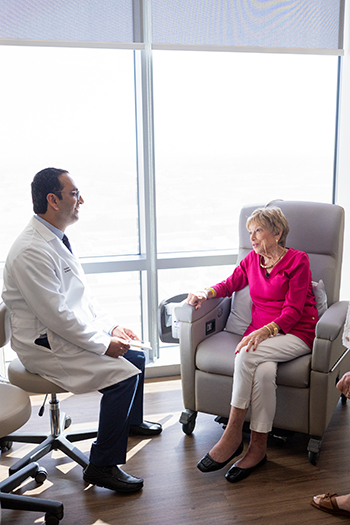
Andes laughed and smiled as she prepared for the moment she had been waiting for; taking her first dose of daraxonrasib.
When Dr. Kasi asked if she was ready, Andes was quick to respond.
“Couldn't have been sooner,” she said with a laugh.
Later, after taking the pills, she raised her water bottle in a celebratory toast.
"Go get it," she said.
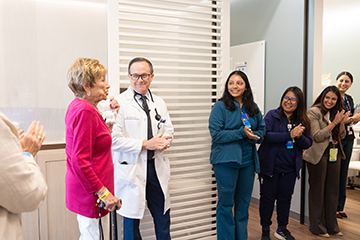
Her daughter Karen Andes Westland wiped away tears as she watched her mother begin treatment. Emerging from the exam room, Andes was greeted by applause from the clinical research team, members of Dr. Kasi’s team and others who understood the significance of the moment.
“My mom is the heartbeat of our whole family,” said Westland. “She's a hero to so many of us. We are so excited. Everyone is just thrilled to be able to see what kind of a new life this is going to bring for her.”
Andes has lived a life full of family, friends, and faith. She has four children, 10 grandchildren, and 13 great-grandchildren who keep her active when she is not globetrotting. Andes said she has more life to live and more fight in her to stay alive.
"My attitude all along has been one of: I'm on a journey; I'm not alone," said Andes. "I have wonderful people at City of Hope. My family is extremely supportive. I have my support groups in church and another organization I belong to, all reaching out, sending me love and prayers."
Looking to the Future
Last year, City of Hope launched a new national clinical trials model designed to expand access to emerging cancer treatments to patients nationwide. The model enables research programs to be activated across multiple locations simultaneously, expanding the reach of innovative therapies and bringing them to patients more quickly.
Studies are now underway to see if giving daraxonrasib to study participants much earlier could benefit patients. For example, if it could help shrink tumors in patients with earlier stage disease, it could help previously inoperable patients qualify for surgery, which is currently the only treatment with the potential to cure pancreatic cancer.
"But it's not just about pancreas cancer and it's not just about patients where one chemotherapy has failed,” said Kasi. “That's how the approval story will start. I get more questions from patients with other types of cancers including colorectal cancer, lung cancer, and ovarian cancer that also have this 'undruggable’ KRAS mutation who are asking, “How and when will I be able to get on a drug?”
“And the answer is it's already happening.”
Dr. Kasi said that therapies capable of slowing disease progression for longer periods may provide researchers with additional opportunities to develop new treatment approaches. Daraxonrasib could serve as an important stepping-stone toward future advances and, ultimately, more cures.
The availability of daraxonrasib reflects City of Hope’s long-standing commitment to advancing pancreatic cancer research and bringing promising therapies to patients. That commitment includes investments such as the launch of the Stephenson Global Pancreatic Cancer Research Institute in 2024 and the work of researchers, clinical investigators, physicians, nurses, research coordinators, regulatory teams, and countless others who help move discoveries from bench to bedside.
In addition to excitement about what daraxonrasib could mean for her future, Andes expressed deep gratitude for both the physicians on her care team and the scientists who have helped carve a new path forward for her and others fighting a deadly disease.
"To the researchers and the developers who have done this, my thanks would have to be multiplied 100,000 times that they recognized there was something that could be done and they pursued it," said Andes. "It's just a tremendous scientific effort and discovery for so many people. I don't think there's another word but unbelievable. What's happening is a total breakthrough."