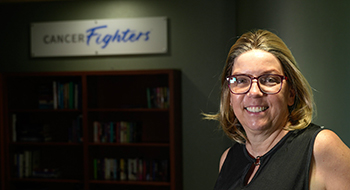
By the spring of 2026, Rachelle Gardner was running out of options.
Nearly three years after her pancreatic cancer diagnosis, chemotherapy, surgery and radiation had all failed to stop the disease. Just as she began to wonder what might come next, her City of Hope oncologist, Evan Pisick, M.D., shared news she hadn’t expected.
There was another option.
Pisick told her about an investigational therapy called daraxonrasib that would soon be available to eligible patients at City of Hope Chicago through an FDA-authorized Expanded Access Program. The program allows patients with serious illnesses to receive investigational therapies outside of a clinical trial, under close medical supervision, when standard options have been exhausted.
For Gardner, it meant more than a new treatment.
“When they told me the chemo wasn’t working anymore, I thought, ‘What’s left?’” Gardner said. “Then Dr. Pisick told me about (daraxonrasib), and that there was a chance I could get on it. That gave me hope.”
From pancreatic cancer recurrence to new hope: ‘Our job isn’t to stop searching’

In 2023, an itchy rash across Gardner’s chest and an unusual yellowing of her skin prompted a visit to the emergency room. Blood work and other tests confirmed she had pancreatic cancer. She began treatment close to home — chemotherapy followed by a complex surgery to remove the tumor. Even through the worst of it, she kept teaching, working with visually impaired students in her Milwaukee school district. Being with the kids, she said, helped her not think about the cancer. Initially, there was reason for optimism.
Then the cancer returned.
By the spring of 2025, it had spread to her stomach lining and liver. Gardner began looking for alternatives. Encouraged by her family, she went to City of Hope Chicago.
The difference was immediate.
Instead of focusing only on the next treatment, her new care team stepped back to look at the full picture — reviewing every available approach and looking for new ones. Even after radiation and additional chemotherapy failed to stop the cancer’s progression, they kept looking.
“When conventional treatments reach their limits, our job isn’t to stop searching,” Pisick said. “Research gives us another place to look. That’s why clinical trials matter. That’s why expanded access programs matter. They can create opportunities for patients when standard therapies are no longer enough.”
It did for Gardner.
Daraxonrasib, clinical trials and the latest advances in pancreatic cancer treatment
Daraxonrasib is one of the most significant advances in pancreatic cancer treatment in years. The targeted therapy, which the FDA recently approved under the brand name Rasonque, focuses on KRAS, a genetic mutation that drives more than 90% of pancreatic cancers. KRAS was considered one of the most difficult targets in cancer research.
City of Hope helped evaluate the therapy as one of 59 centers worldwide participating in the pivotal phase 3 clinical trial that generated data that helped lead to FDA approval.
But for physicians like Pisick, the work doesn’t end with data. The goal is to bring what’s learned in the lab to patients — safely and without unnecessary delay.
That commitment helped shape City of Hope’s national clinical trials model — the first of its kind among U.S. academic cancer centers. The model allows clinical trials and expanded access programs to launch simultaneously across City of Hope locations in Chicago, Southern California, Phoenix and Atlanta, so eligible patients don’t have to wait.
Because City of Hope had been part of the trial and already had the infrastructure in place, the team was ready when expanded access opened. Gardner became one of the first patients at City of Hope Chicago to receive daraxonrasib through the program.
“Research doesn’t end when a clinical trial closes,” Pisick said. “Every advance represents years of work by scientists, physicians and patients who participated in that research. Our responsibility is to translate those discoveries into new opportunities for patients as quickly and thoughtfully as we can.”
Pancreatic cancer care beyond treatment: ‘They take care of you as a person’
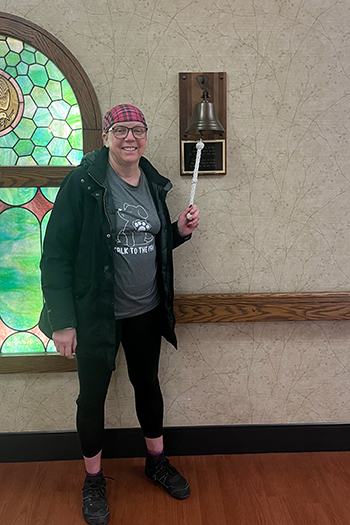
Throughout her treatment, a nurse navigator connected Gardner with a YMCA exercise program designed for cancer patients. A nutritionist helped her adapt meals to changing treatment needs without making food another source of stress. A counselor provided support through some of the most difficult moments. Together, the team cared not only for her cancer, but for the challenges that came with it.
“I’ve been really lucky at City of Hope,” Gardner said. “There are so many people ready to help — a nurse who checks in on me, a nutritionist, a counselor. They don’t just treat the cancer. They take care of you as a person.”
Gardner encourages others facing a difficult diagnosis to ask questions, lean on those who care about them and remember that exploring additional treatment perspectives can open doors to options they may not have considered.
“If something doesn’t seem right, don’t be afraid to ask questions or get another opinion,” Gardner said. “Find the people who support you and lean on them. There are going to be good days and bad days, but you have to stay positive.”
Today, Gardner knows no one can predict what lies ahead. But after nearly three years of living with pancreatic cancer, she’s grateful for the team that kept looking when she thought there was nothing left to try — and for the chance to keep going.