City of Hope highlights survivorship support as part of Breast Cancer Awareness Month
LOS ANGELES – As advances in breast cancer care help more patients live longer, City of Hope is celebrating survivors and highlighting the need for long-term support to help them live fuller, healthier lives after diagnosis.
There are more than 4.3 million breast cancer survivors in the U.S., many of whom are balancing families and careers with physical, emotional, financial and social challenges that can occur long after treatment ends. With breast cancer rates rising about 1% every year, these challenges are expected to become increasingly prevalent.
“As we cure more patients through individualized treatment and new therapies, we need to ensure we are helping those survivors to not only live longer, but to live well,” said Hope S. Rugo, M.D., division chief of breast medical oncology and director of the Women’s Cancers Program at City of Hope. “At City of Hope, surviving cancer is not an endpoint. It is another important chapter of the story. When we tailor treatment to the individual patient and invest in evidence-based supportive care, we are reducing the long-term burden that can occur after breast cancer is treated.”
Throughout October, City of Hope will bring together medical experts, scientists, community members and caregivers to discuss treatment advances and supportive care strategies for survivors concerned about cancer recurrence, fertility planning, financial strain, cardiovascular health and other long-term effects of chemotherapy, surgery and radiation. City of Hope will also honor survivors who are sharing their stories to create community, be a voice of hope, and inspire others to live well during and after breast cancer.
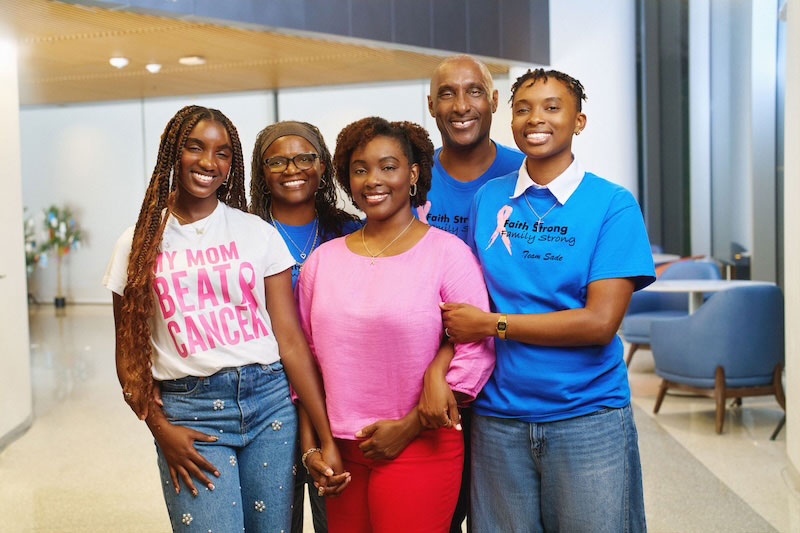
Creating Community
Sade Wilson, 41, is one of those voices. Discovering her aggressive breast cancer while it was in an early stage has been both fortunate and challenging. While she is celebrating being cancer-free for three years, Wilson also has felt disconnected from her body and personal identity due to hair loss, new scars on her body, and changes to her breasts. Like many survivors, she worries cancer will come back. At each follow-up visit, she shares concerns with City of Hope doctors and clinical experts who have witnessed every step of her journey.
“Having doctors that I trust and being able to raise a concern is really important. I appreciate being heard. Any concerns I bring up, my doctors are aggressive about getting me checked out and making sure I am always on the up-and-up,” said Wilson, who is a teacher, basketball coach, and mom to a teenage daughter. “The battle is 90% mental. It took a while, but I’m now getting to the point of living and not just existing. Every time I share my story, I find community. I have learned that even from something ugly, something beautiful can erupt.”
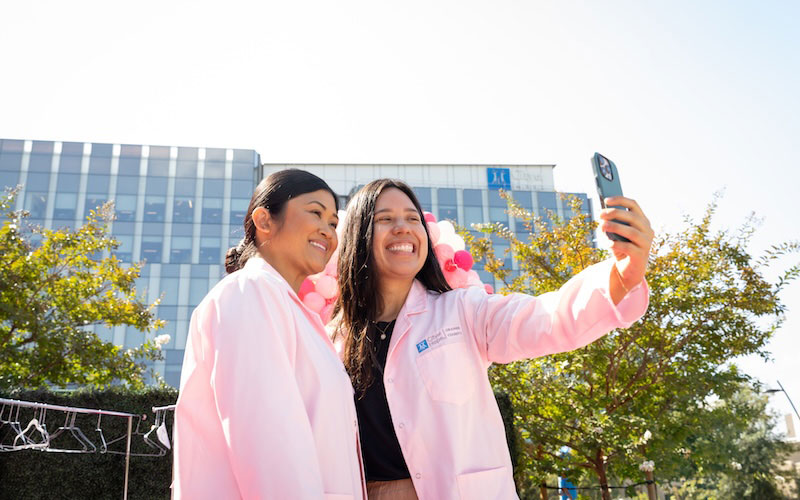
The Importance of Hope
In recognition of Breast Cancer Awareness Month, City of Hope physicians at locations in California, Arizona, Illinois and Georgia will continue an annual tradition of swapping their white doctor’s coats for pink ones. They’ll gather at events to call attention to the urgent need for expanded access to breast cancer screenings, risk assessments and support.
Patients, survivors, caregivers and community partners can also create hope during Breast Cancer Awareness Month in the following ways:
- Tell your story. City of Hope invites breast cancer survivors to share stories about the people, moments and milestones that have given them hope after diagnosis. Email your story to [email protected] or post on social media and tag City of Hope (@cityofhope on Facebook and Instagram). City of Hope will amplify survivor stories throughout Breast Cancer Awareness Month.
- Understand breast cancer risk. City of Hope urges women to have an initial breast cancer risk assessment at age 25, which includes an evaluation of lifestyle factors and family history. This assessment helps women understand at what age they should begin receiving mammograms or other breast cancer screenings. Leading cancer centers including City of Hope offer comprehensive risk assessments that include genetic counseling.
- Get screened. Breast cancer that is caught early may be easier to treat. Stay on track with breast cancer screenings such as annual mammograms. For people at average risk, annual mammograms are currently recommended starting at age 40. For those at above-average risk, screening may be recommended earlier.
- Leave a message of support. Call the City of Hope Line to hear messages of encouragement and strength from cancer survivors, patients, caregivers, physicians and supporters. Add your voice by sharing a message to uplift, comfort or inspire someone on a breast cancer journey. Call 626-218-4056 and press “1” to leave a message of hope or press “2” to listen to messages of hope.
“Every advance we make against breast cancer begins with someone who believes better outcomes are possible,” said Marcel van den Brink, M.D., Ph.D., president of City of Hope National Medical Center and City of Hope Los Angeles. “We want to recognize the survivors, caregivers, researchers, philanthropic donors and advocates whose determination continues to move us closer to a future where breast cancer is detected earlier, treated more effectively and ultimately prevented.”
Accelerating Personalized, Less Toxic Breast Cancer Treatment
As a national leader in breast cancer research and treatment, City of Hope is advancing more precise, less toxic treatments and innovative strategies for managing side effects, including:
- Antibody-drug conjugates (ADCs) that selectively attack cancer cells while sparing healthy tissue.
- Bispecific antibodies that engage multiple cancer targets at the same time.
- Newer endocrine therapies that help overcome treatment resistance in hormone receptor-positive breast cancer.
- Circulating tumor DNA (ctDNA) and other biomarkers that may help identify which patients need more intensive treatment, and which could safely benefit from less.
- Immunotherapies for HER2-positive breast cancer that train a patient's own immune T cells to recognize and destroy cancer cells.
- Lymph node reconstruction to reduce the risk of lymphedema.
- Nipple-sparing mastectomy and breast reinnervation to restore some sensation to the breast.
- Research on ablation for some early-stage tumors as a less invasive alternative to traditional surgery.
- Research on how precise “doses” of exercise may help prevent cancer in high-risk individuals and reduce the risk of cancer progression or recurrence.
- The development of more evidence-based supportive care such as acupuncture to help prevent and manage treatment-related side effects such as peripheral neuropathy and joint pain.
- Access to City of Hope’s national clinical trials model, which offers more than 100 breast cancer clinical trials designed to find tomorrow’s cures.
“What gives me hope is our growing ability to understand the biology of each person’s cancer and use that knowledge to make treatment more precise,” Rugo said. “We are developing therapies that are more targeted and studying ways to predict who needs more treatment and who may need less as we work to prevent the long-term side effects that can continue for years after therapy ends. The future of breast cancer care is about delivering the treatment each patient needs – and no more – while continuing to improve outcomes for everyone.”
Help advance the next generation of breast cancer treatment.
Philanthropy helps City of Hope expand survivorship programs and advance research that brings promising new therapies to patients faster. Learn how you can make a difference.
# # #
About City of Hope
City of Hope's mission is to make hope a reality for all touched by cancer and diabetes. Founded in 1913, City of Hope has grown into one of the largest and most advanced cancer research and treatment organizations in the United States, and one of the leading research centers for diabetes and other life-threatening illnesses. City of Hope research has been the basis for numerous breakthrough cancer medicines, as well as human synthetic insulin and monoclonal antibodies. With an independent, National Cancer Institute-designated comprehensive cancer center that is ranked among the nation’s top cancer centers by U.S. News & World Report at its core, City of Hope’s uniquely integrated model spans cancer care, research and development, academics and training, and a broad philanthropy program that powers its work. City of Hope’s growing national system includes its Los Angeles campus, Orange County, California, campus, a network of clinical care locations across Southern California and cancer treatment centers and outpatient facilities in the Atlanta, Chicago and Phoenix areas. City of Hope’s affiliated group of organizations includes Translational Genomics Research Institute and AccessHope™. For more information about City of Hope, follow us on Facebook, X, YouTube, Instagram and LinkedIn.