When Susan Nason’s brother Jay Hollingsworth learned he had high-risk multiple myeloma, the family sprang into action. They began searching for the most knowledgeable experts who could deliver the
......
Each patient is unique. So is their cancer. Much like a fingerprint, every cancer has a distinct genetic pattern. And current research shows those genes are a puzzle that can hold the secrets of how to best treat — and potentially defeat — a patient’s disease.
Using a technique called whole genome sequencing (WGS), City of Hope investigators examine the DNA of patients’ cancers. WGS is a laboratory technique that determines the order of each cancer’s nucleotides, the building blocks that make up DNA and RNA. WGS analysis results reveal whether a patient’s cancer has the specific genes that existing treatments target. These efforts enable physician-scientists to identify which therapies are more likely to work, saving time and saving lives.
Speed is crucial in determining the most effective and appropriate treatment for cancer patients. Typically, it takes several weeks to receive genetic testing results. Thanks to our Translational Genomics Research Institute (TGen), City of Hope is one of only two centers in the U.S. offering clinical whole genome sequencing and the only one returning results within 48 hours.
Cancer is complex. It is not a singular disease. Instead, it’s thousands of diseases driven by changes to your genes. A genomic analysis of your cancer could be the key to finding a treatment that saves your life. Using WGS results, your doctor may be able to quickly determine which therapies will and will not work against your disease. With this knowledge, they can bypass ineffective treatments, saving money and valuable time.
City of Hope is at the forefront of WGS research. Most recently, two research groups used this technique to unravel both acute myeloid leukemia (AML) and multiple myeloma DNA.
Through WGS, a team led by Guido Marcucci, M.D., director of the Gehr Family Center for Leukemia Research, discovered that CML cells lack miR-142. This RNA molecule controls the cell’s metabolism. It stops progression to secondary acute myeloid leukemia (sAML), a deadly leukemia with few effective treatments. The team developed and tested synthetic miR-142 in mouse models, showing that it prevents CML from advancing and cures some mice. The team plans to test synthetic miR-142 in clinical trials as a possible alternative to stem cell transplant for these patients.
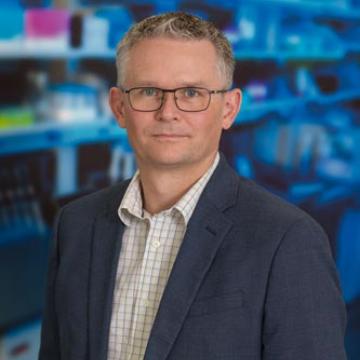
Additionally, Jonathan Keats, Ph.D., scientific director of the Judy and Bernard Briskin center for multiple myeloma research, uses WGS to identify genetic abnormalities in cells for this type of cancer. There is no cure for multiple myeloma. So, his team uses analysis results to determine which of the existing 19 therapies will work best for individual patients. Conducting WGS soon after diagnosis can help physicians select the most effective treatment.
Gifts from the Robert & Lynda Carter Altman Family Foundation Research Fund and the Nason family are the fuel behind City of Hope’s WGS achievements.
The Carter Altman Fund, created by actress Lynda Carter in memory of her husband Robert’s battle with sAML, supports City of Hope and TGen in two ways. The first avenue bolsters research that focuses on faster entry of new investigational medicines and therapies into first-in-human clinical trials. The second track funds TGen’s use of WGS to identify and stop disease progression.
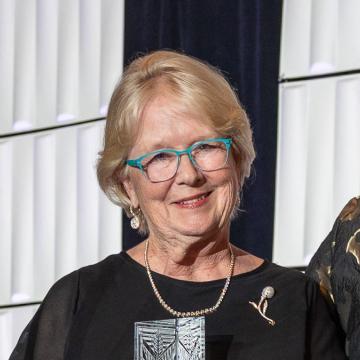
Alongside the Carter Altman gift, Susan Nason and her family have dedicated three gifts in memory of her brother Jay Hollingsworth and his battle with multiple myeloma. The first gift of $7.5 million will help make existing treatments for multiple myeloma, including stem cell transplant and CAR T cell therapy, more accessible to patients. The second gift of $3 million will support efforts to give more doctors the resources needed for computer-automated WGS testing by summer 2025. A third recent gift of $3 million by Nason and her family will create an endowed position for Amrita Krishnan, Ph.D., and provide funding to accelerate additional research in multiple myeloma.
For Susan, supporting City of Hope’s multiple myeloma and WGS work is a way to remember her brother.
“I think of contributing to City of Hope’s work as a legacy for Jay,” she says. “I’ve never seen such a totally committed team. They went above and beyond for my brother. I know he would want me to keep supporting their work.”
Cancer touches nearly 2 million people annually. Every person and family affected by cancer deserves the most advanced, innovative treatment options available. Developing and providing these therapies requires significant resources.
Let’s work together to make hope happen. Support our mission to defeat cancer for all — forever.
When Susan Nason’s brother Jay Hollingsworth learned he had high-risk multiple myeloma, the family sprang into action. They began searching for the most knowledgeable experts who could deliver the
......
Scientists with City of Hope® and the Translational Genomics Research Institute (TGen), part of City of Hope, may have discovered one of the reasons why a type of leukemia sometimes develops into a
......Leading national cancer research and treatment organization foresees significantly shorter treatments, tests to help stop the surge in under-50 cancers, training AI to advance more equitable cancer
......
Sebastian "Diego" Serna is a happy, healthy 17-year-old with big plans.“I want to finish high school,” he says, “then go to college, study criminal justice and go into law enforcement. Maybe the FBI,
......
Translational Genomics Research Institute (TGen), part of City of Hope, has forged a new partnership with actress, singer-songwriter and advocate Lynda Carter Altman to help improve diagnosis and
......