Lior Goldberg Pediatric and Young Adult Cancer Cell Therapeutic Lab
The Goldberg Laboratory is dedicated to the rapid development of innovative immune-based therapies for pediatric and young adult cancers.
Our Young Adult and Pediatric CAR T Cell Therapy Research
Led by Lior Goldberg, M.D., M.S., our team utilizes leading-edge research techniques to uncover new immunotherapy targets and design genetically engineered tumor fighting immune cells, called chimeric antigen receptor (CAR) T cells.
We use insights from basic immune cell biology to enhance the trafficking and metabolic properties of CAR T cells so that they are better equipped to find and kill tumor cells. Our goal is to translate our lab-based findings from bench-to-bedside by developing and conducting clinical trials and performing in-depth correlative work to generate the next hypothesis and lead to new ways to fight cancer in children and young adults.
Dedication to Pediatric and Young Adult Cancers
The Lior Goldberg Lab focus on developing CAR T cells specifically for children and young adults (0-39 years old), who develop different cancers than adults both in type and biology. Young adults (15-39 years old) in particular have worse treatment outcomes compared to both younger and older patients, and new treatments for young adults with cancer are urgently needed. Our goal is to develop an arsenal of CAR T cell therapies that are less toxic and more effective than current standard therapies and may be used for a range of pediatric and young adult cancers. The Goldberg Laboratory is unique at City of Hope in our dedication to advancing new CAR T cell therapies for children and young adults.
What are CAR T cells? CAR T cells are tumor fighting immune cells made from a patient’s own immune system. In this therapy, T cells (immune cells that can fight cancer) are collected from a patient’s blood and genetically engineered in a lab to make a CAR (hence, CAR T cells). The CAR allows the T cells to “see” cancer cells that make the protein that the CAR targets.
Scientists can engineer the CAR to target different proteins to allow CAR T cells to target different types of cancer. Once the CAR T cells are ready, they are infused back into the patient, where they move around the body to find and kill the cancer cells. There are several types of CAR T cell therapies that have been approved by the Food and Drug Administration to treat patients with various blood cancers, like leukemia.
At our Los Angeles-area research lab, our team is designing new kinds of CAR T cells to extend this life-saving technology from hematologic cancers to solid cancers affecting pediatric and young adult patients. Our work focuses on developing immune-based therapy to treat such childhood cancers as:
For Lior Goldberg, M.D., M.S., his work as pediatric oncologist centers around curiosity, compassion and courage. As a physician-scientist, Dr. Goldberg is dedicated to researching new ways to fight cancer affecting pediatric and young adult patients, focusing on novel treatments involving immune-based therapies. He is highly sought-after for his work advancing childhood cancer treatment, and his research has been widely published.

Our Pediatric Cancer Research Focus Areas
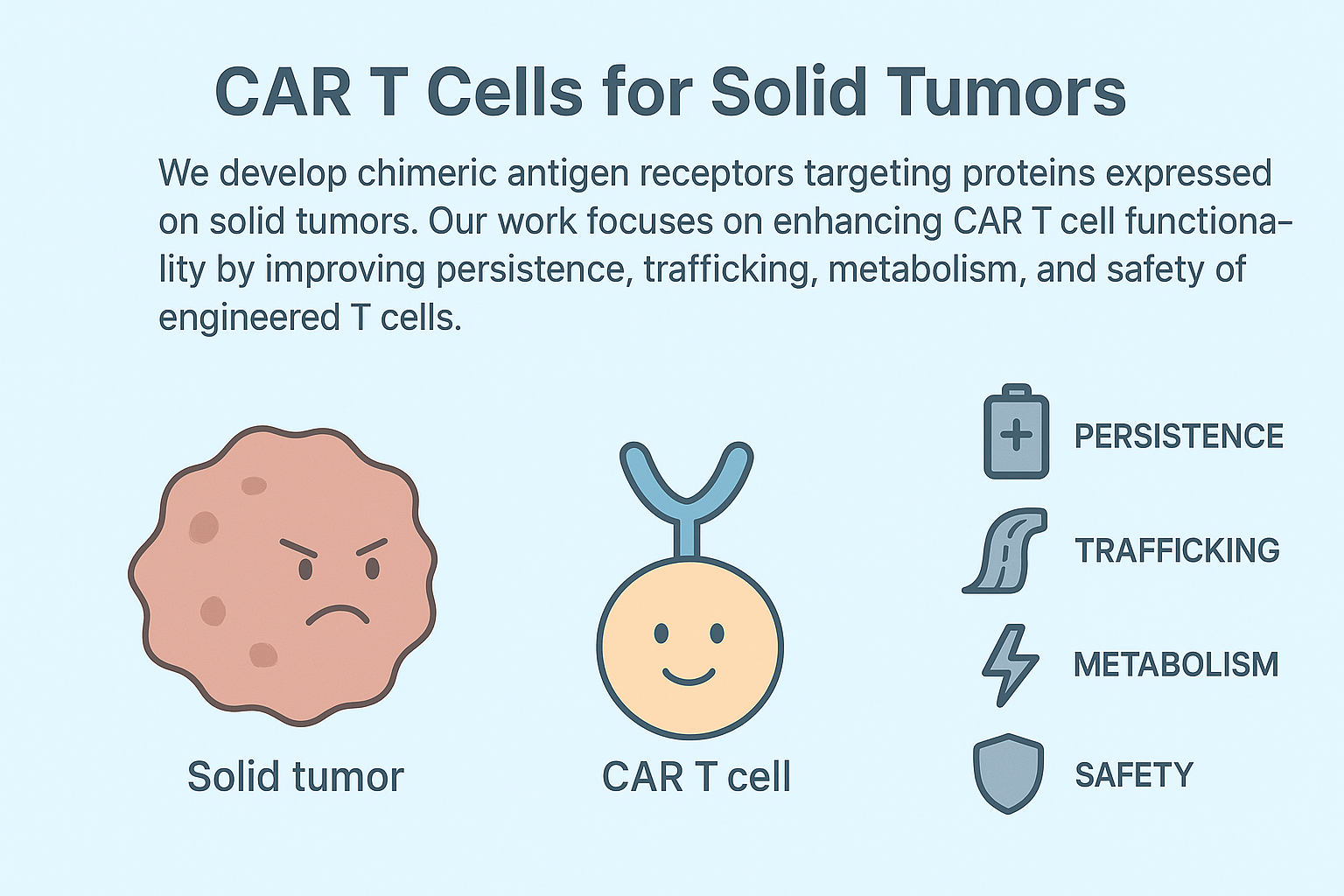
CAR T Cell Therapy for Solid Tumors in Pediatric and Young Adult Patients
In order to function as a therapy for solid tumors, CAR T cells need to 1) express a CAR that targets a protein made by the cancer, 2) traffic to the site of the cancer, 3) kill the cancer cells, and 4) persist in the body to make sure the cancer does not come back.
In our lab, we find and test new CAR target proteins for a variety of solid cancers. We carefully select CAR target proteins that are only made by tumor cells and not made by normal cells in the body, which ensures the safety of our CAR T cells. We study the biology of CAR T cell trafficking at the molecular level, meaning we look at the specific proteins that allow CAR T cells to move around the body and find the tumor. We use this understanding of T cell trafficking to engineer our CAR T cells so that they are better able to home to the tumor.
We also study the metabolism of CAR T cells to understand how they use different nutrient sources for energy for maximum function and persistence. We use this understanding of metabolism to come up with new ways of making CAR T cells so that they are primed to function long-term. Our goal is to engineer our CAR T cells to have favorable safety, trafficking, metabolism and persistence in treating childhood cancers.
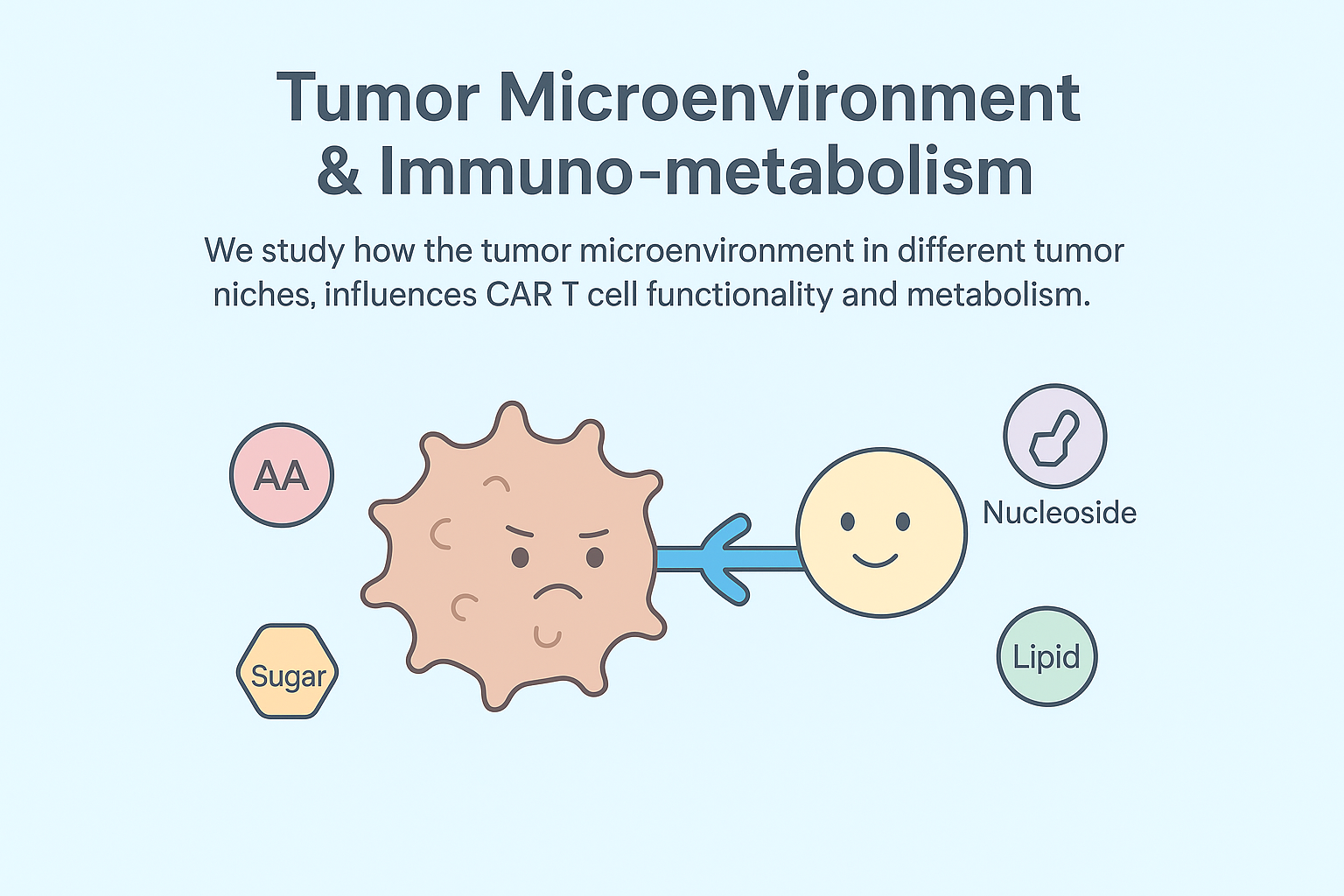
Understanding How the Tumor Microenvironment Affects CAR T Cells
Solid tumors are made up of cancer cells (the bulk of the tumor) as well as support cells and immune cells, which collectively form the tumor microenvironment. The tumor microenvironment includes molecules made by the support cells and immune cells, such as metabolites and other immune modulators, which can stop CAR T cells from working and prevent them from killing the cancer cells. We study how the tumor microenvironment of different solid tumors influences how CAR T cell function as well as their metabolism. We hope to use this understanding to build defense mechanisms into our CAR T cells that allow them to work even in harsh tumor microenvironments.
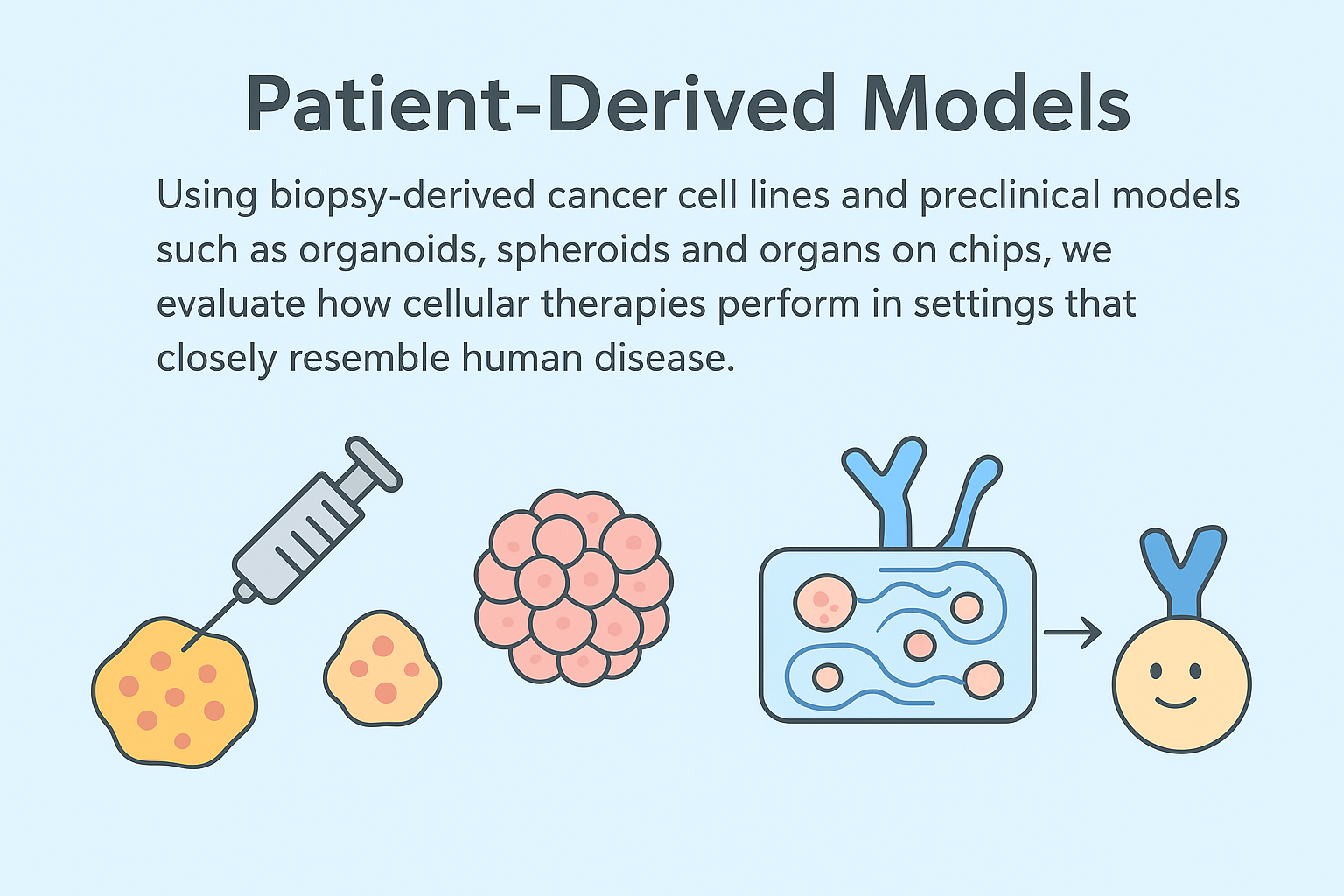
Building Patient-Derived Models
We build preclinical models to test our CAR T cells in settings that closely resemble cancer as it is in the human body. These models include using biopsy-derived cancer cell lines, where cancer cells from a biopsy are grown the lab to use as the “target” cells for CAR T cell therapy. We also build tumor organoids, spheroids, and organs-on-a-chip, which better model solid tumors than conventional two-dimensional cell culture dishes and help us understand how our CAR T cells work in a three-dimensional space.
Selected Publications
Blood Advances
Molecular Therapy Oncology
Nature Communications publication
Cancer Research
OncoImmunology
Molecular Therapy
Cancers
Lab Members

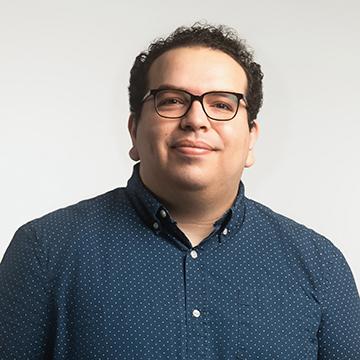


Funding Partners
The Lior Goldberg Lab would like to thank our patients for their generosity in taking part on our studies during a very difficult period in their lives. In addition, we extend our endless appreciation to the following funding partners for their generous contributions and support.
- The National Institute of Health/National Cancer Institute
- The Department of War/Congressionally Directed Medical Research Programs
- Hyundai Hope on Wheels
- The Margaret E. Early Medical Research Trust
- The Albert and Bettie Sacchi Foundation
- The Norman and Sadie Lee Foundation
- The Harriet H. Samuelsson Foundation
- The Ted Schwartz Immunotherapy Accelerator Fund
- The Belardi Family Cellular Immunotherapy Innovation Fund
- The Mike & Linda Fiterman Family Foundation
- The Rothweiler Family

Contact the Lior Goldberg Lab
34.129089116134, -117.97240974275
Beckman Research Institute, Rm. 4115
Duarte, CA 91010