Robert Jenq Lab
The Jenq Lab at City of Hope® examines the impact of the microbiome on cancer treatment outcomes, with a focus on bone marrow transplantation and cancer immunotherapies. Data from our group and others have demonstrated that the microbiome can be a potent modulator of treatment efficacy and toxicity. Using a multidisciplinary approach, including microbiome sequencing, computational methods, functional assays and preclinical models, we aim to develop and translate strategies that target the microbiome to enhance treatment efficacy while reducing toxicities.
Jenq Lab Research
Allogeneic hematopoietic cell transplantation (allo-HCT) is a standard therapy for a range of benign and malignant hematological diseases. Despite advances in allo-HCT protocols, this remains a high-risk treatment modality, largely because patients are at risk of developing graft-versus-host disease (GVHD) — a severe inflammatory condition that frequently affects the intestinal tract and contributes substantially to morbidity and mortality. Over the past decade, multiple studies have shown that gut microbiota injury, or dysbiosis, often precedes GVHD and subsequent treatment-related mortality.
The most common cause of gut microbiota injury in patients undergoing allo-HCT is the use of antibiotics to treat life-threatening infections in these immunocompromised individuals. We recently reported that one commonly used antibiotic, meropenem, is both associated with increased intestinal GVHD in allo-HCT patients and can aggravate experimental GVHD in mouse models (Cell 2022). One key mechanism of these effects appears to be antibiotic-mediated selection of mucus-degrading Bacteroides, leading to erosion of the colonic mucus and increased bacterial translocation.
We have also investigated neutropenic fever is another common toxicity of allo-HCT. In our recent study, we found that Akkermansia and Bacteroides, both capable of degrading mucins, were associated with the development of neutropenic fever (Sci Transl Med 2022). Mouse experiments involving antibiotic-mediated depletion and subsequent reintroduction of these bacteria demonstrated that Akkermansia and Bacteroides species synergize to induce thermodysregulation and compromise intestinal mucus in mouse models of HCT conditioning.
These findings suggest that mucus-degrading gut bacteria may be microbial drivers of both neutropenic fever and GVHD, and thus promising therapeutic targets. Our ongoing work aims to further elucidate the mechanistic pathways by which these bacteria contribute to neutropenic fever and GVHD pathology, and to evaluate strategies for restoring gut barrier integrity and improving transplant outcomes. The key questions we are investigating include:
- Immune system development: How does the microbiome influence the development and regulation of the immune system, particularly through its effects on immune cell polarization and immunological responses?
- Immune modulation: In what ways do microbial metabolites and structural components modulate both innate and adaptive immune cells, such as dendritic cells, macrophages, and T lymphocytes, and how do these immune cells interact with one another?
- Therapeutic potential: How can we harness the microbiome for therapeutic purposes, including enhancing the efficacy of cancer immunotherapies and reducing the risk of immune dysregulation in inflammatory and autoimmune diseases?
Emerging Research Areas
- Microbiome and immune checkpoint inhibitor colitis
- Microbiome and CAR T cell response rates
- Commensal bacteria as anti-tumor immunity enhancing agents
- Bacterial and dietary or prebiotic strategies to prevent neutropenic fever and GVHD
- Role of immune responses against commensal bacteria in GVHD
- Clinical testing to characterize the microbiome prior to cancer immunotherapies
- Novel strategies to characterize the microbiome, including long-read metatranscriptomics, metaproteomics, targeted and non-targeted metabolomics
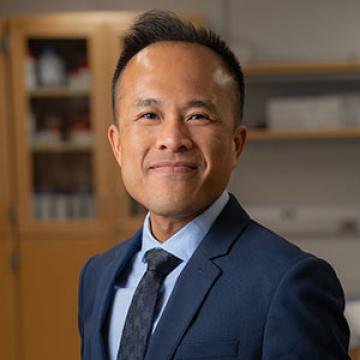
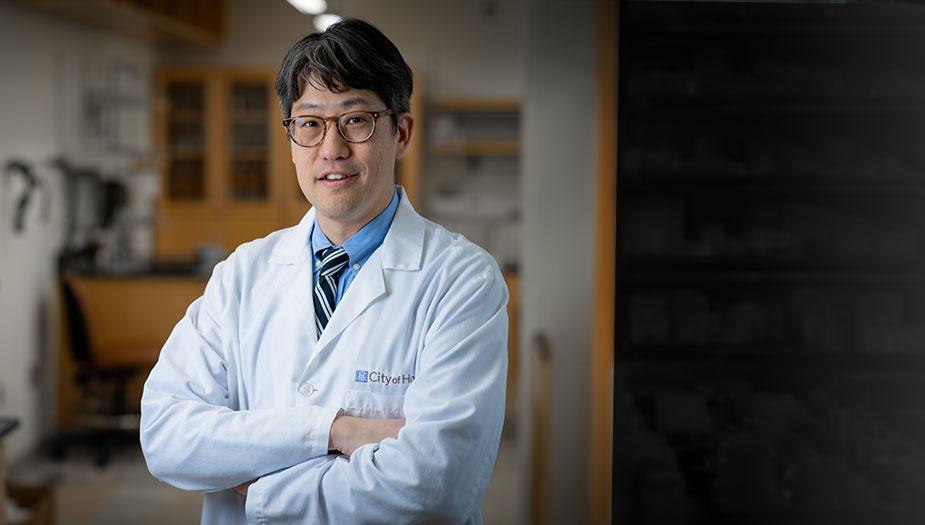
Robert R. Jenq, M.D., is the director of the City of Hope Microbiome Program and a clinical professor in the Department of Hematology and Hematopoietic Cell Transplantation.
Lab Members

Marina Chen, Ph.D., earned her Ph.D. in molecular epidemiology
...
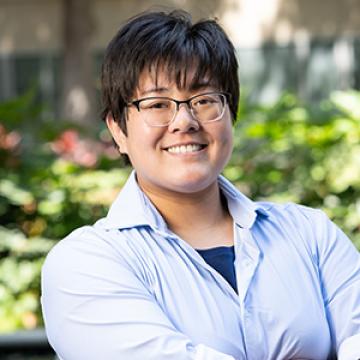
Marina Chen, Ph.D., earned her Ph.D. in molecular epidemiology from Harvard University in Cambridge, Massachusetts, under the mentorship of Dr. Curtis Huttenhower, where she trained as a computational biologist. Her doctoral research focused on microbial ecology and human-environment microbiome interactions, leveraging novel sequencing technologies and advanced computational approaches. She is currently continuing her microbiome research in the Jenq Lab, investigating how the gut microbiome and microbially derived metabolites influence graft versus host disease following allogeneic hematopoietic stem cell transplantation.
After earning her Bachelor of Science in biochemistry from the
...
After earning her Bachelor of Science in biochemistry from the National University of Mongolia, Altai Enkhbayar pursued laboratory research and completed a master’s in biological chemistry at the Korea Institute of Science and Technology. During her graduate studies, she developed a strong interest in understanding host–microbiota interactions within the context of cancer biology. In 2022, she began her Ph.D. program at MD Anderson UTHealth Houston Graduate School of Biomedical Sciences, where she joined Dr. Robert Jenq's team. Now continuing her thesis project in the Jenq Lab at City of Hope, she is investigating how diet and the gut microbiome contribute to the accumulation of somatic mutations in the colonic epithelium.
Edward Hu earned his B.S. in Chemical Engineering with a
...
Edward Hu earned his B.S. in Chemical Engineering with a biomolecular concentration from UCLA in 2025. As an undergraduate, he conducted research in the Junyoung Park Lab under the mentorship of Glenn Nurwono, contributing to projects on optimizing the biosynthetic production of Aspterric Acid and elucidating the pathway for a novel terpenoid. After graduating, he joined the Jenq Lab, where he assists on projects to improve CAR T cell therapy and cancer treatment efficacy, as well as on T cell-mediated antigen identification with Dr. Rishika Prasad and Dr. Maren Schmiester.
Cynthia Jinno, Ph.D., is currently a postdoctoral fellow in the
...
Cynthia Jinno, Ph.D., is currently a postdoctoral fellow in the Jenq Lab, where she studies the gut microbiome in relation to graft-versus-host disease. She earned her Ph.D. in animal biology from the University of California, Davis, in 2022 under the mentorship of Dr. Yanhong Liu. Her doctoral research focused on how probiotic interventions influence the gut microbiota and health outcomes in weaned pigs under diarrheal stress. Prior to her current role, she held a postdoctoral scientist position at Cedars-Sinai Medical Center in Dr. Hideki Furuya’s lab, contributing to biomarker discovery projects in early-stage breast and bladder cancer using both murine models and clinical datasets.
Aqsa Mohammed graduated from the University of Washington Bothell
...
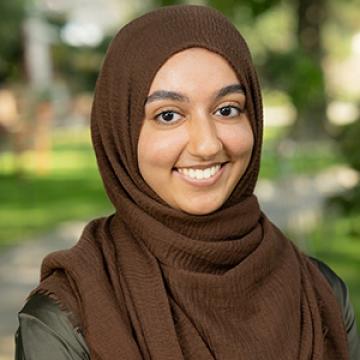
Aqsa Mohammed graduated from the University of Washington Bothell with a Bachelor of Science in biology in 2020. As a post-baccalaureate researcher, she gained experience in immunology by characterizing gut immune populations in autoimmune disease models. In 2022, she joined the Ph.D. in immunology program at MD Anderson UTHealth Houston Graduate School of Biomedical Sciences under the mentorship of Dr. Robert Jenq. She is continuing her graduate studies at City of Hope, where she is exploring non-antibiotic approaches to modulate the gut microbiome as novel treatment strategies for toxicities associated with allogeneic hematopoietic stem cell transplantation, including neutropenic fever and graft-versus-host disease.
Stephen Mok, Ph.D., is an immunologist and Assistant Research
...
Stephen Mok, Ph.D., is an immunologist and Assistant Research Professor currently working in the laboratory of Dr. Robert Jenq. His research focuses on bacterial engineering and the discovery of tumor-associated antigens for cancer immunotherapy. He earned his Ph.D. in the laboratory of Dr. Antoni Ribas at UCLA, where he studied T cell receptor (TCR) engineering and the interactions between immunosuppressive myeloid cells, T cells, and cancer cells within the tumor microenvironment. Dr. Mok then completed his postdoctoral training at The University of Texas MD Anderson Cancer Center in the laboratory of Nobel laureate Dr. James Allison, investigating the effects of immune checkpoint inhibitors, such as anti-CTLA-4 and anti-PD-1, on memory T cell generation and strategies to reduce immune-related adverse events (irAEs).
Rishika Prasad trained as an engineer, earning her master’s
...
Rishika Prasad trained as an engineer, earning her master’s degree from Cornell University before shifting her focus to cancer outcomes and immunotherapy at The University of Texas MD Anderson Cancer Center. She joined Dr. Robert Jenq’s team at MD Anderson as a Ph.D. student to investigate how gut microbiota influence responses to CAR T cell therapy in lymphoma patients. Now continuing her training as a postdoctoral fellow at City of Hope under Dr. Jenq’s mentorship, Rishika is exploring ways to modulate the microbiota to improve outcomes for cancer patients undergoing stem cell transplantation and CAR T cell therapy.
Mathilde Raybaud began her research journey with Dr. Robert Jenq
...
Mathilde Raybaud began her research journey with Dr. Robert Jenq at The University of Texas MD Anderson Cancer Center in 2020 to 2021, where she served as an intern investigating the role of Akkermansia muciniphila in the development of neutropenic fever in patients undergoing hematopoietic cell transplantation. In 2023, she earned her Bachelor of Science in biochemistry from McGill University, where she continued as a postbaccalaureate researcher. During this time, she worked under Dr. Jörg Fritz, characterizing type 2 innate lymphoid cells (ILC2s) and exploring their inflammatory functions. Building on her interest in microbiome research, Mathilde rejoined Dr. Jenq at City of Hope as a research associate. She is set to begin her master’s in Translational Medicine at City of Hope, where her project will focus on genetic mutations in bacteria within allogeneic hematopoietic stem cell transplantation disease models.
Maren Schmiester, M.D., earned her medical degree from Charité –
...
Maren Schmiester, M.D., earned her medical degree from Charité – Universitätsmedizin Berlin and joined the university hospital’s Department of Hematology, Oncology and Cancer Immunology as a physician-scientist. Under the mentorship of Prof. Il-Kang Na, she led a project evaluating flow cytometric microbiome analyses in cancer patients. After completing her board examinations in internal medicine, she joined the Jenq Lab in 2024 as a visiting postdoctoral research scholar. She is currently investigating the role of microbiota-specific T cells in graft-versus-host disease.
Contact the Jenq Lab
34.1310787, -117.9720032
Duarte, CA 91010