In the early 1900s, physicians noticed a strange phenomenon: Men who labored in physically demanding jobs were less likely to develop cancer than their more sedentary peers. More than 100 years later, researchers are now starting to explain why exercise seems to provide a benefit against cancer, and how exercise programs could eventually be tailored to different patients and cancer types.
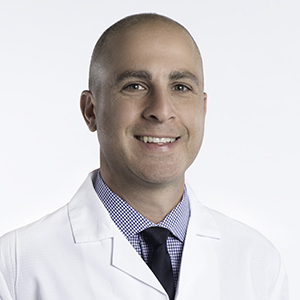
“We’re entering a new era of exercise oncology, where people are starting to think of exercise as a prescriptive therapy or medication alongside other treatments like chemotherapy, radiation or surgery,” said Saro Armenian, D.O, M.P.H., director of the division of outcomes research/intervention at City of Hope.
Clinical trials are now underway to answer questions such as what dose of exercise works best, which patients may benefit the most and even which tumor types are most responsive.
But unlike other emerging or experimental cancer therapies where patients and survivors often need to wait years for Food and Drug Administration approval to access, exercise is something anyone can start right away, Dr. Armenian said.
“Nobody asks to be diagnosed with cancer,” he said. “These types of exercise strategies can be incredibly empowering for patients and survivors as a way to take charge of their lives.”
Beyond Wellbeing: Exercise as Medicine
Scientists have recognized for some time that exercise is beneficial for patients with cancer, but researchers previously thought its primary role was to help patients feel better and improve their overall wellbeing.
That perception changed in 2025 with a landmark study of patients with colon cancer that found a structured exercise program after treatment actually improved cancer outcomes, including lower rates of recurrence and improved overall survival. The study, a large, randomized clinical trial, provided the first gold-standard evidence of exercise as a form of therapy.
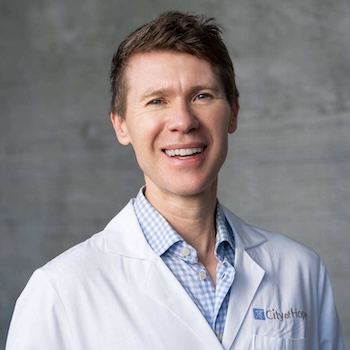
“It really put exercise on the map,” said Lee W. Jones, Ph.D., director of the exercise oncology program at Beckman Research Institute of City of Hope and corresponding author of an exercise oncology paper that published today in the prestigious Nature Reviews Clinical Oncology.
That 2025 landmark trial jump-started a new wave of research aimed at studying exercise like other cancer interventions, investigating mechanisms, dose, patient selection and differences in response. The goal is precision exercise oncology or the development of biology-guided exercise programs that are tailored to individual patients and their specific type of cancer.
“We’re seeing that exercise is not one-size-fits-all, similar to how other cancer therapies are not one-size fits all,” Dr. Armenian said.
Current guidance around exercise for cancer patients and survivors is frustratingly broad, Jones said.
“People say, ‘Just exercise more. It benefits everybody.’ And that’s kind of true and kind of not. We need better, more rigorous research to support and guide current advice,” Jones added. “When we talk about precision exercise oncology in the near future, we’ll be talking about specific doses in specific populations and specific tumors.”

The Biology of Exercise and Cancer
Exercise affects multiple systems in the body, but current research suggests that the main way it helps fight cancer is by stimulating the immune and inflammatory systems.
In fact, studies have found that not only does exercise improve the number and type of immune cells in the body, but it also improves their ability to penetrate the tumor microenvironment, helping them attack cancer cells more effectively, Jones said.
How much exercise is needed to produce that result, which cancer types respond and whether these effects improve responses to other cancer therapies are currently key research questions.
Although exercise advocates often take a “more is better” approach, studies show that may not be the case. In both a mouse study and a study of men with prostate cancer, Jones compared low, medium and high amounts of exercise. He found that the benefits plateaued at higher levels.
“You don’t need to run marathons to get the benefit,” Jones said. “More moderate amounts might be the sweet spot.”
Research also suggests that certain cancers might be more responsive to exercise than others.
In another mouse study, Jones and his team compared different subtypes of breast cancer tumors. Of the seven tumor types studied, three grew slower in mice who ran on treadmills, while four were not affected.
Interestingly, researchers found that alterations in a common cancer pathway were strongly associated with whether tumors responded to exercise.
The findings suggest that exercise programs could be designed for specific tumor types and that exercise could be used in combination with drugs that target certain pathways, Jones noted.
The City of Hope team now plans to bring the research into the clinic by studying how different tumor types respond to exercise in women with breast cancer.
Dr. Armenian called the current wave of research eye-opening.
“That level of complexity and specificity has really been surprising to me,” he said.
How Patients Can Benefit from Exercise Oncology
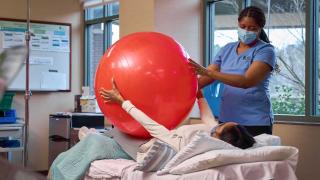
While City of Hope offers a free exercise program for patients, exercise oncology is not yet widely available nationwide. But Drs. Armenian and Jones expect that to change, especially as clinical trials provide more and more evidence supporting its therapeutic effects.
In the meantime, patients don’t need to wait to benefit, Dr. Armenian said.
“There’s no question that all forms of exercise are helpful for our patients for a myriad of reasons, from functional physical health to cancer-related outcomes,” he said.
Technology is also making exercise therapy and clinical trials more accessible to patients, he added, with exercise equipment like treadmills sent directly to patients’ homes, wearable monitors providing feedback and sessions supervised remotely via telehealth.
Exercise can also play an important role in survivorship, he added, noting that the population of cancer survivors is growing, with many facing long-term side effects from chemotherapy and radiation.
“Exercise can be a way to optimize health in this next chapter of life,” Dr. Armenian said. “It has tremendous benefits for long-term wellbeing.”
Experts
Lee W. Jones, Ph.D., is internationally renowned in the field of exercise science. Dr. Jones leads City of Hope’s Exercise Oncology Program, which investigates the effects and mechanisms of structured exercise therapy on the development and treatment of cancer, with a particular emphasis on clinical outcomes for high-risk patients. Dr. Jones’ work has played a pivotal role in establishing exercise oncology as both an intervention for mitigating the adverse physiological consequences of cancer therapy and a biological antitumor strategy.
Saro Armenian, D.O, M.P.H., is an internationally recognized physician-scientist and one of the nation's leading experts in cancer survivorship. Dr. Armenian leads City of Hope's Childhood, Adolescent and Young Adult Survivorship Program and directs research focused on the long-term health effects of cancer and its treatment, including heart disease, secondary cancers and other late complications. His work has helped shape national and international guidelines for survivorship care, advancing how cancer survivors are monitored and supported throughout their lives.
The Nature Reviews Clinical Oncology paper “Current evidence for exercise therapy in cancer prevention and treatment” was supported by City of Hope’s Cancer Center Support Grant from the National Cancer Institute/National Institutes of Health (P30CA033572) and the Cherng Family Center for Integrative Oncology.
The content is solely the responsible of the authors and does not necessarily represent the official views of the National Institutes of Health.