When people learn they need cancer surgery, they often face another difficult decision: whether to leave home for treatment.
For some, that means a long drive. For others, it means getting on a plane, taking time away from work and family and then recovering far from the people they depend on most.
But what if patients could receive care closer to home while still benefiting from the expertise of a highly specialized surgeon?
That question is driving interest in remote robotic surgery, an emerging technology that could change how cancer care is delivered in the years ahead. Today patients often ask me whether they should travel to me for surgery. In the future, the question may be different: Can you operate on me where I am?
Bringing Expertise to the Patient
The idea behind remote robotic surgery is simple.
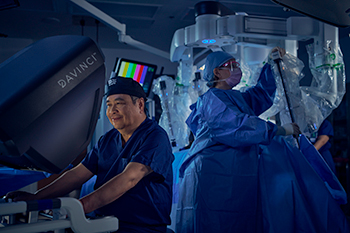
In robotic surgery, the surgeon already operates from a console rather than standing directly over the patient. The robot does not perform the operation on its own. Every movement is controlled by the surgeon.
Remote robotic surgery takes that concept one step further. Instead of sitting a few feet away in the same operating room, a surgeon could be in another location while securely controlling the robotic instruments in real time.
The goal is not to replace local care. The goal is to connect more patients with specialized expertise.
Many patients live far from major cancer centers. Others receive care in communities where access to highly specialized surgeons may be limited. Remote robotic surgery could help bridge that gap by bringing expert surgical care to more patients, regardless of where they live.
Cancer treatment is already physically, emotionally and financially demanding. Travel often adds another layer of stress. Patients may have to arrange transportation, hotels, childcare or time away from work. Family members frequently make sacrifices as well.
I believe we should be asking a different question: How can we make expert care more accessible?
One day, remote robotic surgery could allow patients to receive certain procedures closer to home while still benefiting from the experience of a specialized surgeon. For patients and families, that could mean fewer travel burdens and less disruption during an already challenging time.
Building the Future of Surgery
Remote robotic surgery may sound like science fiction, but researchers around the world have been studying it for years.
Recent advances in robotics, telecommunications and cybersecurity have made it possible to perform surgery remotely with a level of precision that would have been difficult to imagine just a generation ago.
At City of Hope, we have been helping advance this work through research, testing and international collaborations focused on patient safety.
Our teams have contributed to clinical recommendations for remote robotic surgery and conducted studies designed to better understand how these systems perform in real-world conditions.
These efforts are helping answer important questions about safety, reliability and how remote surgery could one day be integrated into patient care.
At the same time, researchers know that innovation alone is not enough. Any new approach must earn patients’ trust through evidence, training and careful oversight.
Remote robotic surgery requires highly trained teams, reliable communications systems, detailed emergency protocols and careful patient selection.
For the foreseeable future, many procedures will continue to be performed with surgeons physically present where the patient is receiving care. Some complex operations may always require in-person care. Remote surgery creates new ways to safely connect patients with expertise when distance would otherwise be a barrier.
Like every major advance in medicine, this technology must earn trust through evidence, careful oversight and a commitment to patient well-being.
Looking Ahead
We are still in the early stages of what remote robotic surgery may become in the United States.
Additional research, regulatory review and clinical experience will be needed before it becomes widely available. The direction is clear: Technology is creating new opportunities to connect patients and specialists in ways that were not possible even a decade ago.
For decades, patients have traveled to find specialized cancer care.
In the future, specialized cancer care may be able to travel to them.
If we succeed, more patients will be able to receive expert treatment closer to home, surrounded by their families and support systems. That is the future we are working toward.
PATIENT BENEFITS
What Could Remote Robotic Surgery Mean for Patients?
Remote robotic surgery is still being studied, but researchers hope it could:
- Reduce the need for long-distance travel for some procedures.
- Expand access to specialized surgeons.
- Help patients receive care closer to home.
- Allow more people to stay near family and support systems during treatment.
- Improve access to expert care in rural and underserved communities.
- Make it easier for local surgeons and specialists to work together.
About the Author
Yuman Fong, M.D., is chair of the Department of Surgery at City of Hope and an internationally recognized leader in surgical oncology, robotic surgery and cancer innovation. His work focuses on developing new technologies and approaches that expand access to high-quality cancer care.