Michael had lived 57 years without serious illness. “I was perfectly healthy,” he said. “I never liked hospitals, never needed them.” That changed during a military trip to San Diego, when sudden symptoms including double vision, right-sided chest pain, a severe headache and extreme fatigue led to an emergency hospital visit. The diagnosis: IgA lambda multiple myeloma, a rare blood cancer that has no definitive cure.
“When you first hear the word cancer, you think, ‘How many days, weeks, months do I have left?’” Michael said. “It feels like a death sentence.”
Tammy, Michael’s wife of more than 30 years with whom he shares six children, remembers the shock. “He called me from San Diego and said, ‘I have cancer,’” she recalled. “He’s a joker, so I didn’t want to believe it. But he’s also optimistic and a fighter and I knew he would fight it.”
The Long Road to Hope
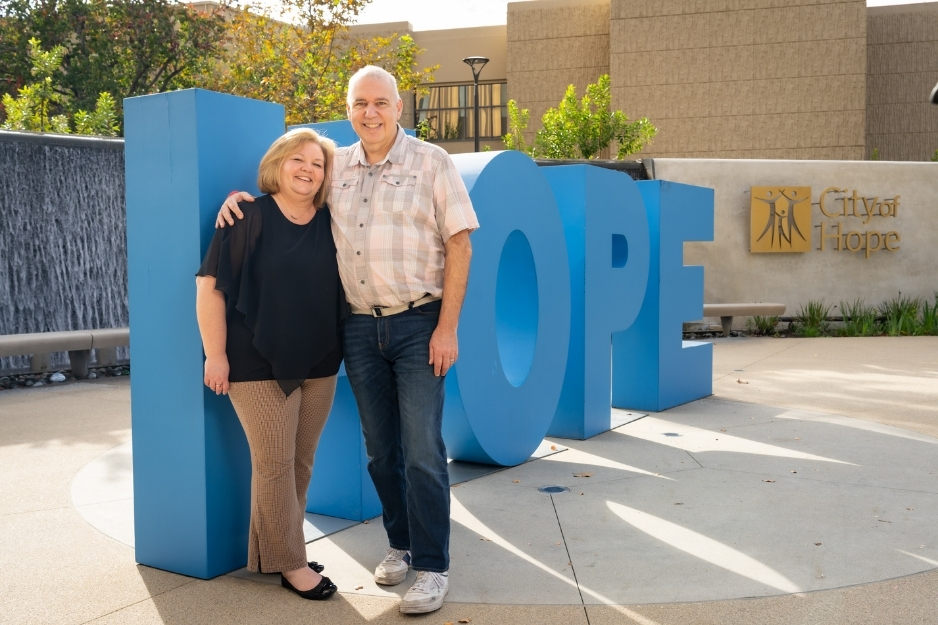
For a year, Michael endured grueling treatments near his home in Victoria, British Columbia. He was hospitalized several times due to side effects and complications from a regimen that included two types of combination [NKL1] chemotherapies and an autologous stem cell transplant. When Michael's disease relapsed early and spread to his lungs and liver, his [KN2] doctors knew a more advanced line of treatment was needed. Carvykti®, a groundbreaking CAR T cell immunotherapy that may provide longer periods of remission, offered hope but was not yet available in Canada.
More than 1,200 miles south, City of Hope’s National Medical Center in Duarte, California, a national leader in CAR T cell research and treatments, had what Michael needed. When he learned of the opportunity to travel there, he didn’t think twice.
“If the treatment was in the U.S. or Czechoslovakia, I didn’t care; I just wanted a solution that’s been verified,” he said. “At City of Hope, they do CAR T treatments daily. I was positively excited to go get it done, quite frankly.”
Traveling to another country for medical services wasn’t easy though. Tammy had never been away from their children for more than a few days. “That was hard, but the international patient services team at City of Hope made it easier,” she said.
City of Hope’s Center for International Medicine (CIM) has supported patients from more than 75 countries across six continents, ensuring that lifesaving therapies reach those who need them wherever they are. The team worked tirelessly with the Kingstons to navigate cross-border logistics and the unique challenges of coordinating care through Canada’s military medical system.
“There were a lot of moving parts,” Tammy said. “But the CIM team made it seamless. We walked onto this campus as foreigners, but we never felt like outsiders. City of Hope had us from day one.”
She says she will never forget the words or the people that carried her through the darkest days. “She didn’t know me,” Tammy said of Lucia Ramirez, a patient navigator with City of Hope’s CIM team. “But she said, ‘I’ve got you.’ And she delivered. In those moments when I felt alone, that meant everything.”
One lifeline for the Kingstons was a WhatsApp group set up by the team, a simple tool that made an already responsive team even more accessible. Michael says all their questions were answered, even late at night, giving them peace of mind throughout the transfer process and beyond.
“Our mission is to make sure international patients and their family feel supported every step of the way, from the first call to the last follow-up,” said Roxanna Man, senior director of international patient services at City of Hope. “For Michael and Tammy, that meant removing barriers so they could focus on healing.”
CAR T and Compassion
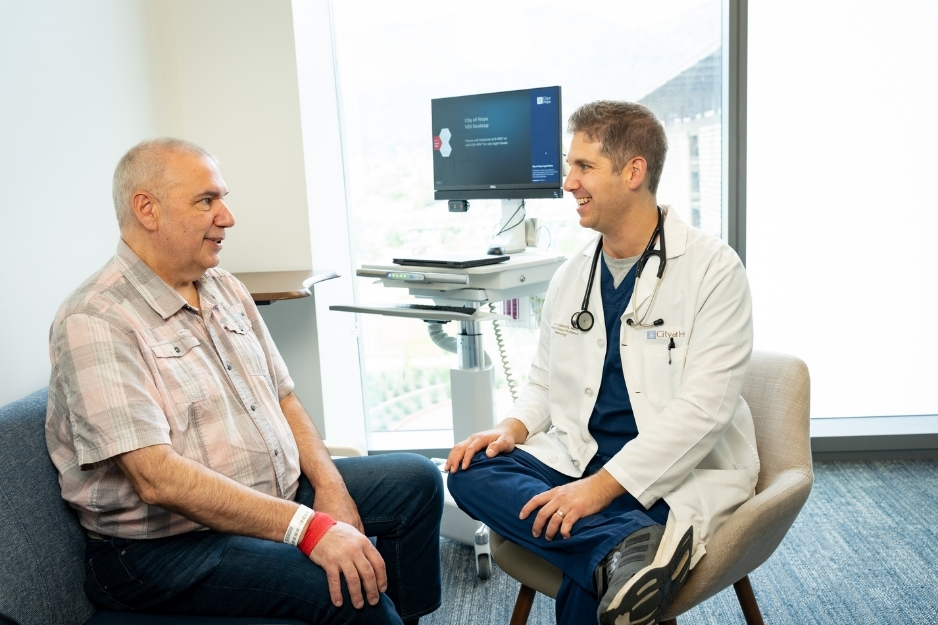
In August 2025, Michael received Carvykti® at City of Hope. It’s the only CAR T cell product that’s available for first relapse multiple myeloma. CAR T cell therapies take a type of immune cell called T cells from a patient’s body and then engineer them in a lab so that they are better able to fight cancer. The modified cells are then infused back into the patient’s body to help boost their immune response.
The treatment was intense, requiring close monitoring and hospital stays[RM3] , but the Kingstons say care was unwavering. Under the guidance of Scott Goldsmith, M.D., who specializes in multiple myeloma, and his team, they both felt reassured throughout the process.
“Dr. Goldsmith explained everything clearly and gave us hope when we needed it most,” Tammy said. “From the doctors to the nurses to the people who cleaned our room, everyone was amazing. Even the campus felt like a place of healing.”
Michael is now in full remission, a milestone made possible by advanced care and unwavering support.
“CAR T cell therapy is transforming outcomes for patients with multiple myeloma,” said Dr. Goldsmith. “The Center for International Medicine and Michael’s story exemplify how we can improve global access to these advanced and innovative therapies, so that more patients like Michael can achieve remission.”
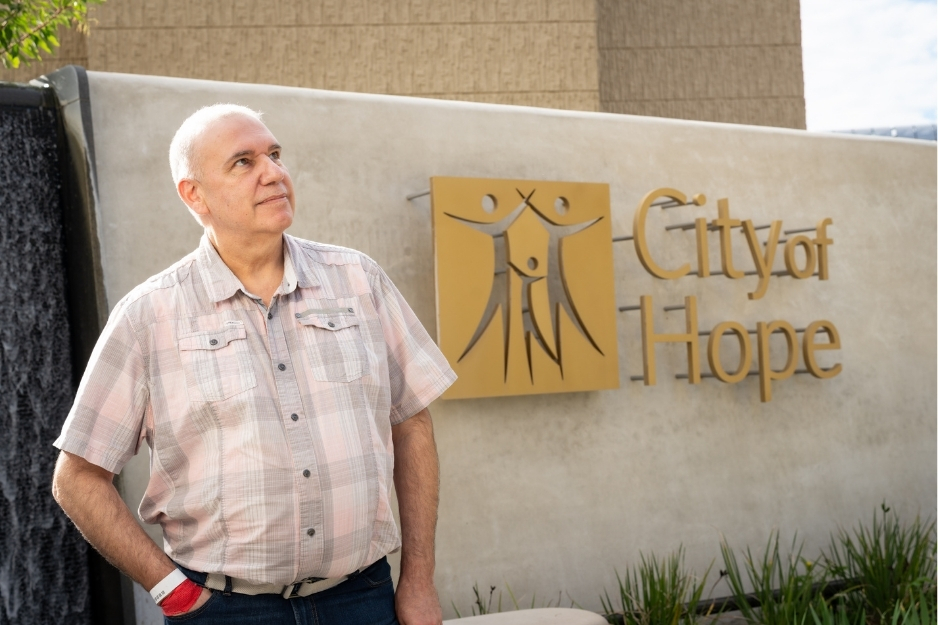
Michael remembers the comfort of familiar faces during his hospital stay. “Seeing the same nurses repeatedly. It helped,” he said. “You can’t schedule that, but it mattered. Everyone at City of Hope has been tremendously supportive.”
His outlook remains as steadfast and optimistic as ever: “I tell my kids, the glass isn’t half full or half empty; it’s full. Half water, half air. That’s how I choose to live.”
Tammy’s emotion is simpler: gratitude. “It’s just pouring through my veins,” she said. “City of Hope gave us this chance. From the international team to the nurses to the doctors, every single person cared. We’ll never forget that.”
The Kingstons hope that sharing their story helps inform and inspire others.
“You feel like you’re lost in a black hole,” Michael said of his experience with cancer. “But there’s light at the end of the tunnel. Believe in that light. It’s real.”
If you or a loved one is concerned about possible signs or symptoms of cancer and would like an initial appointment or a second opinion, call us 24/7 at (833) 902-5220.