
Andrei Rodin Lab
Research Lab Overview
The Andrei Rodin Lab conducts research in two interconnected areas. The first is computational systems biology, with an emphasis on interpretable artificial intelligence (AI) and machine learning (ML), probabilistic graphical models, information-theoretic methods and causal discovery under explicit modeling assumptions. We develop and apply these methods across diverse biomedical domains, including the molecular dynamics of proteins and protein complexes, spatial transcriptomics and spatial multi-omics, immune cell signaling and immuno-oncology, and multimodal data integration in cancer research, genetic epidemiology and clinical and translational research more broadly.
Our primary methodological focus is probabilistic AI/ML, particularly Bayesian network (BN) structure learning for high-dimensional, multiscale biomedical data. Current research directions include integrating BN structure learning with conventional statistical learning and deep learning (DL) approaches within hybrid AI frameworks and developing computationally scalable methods for modeling nonstationary network dependencies in temporally and spatially indexed data.
Our second longstanding research interest is evolutionary biology, including the origins of the genetic code and translation machinery, the evolution of protein networks, molecular evolution and phylogenetic analysis and the mathematical modeling of epigenetic regulatory mechanisms.
Our research is made possible in part by the generous support of the Dr. Susumu Ohno Endowed Chair in Theoretical Biology and the Susumu Ohno Distinguished Investigator Fellowship, for which we are deeply grateful.
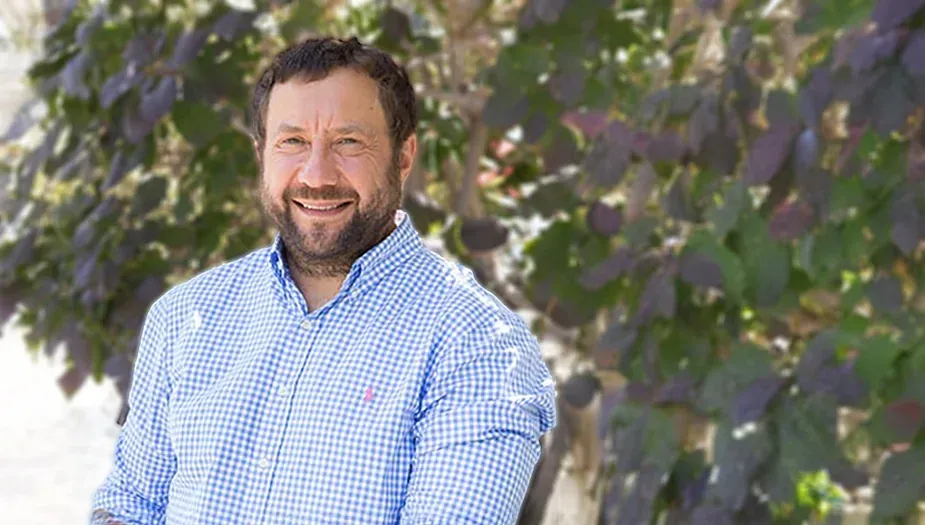
Andrei S. Rodin, Ph.D., is a Professor in the Department of Computational and Quantitative Medicine at the Beckman Research Institute of City of Hope, where he holds the Dr. Susumu Ohno Endowed Chair in Theoretical Biology. He also serves as Co-Director of the Division of Mathematical Oncology and Computational Systems Biology.
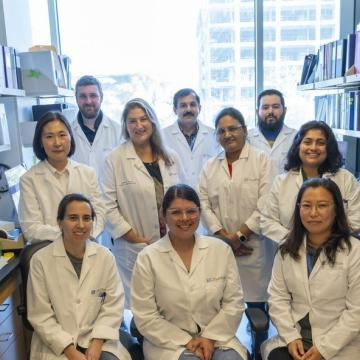
Lab Members
Join one of our labs and help us on our mission to save lives.
Our Publications
Gogoshin G, Rodin AS.
Wei W, Del Mundo R, Yang T, Mukhaleva E, Sivaraj IR, Shanmugasundaram V, Branciamore S, Rodin AS, Sivaramakrishnan S, Ma N, Vaidehi N.
Wei W, Taylor HD, Ma N, Rodin AS, Branciamore S, Dohlman HG, Vaidehi N.
Craig DW, Rodin AS.
Manookian B, Mukhaleva E, Gogoshin G, Bhattacharya S, Vaidehi N, Rodin AS, Branciamore S.
Latest Research News
Contact Information
34.1291661, -117.9725847
Monrovia, CA 91016