
Enrique Velazquez Villarreal Lab
Research Lab Overview
The Velazquez Villarreal Lab focuses on gastrointestinal cancers — particularly colorectal and pancreatic cancer — which are marked by rising incidence among younger populations and persistent disparities in underserved communities.
The laboratory develops artificial intelligence (AI)-driven platforms and conversational AI agents, including AI-HOPE (Artificial Intelligence Agent for High-Optimization and Precision Medicine) for colorectal cancer and AI-HOPE for pancreatic cancer. These platforms are part of the broader AI-HOPE ecosystem, which integrates clinical, genomic and multi-omics datasets to accelerate discoveries in cancer biology and translational medicine. By enabling researchers and clinicians to analyze complex biomedical data, generate testable hypotheses and identify clinically actionable biomarkers, these tools aim to advance early cancer detection, improve risk prediction, guide treatment selection and identify molecularly directed therapies tailored to each patient’s tumor profile.
A major focus of the lab is the molecular characterization of colorectal cancer across diverse populations, including Hispanic and Latino communities that experience a disproportionate cancer burden. By combining genomics, spatial biology, epidemiology and AI, the team aims to better understand tumor biology, identify drivers of cancer disparities and develop precision medicine approaches that improve outcomes for all patients.
Through interdisciplinary collaboration spanning bioinformatics, genomics, epidemiology and clinical oncology, the lab seeks to transform how cancer data is analyzed and translated into real-world clinical impact. Our mission is to leverage AI-enabled precision oncology to improve early cancer detection and therapeutic decision making in gastrointestinal cancers.
Research Areas
AI-Driven Precision Oncology Platforms
The Velazquez Villarreal Lab develops autonomous AI agents and conversational AI systems that accelerate discovery in precision oncology. A central innovation is the AI-HOPE ecosystem, a suite of AI-driven tools that integrate clinical, genomic and multi-omics data to support automated hypothesis generation and translational cancer research. These platforms allow researchers to interact with complex datasets using natural language, lowering technical barriers and enabling real-time exploration of cancer biology.
- Dr. Velazquez Villareal talks about AI-HOPE in The Cancer Letter
- Dr. Velazquez Villareal's ASCO posters
AI-HOPE for Colorectal Cancer Genomics
One major project applies AI-HOPE agents to colorectal cancer datasets to identify clinically relevant genomic alterations and molecular pathways. For example, AI-HOPE analyses have identified enrichment of TP53 mutations in advanced colorectal cancer and associations between KRAS mutations and poorer outcomes in patients treated with FOLFOX chemotherapy, demonstrating the ability of AI agents to extract biologically meaningful insights from large clinical genomic datasets.
View his AACR video on Facebook
Pathway-Focused AI Agents for Cancer Biology
The lab is developing specialized AI agents targeting specific signaling pathways involved in cancer progression, including the TP53, MAPK, TGF β and JAK STAT pathways. These systems integrate genomic and clinical data to study early-onset colorectal cancer, identify therapeutic vulnerabilities and explore how pathway alterations influence treatment response and patient outcomes.
View his ASCO video, Journal of Hematology Oncology Pharmacy
Multi-Omics and Spatial Biology in Gastrointestinal Cancers
Another key research area is the integrative analysis of multi-omics datasets, including genomics, transcriptomics and emerging spatial biology technologies. By combining this data with AI-driven analytics, the lab aims to uncover molecular mechanisms underlying gastrointestinal cancers, especially colorectal cancer, and identify biomarkers for early detection and precision medicine applications.
Read his article in The Cancer Letter
Cancer Disparities and Precision Oncology
A central mission of the laboratory is addressing cancer health disparities, particularly among Hispanic and Latino populations. The lab investigates molecular drivers of colorectal cancer across diverse groups and integrates genomic, clinical and social determinants of health data to better understand differences in cancer risk, progression and treatment outcomes.
Read his article in Stories of Hope
Community-Engaged Translational Multi-Omics and AI for Health Literacy
Beyond molecular research, the lab translates multi-omics discoveries into community-focused interventions aimed at improving health literacy and cancer prevention. Using AI agents, the team is developing patient-centered tools that communicate complex genomic and clinical information in accessible ways for patients, caregivers and underserved communities. These AI-enabled approaches bridge the gap between scientific discovery and public health by supporting community engagement, raising awareness of colorectal cancer risk and empowering individuals to participate in precision oncology and early detection programs.
View his video on Blood Cancer United
Future Directions: AI Agents for Translational Medicine
Looking ahead, the Velazquez‑Villarreal Lab aims to expand its AI‑agent frameworks to integrate electronic health records, genomic sequencing and population‑level data. These next‑generation systems will support AI‑enabled precision oncology by helping researchers and clinicians discover biomarkers, predict treatment response and ultimately improve cancer outcomes across diverse populations.
Enrique Velazquez Villarreal, M.D., Ph.D., M.P.H., M.S., is a physician-scientist, surgeon and computational geneticist specializing in cancer genomics, precision medicine, supercomputers, big data and artificial intelligence.
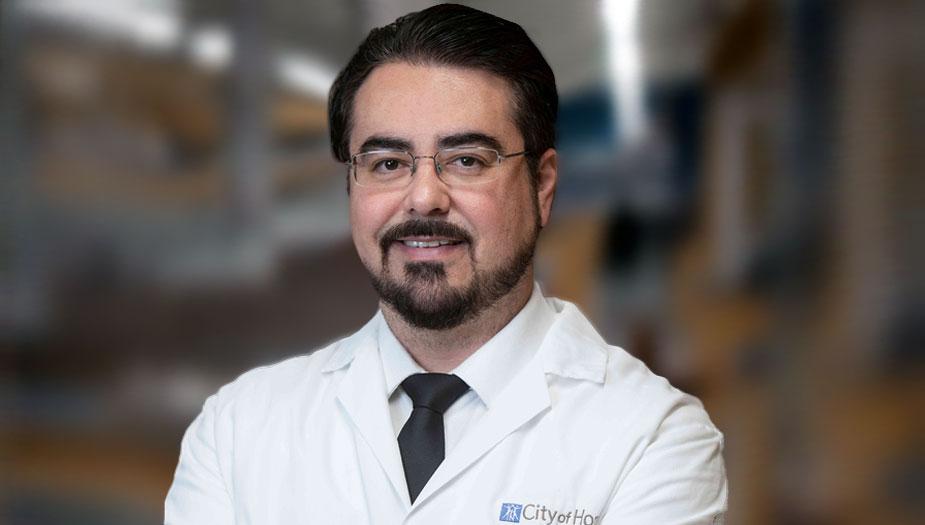
Lab Members
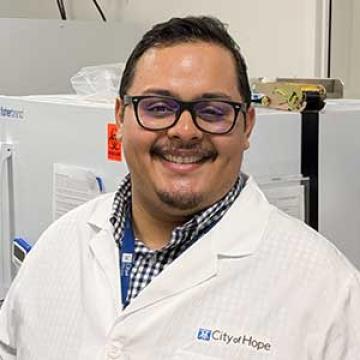
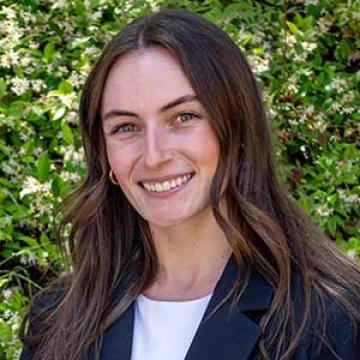
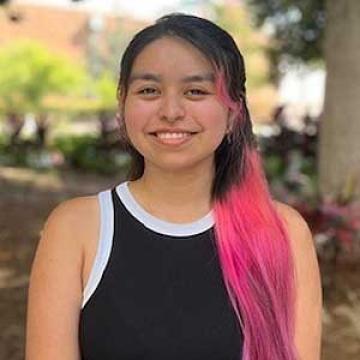
The Velazquez Villarreal Lab at City of Hope welcomes scientists, trainees and collaborators interested in molecular cancer characterization, artificial intelligence, precision oncology and translational multi‑omics in gastrointestinal cancers. Our multidisciplinary team — spanning clinical oncology, genomics, bioinformatics and AI — develops innovative approaches for early detection, biomarker discovery, precision medicine and reducing cancer health disparities. We invite students, postdoctoral fellows, computational scientists and clinical partners who share our mission of leveraging AI‑driven technologies to improve cancer research and patient outcomes. For collaboration, training opportunities or general inquiries, please contact Dr. Velazquez Villarreal at [email protected].
Our Publications
Latest Research News

Contact Information
34.1291661, -117.9725847
Duarte, CA 91010