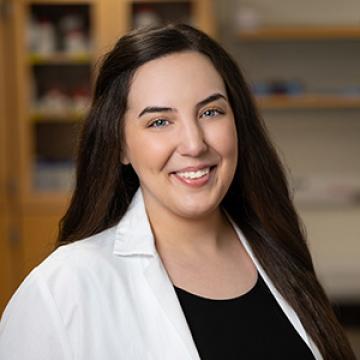
Claire Chappuis, M.S., R.D., is a registered dietitian with the Microbiome Program at City of Hope. Her work supports clinical research investigating the relationship between diet, the microbiome and cancer. She applies her nutrition expertise toward study planning and implementation, leading dietary assessments and data collection efforts.
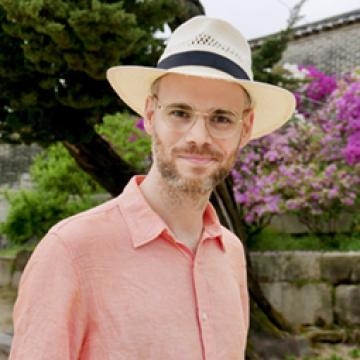
Tyler Funnell, Ph.D., is a senior computational biologist studying the microbiome in hematopoietic cell transplant recipients. His primary appointment is with the van den Brink Laboratory at City of Hope. Tyler holds a Ph.D. from Cornell University, where his research focused on identifying patterns of genomic variation in breast and ovarian cancers.
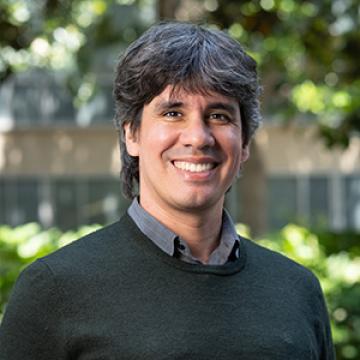
Antonio L. C. Gomes, Ph.D., is the Bioinformatics Director of the Microbiome Program at City of Hope. Dr. Gomes is particularly interested in understanding how the intestinal microbiota modulates the immune system and influences the outcomes of CAR T-cell therapy and allogeneic hematopoietic cell transplantation. He earned his Ph.D. from Boston University and held research roles at Columbia University, Memorial Sloan Kettering Cancer Center and Xbiome. His experience spans microbiome research, gene regulation, systems biology, synthetic biology and microbial therapeutics.
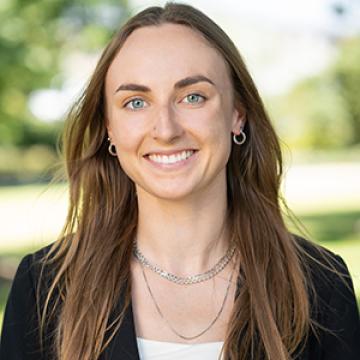
Emma Kuntz is a Research Associate in the Microbiome Core at City of Hope. She holds a B.A. in Biology from Bard College (2024) and a Postbaccalaureate Certificate in Biotechnology from California State University, Los Angeles (2025). In her role, she supports a range of collaborative projects by assisting with sample processing and data generation. Her work contributes to advancing research aimed at understanding microbiome dynamics in health and disease.
Jason Lee, B.S. is a Clinical Research Associate in the Microbiome Program. He earned his B.S. at University of California, Riverside with a degree in Biochemistry before joining the Jenq Lab. As a Clinical Research Associate, he supports the program through patient outreach, sample collection, and sample processing.
Xiaomeng Liang, Ph.D., is a Metabolomics Scientist in the Microbiome Program at City of Hope. Her research focuses on multi-omic approaches and advanced mass spectrometry–based screening strategies to uncover biomarkers linked to human health and disease. She obtained her Ph.D. from University of Copenhagen, Denmark and completed her postdoctoral training at Lawrence Berkeley National Laboratory before joining the program.
Phil Lorenzi, Ph.D., brings 16 years of experience in developing and managing state-of-the-art metabolomics and proteomics facilities. His innovations include stable isotope-based methods for quality control in metabolomic profiling, methods for accurately measuring unstable metabolites such as coenzymes and methods and software applications to aid in processing, visualizing and interpreting multi-omic data. He leads the development of mass spectrometry-based pipelines for the detection, quantification and interpretation of microbiome-derived metabolites, lipids and proteins.
Lauren McDaniel, M.S., is the Sequencing Director of the Microbiome Core at City of Hope. She earned her Bachelor of Science in 2018 from Florida State University and her Master of Science in 2020 from the University of Illinois at Urbana-Champaign, where she studied ecology and population genetics. Since 2021, Lauren has worked in microbiome sequencing, combining her research background with technical expertise to advance the field of microbiome science. Her work within the Microbiome Program aims to provide researchers with high-quality sequencing data to profile microbiota from diverse sample types.
Cindy Nguyen is a research associate in the Microbiome Program at City of Hope. She graduated with a Bachelor of Science in biological sciences from the University of California, Irvine. In the program, she assists with the preparation and processing of patient samples, supporting various studies that investigate the relationship between the microbiome and treatment outcomes in patients.
Srilekha Pallempati, M.S., is an associate bioinformatics specialist in the Microbiome Program at City of Hope. She completed her master’s degree in bioinformatics at Boston University in 2025. She specializes in developing and maintaining computational pipelines and databases, with a primary focus on shotgun metagenomic analysis. Her work includes building pipelines for taxonomic profiling, metagenome assembly, antimicrobial resistance detection and host decontamination, which are used by research teams across the program. She also designs and manages microbiome databases to organize and store pipeline outputs from multiple tools, enabling downstream analysis and integrated data exploration.
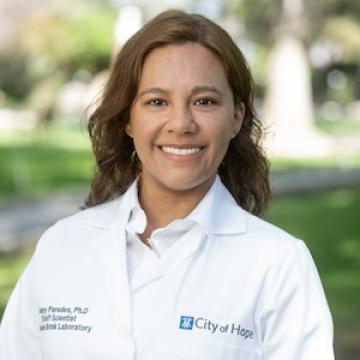
Jenny Paredes, Ph.D., is the Lead of the Microbiome Team in the van den Brink Laboratory (vdB Lab), where she holds her primary appointment. Her research focuses on the interaction of the intestinal microbiome, diet and graft-versus-host disease (GVHD) after allogeneic hematopoietic cell transplantation (allo-HCT). Her vdB Lab group has previously shown that the diversity of the intestinal microbiome, as well as the diet of patients undergoing allo-HCT, correlates with the development and outcomes of GVHD. Based on these findings, in pre-clinical and in-vitro models, she is investigating if dietary interventions targeting the intestinal microbiome and its metabolites can modulate GVHD outcomes post allo-HCT. She hopes that these studies could lead to dietary and microbial approaches that can improve the survival of patients with hematological malignancies.
Maria Spiering, M.S., is the Program Manager for Strategic Operations within the City of Hope Microbiome Program. With over 10 years of experience in the tech industry and a background in computer science, agile coaching and project and product management, she provides strategic advisory and facilitation services to support the program’s growth. Maria works closely with leadership to enhance decision-making, boost team productivity and align goals. Her focus areas include program development, stakeholder engagement, process optimization and strategic communication, helping translate vision into action.
Emily Tang, Ph.D., is a scientist from the Dept of Clinical and Translational Project Development. Dr. Tang supports the Microbiome Program by guiding the development of clinical studies and preparing documents required for scientific, ethics and regulatory approvals. Prior to joining City of Hope, she contributed to the development of CRISPR and T-cell therapeutics in both academia and industry. She completed her B.S. in Immunology at University College London and Ph.D. in Biomedical Sciences at University of California, San Francisco and has had broad research experiences investigating the immunology of chronic infections, allergic inflammation and cancer using animal models and human samples.
Xinran Qi, Ph.D., is an assistant research professor of Biostatistics in the Microbiome Program at City of Hope. Her work focuses on providing statistical and computational expertise for clinical trials and basic science research aimed at understanding the dynamics of the microbiome. Before joining City of Hope, she completed her postdoctoral training at Stanford University (2021–2024), where she specialized in statistical genetics and the integrative analysis of omics data. She earned her Ph.D. in Biostatistics from the Medical College of Wisconsin in 2021 and received her Bachelor of Science in Statistics and Chemistry from Sun Yat-sen University in 2016.
Hanjun Qin Ph.D. is a Staff Scientist at City of Hope with over 10 years of experience in genomics, immunology, and molecular biology, leading next-generation sequencing (NGS)-based research and supporting studies in cancer and translational biomedical research. He collaborates on diverse projects to translate complex biological questions into meaningful scientific discoveries.
Kareem Yousef, B.S., is a Research Associate in the Microbiome Program at City of Hope. In his role, he coordinates patient interactions, assists with sample collection and processing, and supports clinical research studies investigating the relationship between the microbiome and treatment outcomes.