
Chimeric antigen receptor (CAR) T cell therapy genetically reprograms a patient’s immune cells to seek out and kill cancer. The personalized approach has revolutionized treatment, yet today's therapies remain largely “hardwired” and unable to adapt after the rewired cells are restored to the patient’s bloodstream.
Now City of Hope researchers have developed a new "plug-and-play" technology that adds engineered molecules to CAR T cells after treatment, allowing scientists to better control the cells and redirect them to attack different types of cancer. Published this month in Cancer Immunology Research, a journal of the American Association for Cancer Research, the preclinical study offers a more flexible way to help CAR T cells keep pace with mutating tumors.
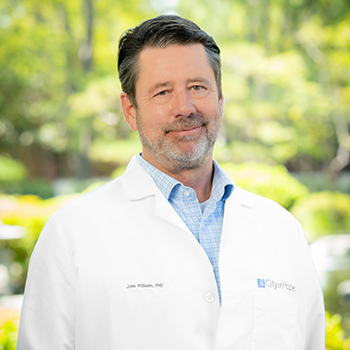
"The bottom line is that tumors adapt to CAR T therapies, leading to treatment failure and cancer relapse. To remain effective, our therapies need to adapt, too,” said co-senior author John Williams, Ph.D., director of City of Hope’s X-ray Crystallography Core. “City of Hope has created a system that allows us to reconfigure these potent cancer killers as the tumor progresses."
A Solution to CAR T’s Drawbacks
While effective at treating blood cancers, CAR T therapies face several limitations. The treatments have a short lifespan, can cause serious side effects and can’t be altered after infusion. As tumors evolve and develop new ways to escape immune attack, CAR T cells can lose their effectiveness, allowing some cancer cells to survive and drive relapse.

To overcome these hurdles, Dr. Williams collaborated with co-senior author Christine Brown, Ph.D., deputy director of T Cell Therapeutics Research Laboratories at City of Hope, to build on his earlier research on a technology called meditope*, a molecular “docking system” that allows scientists to add new capabilities to immunotherapies.
In the new study, the scientists redesigned CAR T cells so they could connect with a small molecule called meP, creating a new type of cell called meCAR T.
Next, the team showed that meCAR T cells could be equipped with different add-ons that help them be tracked, grow and recognize a wider range of cancer cells.
New Platform Delivers Power and Flexibility
“Much like a software update adds new features to a smartphone after you buy it, meditope allows us to send new instructions to CAR T cells already in the body,” said Dr. Williams, a professor in the Department of Cancer Biology and Molecular Medicine at Beckman Research Institute of City of Hope.
The team also showed that meCAR T cells could be programmed to carry out new functions, helping researchers better control how the cells find and attack cancer.
“The power of this platform is its flexibility,” said Dr. Brown, City of Hope’s Heritage Provider Network Professor in Immunotherapy. “Instead of hardwiring every function into a CAR T cell, we can use protein-adaptor plug-ins to add new capabilities as needed, improving their ability to overcome tumor heterogeneity and other barriers that limit CAR T therapy in solid tumors.”
The next step will be to translate the study’s promising findings into clinical testing. The researchers are developing two Phase I clinical trials to evaluate the safety and activity of meCAR T cells as a platform for treating patients with solid tumors and acute myeloid leukemia.
“We’re excited about this new platform that allows us to control CAR T cells,” said Dr. Brown. “Our approach potentially could be applied across many different cancers and other diseases for which CAR T cell therapies are being developed.”
A Leader in CAR T Therapy Research
City of Hope is home to one of the nation’s largest cellular therapy programs and CAR T outpatient programs, treating about 90% of CAR T patients in an outpatient setting. More than 2,000 patients have participated in its immune effector and CAR T cell trials.
Importantly, City of Hope researchers are quickly moving discoveries from the lab into patient care, including personalized immunotherapies and other next-generation treatments designed to improve outcomes and quality of life.
The Cancer Immunology Research study “Meditope-Enabled Chimeric Antigen Receptors Facilitate Plug-and-Play Control of T Cells” was funded by grants from the National Cancer Institute (R21-CA193055 and P30CA033572); The Marcus Foundation, the Dr. Richard Merkin and the Merkin Family Foundation Q23, Buster for T-cell Therapy Q24 and the City of Hope Integrated Drug Development Venture program.
About the Study Authors
Christine Brown, Ph.D., is an expert in translational CAR T cell therapy research for both blood malignancies and solid tumors. Her work spans preclinical and clinical trials with specialization in innovative treatments for brain tumors or glioblastoma.
John Williams, Ph.D., is an expert in structural biology and protein engineering. His research focuses on developing new cancer therapies. He discovered meditope, a molecular “docking system” that allows scientists to add new capabilities to therapeutic antibodies and immune-cell therapies.
* City of Hope holds equity and royalty interests in Meditope Biosciences Inc. Meditope has licensed the core technology but does not have the rights to the meCAR asset. Dr. Williams holds equity in the company, receives royalties related to the technology and serves as a consultant.