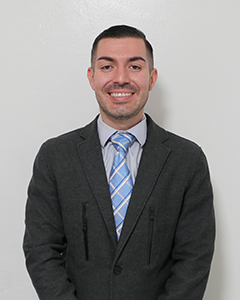
Edwin Ruiz, 32, is an energetic and active Fullerton resident whose busy life includes working as the chief operating officer for a food manufacturing business.
But just last year, at age 31, Ruiz was diagnosed with colorectal cancer. Around 10 percent of people diagnosed with colorectal cancer are younger than age 50, a distressing national trend being addressed with urgency at City of Hope, one of the largest cancer research and treatment organizations in the United States. Learn more about the younger face of colorectal cancer.
Ruiz’s first symptoms were night-time stomach aches, which he brushed off. He was otherwise healthy — he exercised in the gym almost every day and enjoyed running. Eventually, though, the running started getting more difficult. Ruiz couldn’t catch his breath, and at the same time, the stomach aches were worsening.
At first, like many others, Ruiz turned to the internet for health information rather than consulting his doctor. Thinking he might be low in key vitamins, Ruiz began taking supplements. He also experimented with a cleansing diet, but this made his symptoms worse. By now his stomach aches were very painful. “I would drive holding my stomach,” he says. “I would come to work limping up to my office.”
Finally, Ruiz saw his primary care doctor. A stool test came back negative for cancer. But Lynch Syndrome, an inherited genetic condition that increases the risk of several types of cancer, including colorectal cancer, runs in Ruiz’s family. Ruiz’s uncle, aunt, grandmother, and cousin all had colorectal cancer, he says, and he went in for a colonoscopy. “Cancer was the last thing on my mind, and I was not overly concerned despite my family history,” Ruiz says. But the procedure could not be completed due to an obstruction — a serious problem that is common in colon cancers.
“I remember waking up and I asked the doctor, ‘Did everything come out good?’” Ruiz recalls. “He shook his head, and that’s when I learned I had cancer. I just started crying. it was a big shock.”
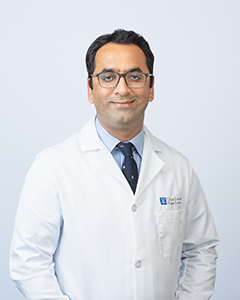
Ruiz’s uncle, who’d had colon cancer, urged Ruiz to be proactive and find a team of experts. That led Ruiz to Pashtoon Kasi, M.D., City of Hope Orange County’s medical director of GI medical oncology. Dr. Kasi immediately put Ruiz on an individualized treatment plan that included immunotherapy, a leading-edge cancer treatment that can be highly effective.
“We started seeing immediately the reduction in cancer and negatives on a lot of cancer tests,” says Ruiz. “It’s been a home run for me,” he says.
The results of Ruiz’s next colonoscopy confirmed his hopes. “I woke up this time and asked, ‘How did it go?’ and it was good news. The tissue samples all came back negative. I was overjoyed.”
Through it all, Ruiz continued to work. “I love working, I love spending time with my family, I love exercising,” he says. “I feel grateful and fortunate knowing City of Hope and Dr. Kasi are here for me.”
As a result of his cancer experience, Ruiz changed his diet to include less red meat and more whole foods. “If I can’t read an ingredient on a food label, I’m not going to eat it,” he says. He also pays attention to cancer research to make sure he understands the most current prevention and lifestyle recommendations.
The cancer journey is a roller coaster, Ruiz says, and he finds support through his faith. He has been able to return to all of his favorite activities, including horse riding and working out in the gym.
Given the recent trend of younger adults being diagnosed with cancer, Ruiz says “I believe we can all do more to be healthy and prevent cancer. Everyone should speak with their doctor about their family health history and about how cancer can be detected and treated early.”
Talking Hope: How liquid biopsies are reshaping colon cancer detection and treatment
A Living Promise of Hope
Gastrointestinal Cancer Care in Orange County