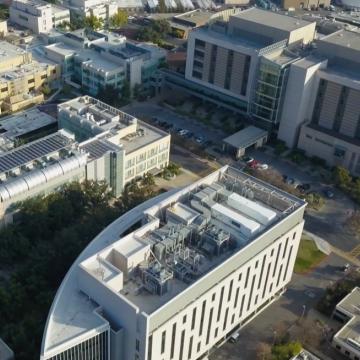
At City of Hope® hospitals in Duarte near Los Angeles and Orange County, patients with gastric cancer receive leading-edge, personalized care from a multidisciplinary team of specialists. Our experts treat all types of gastric cancer, including the most common gastric adenocarcinomas, as well as less common cancers such as gastrointestinal stromal tumors (GISTs), neuroendocrine (carcinoid) tumors and gastric lymphoma. We combine advanced treatment options with compassionate, patient-centered care tailored to your unique needs.
What Sets Our Gastric Cancer Program Apart?
Gastric cancer, also known as stomach cancer, requires highly specialized expertise. At City of Hope, patients in Los Angeles and Orange County benefit from one of the nation's leading programs, combining extensive experience, advanced surgical techniques and nationally recognized leadership.
- One of the nation's highest-volume gastric cancer programs: Our specialized gastric cancer team brings deep experience in diagnosing and treating this complex disease, with the expertise that comes from caring for a high volume of patients.
- Advanced robotic and minimally invasive surgery: City of Hope is a pioneer in robotic surgery for gastric cancer, offering minimally invasive approaches for both early and locally advanced gastric adenocarcinomas. Our high-volume surgical expertise helps us use techniques designed to safely treat cancer while preserving function, reducing the impact of surgery and helping patients return to their normal lives sooner.
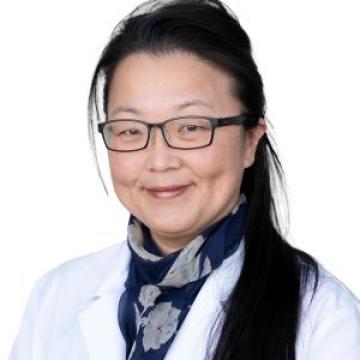
- National and international leadership: Led by internationally recognized surgical oncologist-scientist Yanghee Woo, M.D., our program is helping advance gastric cancer surgery worldwide. Dr. Woo has performed more than 500 robotic gastrectomies and serves as director of City of Hope's Gastroenterology Minimally Invasive Therapy Program. Her leadership also extends to established surgical organizations, including the Society of Surgical Oncology and the International Gastric Cancer Association.
Our Multidisciplinary Gastric Cancer Team
Gastric cancer care at City of Hope brings together a highly trained, multidisciplinary team of experts in surgical, medical and radiation oncology, gastroenterology, interventional endoscopy, pathology, genetics, nutrition, specialized nursing and advanced practice care.
This team-based approach brings multiple perspectives to patient care. Research has shown that stomach cancer patients treated at high-volume, specialized cancer centers with multidisciplinary teams often experience better outcomes and quality of life. At City of Hope, our specialists work closely together to coordinate care and develop a personalized plan at every step. That means every patient benefits from the expertise of the entire team — not just one specialist.
Comprehensive Treatment for Every Stage of Gastric Cancer
Whether you’re newly diagnosed with early-stage disease or facing advanced and complex gastric cancer, City of Hope’s experts focus on identifying the optimal treatment strategy with curative intent — tailored to you, your tumor and its unique characteristics.
- Early-stage gastric cancer: Advanced endoscopy and endoscopic submucosal dissection (ESD) may allow appropriately selected patients to treat their cancer without surgery. Our interventional gastroenterology specialists and multidisciplinary team carefully evaluate each patient to determine the optimal approach.
- Locally advanced, curable disease: Coordinated treatment planning helps optimize therapy and determine the right timing and approach for surgery and other treatments.
- Complex, resectable disease: High-volume surgical expertise and multidisciplinary care help guide treatment for challenging cancers that may be removed with surgery.
- Stage 4 gastric cancer: Advanced, personalized treatment options and clinical expertise help patients navigate metastatic disease.
- Peritoneal metastases: At City of Hope, specialists across disciplines work together to develop personalized, multimodal treatment plans for complex cancer that has spread to the lining of the abdomen.
- Gastroesophageal junction (GJ) tumors: A coordinated team with specific focus on cancers occurring where the stomach and esophagus meet.
- Second opinions: Our experts can review a diagnosis and treatment plan to provide additional perspective and recommendations.
- Not sure what treatment you need? Our multidisciplinary team can help clarify your diagnosis, evaluate your options and determine the most appropriate next steps.
Whenever possible, we encourage patients to connect with our specialists early. Early evaluation allows our multidisciplinary team to understand the cancer and the individual, determine the right treatment approach and timing and help patients and their families navigate the full spectrum of cancer care. This may help us:
- Avoid unnecessary surgery
- Determine the right extent of treatment based on the cancer and each patient’s unique needs
- Use endoscopic treatment when appropriate
- Optimize treatment before, during and after surgery to support optimal outcomes
- Pursue curative treatment whenever possible
- Coordinate care across the cancer journey, from diagnosis and treatment through recovery and ongoing follow-up
- Support patients and families with the information, guidance and resources they need throughout treatment
Leaders in Robotic and Minimally Invasive Gastric Cancer Surgery
City of Hope brings surgical innovation to gastric cancer care, combining advanced techniques with the experience of a high-volume program to help patients receive effective treatment with less disruption to their lives.
Our surgeons have extensive expertise in robotic and minimally invasive approaches for gastric cancer, using the right technique for each patient and each tumor. These include:
- Robotic surgery: High-volume expertise in minimally invasive robotic approaches for gastric cancer, including early and locally advanced disease.
- Advanced surgical strategies: Multidisciplinary expertise in complex approaches such as cytoreductive surgery and conversion gastrectomy for select patients with advanced gastric cancer, when treatment may make surgery with curative intent possible.
- Endoscopic submucosal dissection (ESD): An advanced endoscopic technique that removes certain early gastric cancers without traditional surgery.
- Hyperthermic intraperitoneal chemotherapy (HIPEC)/pressurized intraperitoneal aerosol chemotherapy (PIPAC): Specialized treatments that deliver chemotherapy directly to the abdomen for select patients with peritoneal disease. City of Hope has the highest HIPEC volume in Los Angeles County and is among the few centers offering HIPEC with minimally invasive surgery.
- Peritoneal-directed therapy: Specialized approaches designed to treat gastric cancer that has spread to the lining of the abdomen.
Our enhanced recovery after surgery program is designed to help patients recover more comfortably and return to their normal activities sooner.
Personalized, Precision Gastric Cancer Care
Every gastric cancer is different. By examining the genetic, molecular and biomarker features of your gastric cancer, our experts may gain a deeper understanding of your disease and use that information to help personalize your testing and treatment.
- Genetic testing: Comprehensive testing looks for inherited genetic changes or conditions — like CDH1 and CTNNA mutations and Lynch syndrome — that may affect cancer risk and help guide care. All patients may access this testing, regardless of their personal or family medical history.
- Genomic and molecular testing: State-of-the-art molecular profiling examines the unique genetic and molecular features of your gastric cancer to help identify treatment options.
- Biomarker-based treatment: Biomarkers can show specific features of your gastric cancer that may help identify treatments matched to your individual cancer.
Gastric Cancer Clinical Trials and Research
City of Hope offers a robust portfolio of gastric cancer clinical trials and research, expanding access to promising investigational treatments and advancing new approaches to gastric cancer care.
- Gastric cancer clinical trials: Studies evaluating promising new treatments and approaches.
- Translational research: Turning laboratory discoveries into new treatments.
- Early detection research: Finding new ways to detect gastric cancer earlier.
- Biomarker-driven treatment: Matching treatments to the unique features of each cancer.
- Molecular and genomic research: Studying cancer’s genetic and molecular makeup to guide personalized care.
- PIPAC research: Investigating pressurized chemotherapy delivered directly into the abdomen.
- Oncolytic virus and peritoneal-directed therapy research: Exploring targeted approaches to treat cancer that has spread to the abdominal lining.
Patients may also have access to innovative studies such as the NAVIGATION randomized controlled trial, for which City of Hope is the only selected center.
Patient Stories
Meet Our Los Angeles and Orange County Gastric Cancer Team
Our multidisciplinary team of nationally recognized gastric cancer specialists in Los Angeles and Orange County brings together expertise across surgery, medical oncology, gastroenterology and more.
Gastric Cancer Leadership

Yanghee Woo, M.D., is director of the Gastroenterology Minimally Invasive Therapy Program.
Call now to become a patient, get a second opinion or make a referral.